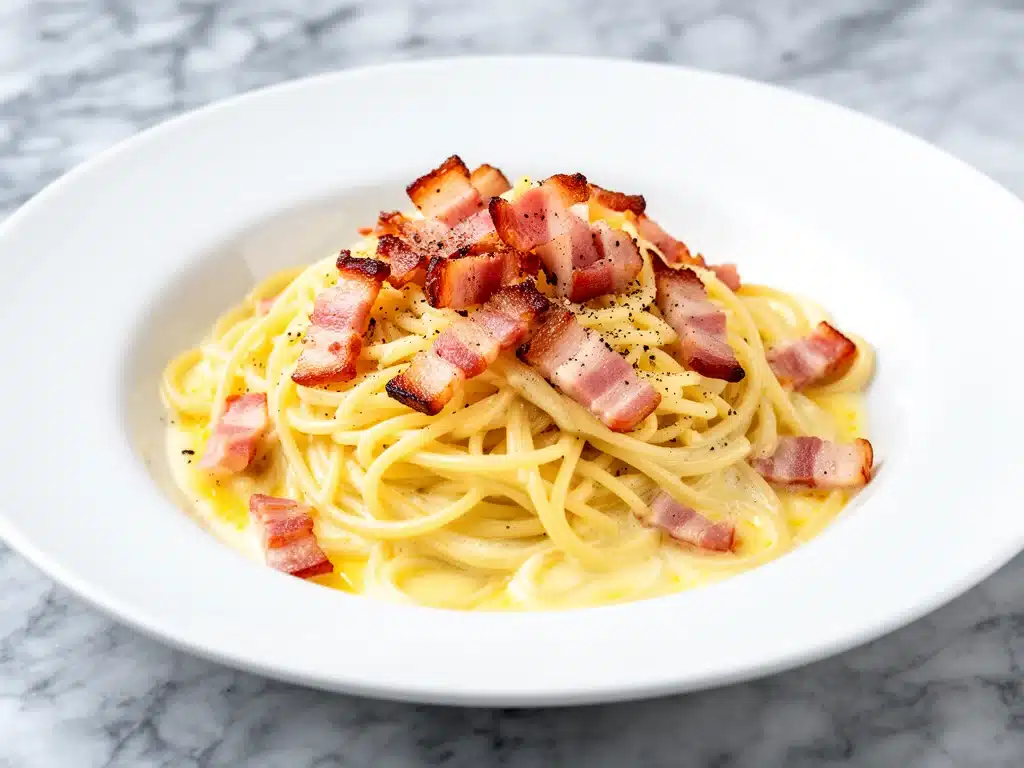
My husband walked into the kitchen last Saturday, sniffed the air, and immediately asked if I’d ordered takeout from Rome. I laughed because we definitely hadn’t. I’d just thrown together what I thought was a decent pasta dinner using what was in the fridge. But when he took that first bite of the egg-coated spaghetti with the crispy, salty pork, his eyes actually widened. He put his fork down and said, “This is it. This is the one.”
It sounds dramatic, maybe even a little cheesy (pun intended), but this specific recipe for Authentic Italian Carbonara has genuinely changed how we view weeknight dinners. For years, I made the “American” version. You know the one: heavy cream, sautéed onions, maybe some peas, and a sprinkle of parmesan. It was good. It was easy. It was also completely wrong.
Real carbonara doesn’t use cream. Not a drop. The creaminess comes entirely from emulsifying eggs, cheese, and starchy pasta water. It’s a technique that sounds terrifying if you’re used to throwing ingredients in a pot and hoping for the best, but once you get the hang of it, it’s surprisingly forgiving. I’ve tested this 5-ingredient dinner method at least twenty times—some successful, some scrambled—so I know exactly where people trip up. And now, I’m sharing the secrets so you can get it right every single time.
This isn’t just about following rules; it’s about understanding the balance. When you nail this Authentic Italian Carbonara with Crispy Pancetta, you’re not just making pasta. You’re making something that tastes like comfort, luxury, and skill all rolled into one plate. It’s faster than delivery, cheaper than a restaurant, and honestly? It tastes better.
Why You’ll Love This Recipe
There are a lot of pasta recipes out there, but this one stands out for reasons that have nothing to do with fancy techniques. Here’s why this Authentic Italian Carbonara with Crispy Pancetta has become a staple in our house:
- It’s Actually Fast — I know, “authentic” usually sounds like it takes all day. Not this. From boiling water to plating, you’re looking at 20 minutes. That’s faster than waiting for a pizza delivery driver to find your house. I make this on nights when I’m exhausted and just want to eat something warm without spending an hour in the kitchen.
- Five Ingredients, Maximum Flavor — You don’t need a pantry full of spices or weird sauces. Just eggs, cheese, pork, pasta, and black pepper. That’s it. It proves that good food doesn’t need a long ingredient list. It’s the opposite of those complicated healthy green apple spinach smoothie recipes where you need three different types of kale and a blender that costs more than my car.
- Restaurant Quality at Home — There’s a specific texture you get when you emulsify eggs and cheese correctly. It’s glossy, rich, and clings to every strand of pasta. It feels like you’re in a bistro in Trastevere. My friends can’t believe I made it myself, especially since there’s no cream in sight.
- Perfect for Date Night — When I want to impress someone without looking like I tried too hard, this is my go-to. It looks elegant on the plate, smells incredible while cooking, and the crispy pancetta adds that perfect crunch. It’s the kind of meal that makes people ask for the recipe immediately.
- Minimal Cleanup — Since you’re using a skillet for the pork and a pot for the pasta, you’re really only washing two main things. Compared to the mountain of dishes I’d get after making something like Labor Day no-bake strawberry pretzel salad (which is delicious but requires a dozen bowls), this is a dream.
This recipe takes the intimidation out of Italian cooking. It’s bold, it’s simple, and it rewards you with one of the best flavors you can get from a few basic ingredients.
Ingredients You’ll Need
Here’s the best part: you probably have most of this already. Authentic carbonara relies on high-quality ingredients because there are so few of them. If you use bad pancetta, the dish will taste bad. If you use good pecorino, it will sing. Let’s break it down.
The Core Components
Guanciale or Pancetta (8 ounces / 225g) — This is the star. Traditional carbonara uses guanciale (cured pork jowl), which has a richer, more intense flavor. But if you can’t find it, high-quality thick-cut pancetta is a perfect substitute. I like to buy it in one solid piece and slice it myself rather than buying pre-sliced, which tends to be too thin and burns easily. Look for one with a good ratio of fat to meat.
Eggs (3 large yolks + 1 whole egg) — This is the sauce. We use mostly yolks for that rich, golden color and luxurious texture. The one whole egg adds a bit of structure so the sauce isn’t too runny. Use room temperature eggs if you can; cold eggs can shock the hot pasta and scramble the yolks. I learned this the hard way on my third attempt.
Pecorino Romano Cheese (1 cup / 100g, freshly grated) — This is a sharp, salty sheep’s milk cheese. It’s stronger than Parmesan, which is why it’s the traditional choice. You can use a mix of Pecorino and Parmigiano-Reggiano if you find Pecorino too salty, but start with all Pecorino for the authentic punch. Grate it yourself. Pre-grated cheese has anti-caking agents that prevent it from melting smoothly, leaving you with a grainy sauce.
Dry Spaghetti or Rigatoni (1 pound / 450g) — Spaghetti is the classic choice, and I love the way the sauce clings to the long strands. Rigatoni is a great alternative if you prefer a heartier bite; the ridges and tube shape hold onto the creamy sauce beautifully. Avoid thin pasta like angel hair, as it can get mushy when tossed with the hot eggs.
Freshly Cracked Black Pepper (1 to 2 teaspoons) — Don’t use the stuff in the shaker with the hole that’s too big. Get a pepper mill and crack it fresh. The heat and aroma of fresh pepper are essential. In Italy, this dish is sometimes called “cacio e pepe” because of the cheese and pepper, and the pepper needs to be bold enough to stand up to the rich pork.
For the Cooking Water
Salt (1 tablespoon) — You need a generous amount of salt for your pasta water. It should taste like the sea. This seasons the pasta from the inside out, which is crucial since the sauce itself is already salty from the cheese and pork.
Equipment Needed
You don’t need fancy gadgets for this. Here’s what I actually use:
Large Skillet or Cast Iron Pan — I use a 12-inch skillet. You need enough surface area to cook the pancetta in a single layer so it gets crispy. If you crowd the pan, it steams instead of crisps. Cast iron is great for holding heat, but stainless steel or a heavy non-stick works too.
Large Pot — For boiling the pasta. A 6-quart pot is standard. Make sure it’s big enough so the pasta has room to move.
Whisk — A simple balloon whisk is perfect for beating the eggs and cheese together. You need to get it smooth before it hits the heat.
Tongs — Essential for tossing the pasta. Forks are too awkward for this step. Tongs let you grab a big handful of pasta and mix it vigorously with the sauce.
Microplane or Box Grater — For grating the cheese. A microplane makes super-fine shreds that melt instantly. A box grater works, but the shreds will be chunkier.
Heatproof Bowl — To mix your egg and cheese mixture. Ceramic or glass works well.
How to Make It: Step-by-Step
Alright, let’s make this! I’m walking you through exactly how I do it, including the little tricks I’ve picked up over the years. The key here is timing. You need to have everything ready before you start cooking the pasta because things move fast.
Step 1: Prep the Egg Mixture (5 minutes)
In your heatproof bowl, whisk the eggs and egg yolks together until they are smooth. Add the grated Pecorino Romano and about three-quarters of the cracked black pepper. Whisk until it forms a thick, paste-like consistency. It will look like a yellow dough. Set this aside. This is your sauce base. If you wait until the pasta is cooked to do this, you’ll be rushing and likely end up with scrambled eggs.
Step 2: Cook the Pancetta (8-10 minutes)
Place your skillet over medium heat. Add the sliced pancetta or guanciale. Do not add any oil or butter—the pork will render its own fat. Let it cook undisturbed for a few minutes until the bottom is golden. Then, flip and continue cooking until the pieces are crispy and browned on all sides. You want them to look like little chips of salty gold. This usually takes about 8-10 minutes. Once they’re done, remove them from the pan with a slotted spoon and set them aside on a paper towel, leaving the rendered fat in the pan. This fat is liquid gold; don’t throw it away.
Step 3: Boil the Pasta (8-10 minutes)
Bring a large pot of heavily salted water to a boil. Add the spaghetti or rigatoni. Cook according to package directions, but keep a close eye on it. You want it “al dente,” meaning it still has a slight bite. IMPORTANT: About two minutes before the pasta is done, scoop out 1.5 cups of the starchy pasta water and set it aside. This water is the secret weapon for emulsifying the sauce. Drain the pasta, but do not rinse it. Rinse removes the starch you need.
Step 4: Combine and Emulsify (3 minutes)
This is the critical moment. Reduce the heat under your skillet with the pancetta fat to low. Add the drained pasta directly into the skillet with the fat. Toss the pasta for a minute to coat it in the pork fat. Then, remove the skillet from the heat entirely. Let it cool for about 30 seconds. You do not want the pan to be piping hot, or the eggs will scramble.
Pour the egg and cheese mixture over the pasta. Immediately start tossing and stirring with your tongs. The residual heat from the pasta and the pan will cook the eggs gently, turning them into a creamy sauce. If the sauce looks too thick or clumpy, add a splash of the reserved pasta water. Keep adding water a tablespoon at a time until you reach a glossy, creamy consistency that coats the pasta. It should look like melted cheese, not scrambled eggs.
Step 5: Finish and Serve
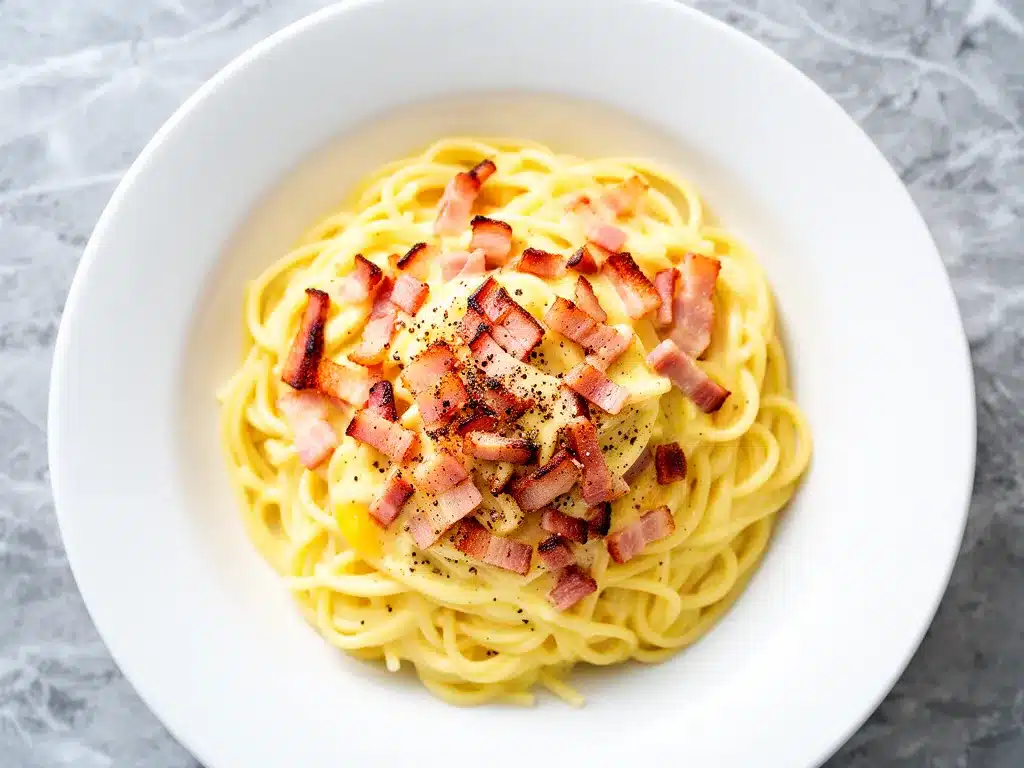
Stir in the crispy pancetta pieces (reserve a few for garnish). Taste the pasta. It should be salty, peppery, and creamy. Add more black pepper if you want more kick. Serve immediately on warm plates. Top with the reserved pancetta and a final crack of black pepper.
Total Time: About 25 minutes (10 minutes active, 15 minutes mostly hands-off)
Expert Tips & Tricks
Here’s everything I’ve learned from making this dozens of times. These tips will save you from my mistakes.
The Temperature Game
The biggest mistake people make is adding the egg mixture to a hot pan. Always take the pan off the heat. The goal is to use the residual heat of the pasta to cook the eggs gently. If the pan is too hot, you get scrambled eggs. If it’s too cold, the eggs stay raw. Aim for the pan to be warm, not hot. If you’re nervous, let the pasta sit for a full minute after draining before adding the eggs.
Save That Pasta Water
I cannot stress this enough. The starchy water is what binds the fat and the eggs into a smooth sauce. Without it, you’ll have a greasy mess with clumps of cheese. Add it gradually. You don’t need all of it, but you need enough to loosen the sauce to a pourable consistency.
Don’t Skimp on the Pepper
Black pepper isn’t just a garnish here. It’s a primary flavor. Use a good amount. If you’re sensitive to spice, reduce it slightly, but don’t eliminate it. The heat cuts through the richness of the egg and pork.
Fresh Cheese Only
Pre-grated cheese contains cellulose to keep it from clumping. This cellulose prevents the cheese from melting smoothly, leaving you with a gritty sauce. Buy a block of Pecorino Romano and grate it yourself. It takes two minutes and makes a huge difference in texture.
Crispy Pork is Non-Negotiable
You want texture contrast. If your pancetta is chewy, the dish feels flat. Cook it until it’s crisp. If you overcook it slightly, that’s okay—it just adds more crunch. Just make sure you don’t burn it, which makes it bitter.
Variations & Substitutions
Once you’ve nailed the basic version, here’s how you can mix it up. I’ve tried all of these.
Cacio e Pepe Style
Skip the pork entirely. Just use the pasta water, cheese, and lots of pepper. It’s a simpler, vegan-friendly (if you skip cheese or use vegan alternatives) version that’s equally delicious.
With Chicken
If you want more protein, you can add grilled chicken strips. Cook the chicken separately and toss it in at the end. It’s not traditional, but it’s a great way to stretch the meal if you’re feeding a hungry crowd.
Gluten-Free
Use your favorite gluten-free pasta. Brown rice or corn-based pastas work well. Note that GF pasta releases less starch, so you might need a bit more pasta water to get the sauce to emulsify properly.
Veggie-Loaded
Add sautéed spinach or peas in the last minute of cooking. The spinach wilts quickly and adds a nice color contrast. It’s a great way to sneak in vegetables for picky eaters.
Substituting Pancetta
If you can’t find pancetta, bacon is the closest substitute. Use thick-cut bacon, cut into chunks. It’s saltier and smokier than pancetta, so reduce the added salt in the sauce. It’s not authentic, but it’s tasty.
Serving & Storage
How to Serve
I usually serve this straight from the skillet at the dinner table—it looks rustic and stays warm. But here are other ways I’ve enjoyed it:
- Sides: A simple arugula salad with lemon vinaigrette cuts the richness perfectly. Roasted asparagus or green beans also work well.
- Wine Pairing: A crisp white wine like Pinot Grigio or a light Chianti pairs beautifully with the salty pork and rich eggs.
Storage Instructions
Refrigerator: Store leftovers in an airtight container for up to 2 days. The sauce will thicken in the fridge as the fats solidify. This is normal.
Reheating: Do not microwave leftovers directly; the eggs will separate and become rubbery. Instead, add the cold pasta to a skillet with a splash of water or milk. Heat gently over low heat, stirring constantly, until warm and creamy again. It won’t be quite as good as fresh, but it’s still edible.
Freezing: I don’t recommend freezing this dish. The eggs and cheese do not freeze well. The texture becomes grainy and separated upon thawing. It’s best enjoyed fresh.
Nutrition Information
I’m not a nutritionist, but here’s the breakdown if you’re tracking. Keep in mind that this is a rich dish, so portions matter.
Per Serving (based on 4 servings):
| Nutrient | Amount |
|---|---|
| Calories | 650 |
| Protein | 28g |
| Carbs | 70g |
| Fat | 28g |
| Saturated Fat | 10g |
| Sodium | 900mg |
What’s Good: High in protein from the eggs and pork. It’s a satisfying meal that keeps you full.
What to Know: It’s higher in sodium due to the cured pork and cheese. If you’re watching salt, choose low-sodium pancetta and reduce the added pepper.
Final Thoughts
So that’s my go-to Authentic Italian Carbonara with Crispy Pancetta! I’ve probably talked your ear off at this point, but when you make a recipe this often, you have a lot to say about it.
This has saved weeknight dinners more times than I can count. It’s my answer to “what’s for dinner” when I’m tired, don’t want takeout, and still want something that tastes really good. My kids are happy, my husband’s happy, and I’m happy because I’m not stressed about cooking.
Make it yours! Try different types of pasta, adjust the garlic (though traditional carbonara doesn’t use garlic, some people add it—I don’t, but you do you), and play with the pepper. The best recipes are the ones you adapt to your family’s tastes.
If you make this, drop a comment and let me know what you think! I love hearing how recipes turn out in your kitchen. And if something doesn’t work, tell me that too—I’m here to help troubleshoot.
Happy cooking! And I hope your kitchen smells half as good as mine does right now.
Frequently Asked Questions
Q: Can I use cream instead of eggs?
A: You can, but it won’t be authentic carbonara. Cream makes it a “Carbonara-style” dish, like the American version I mentioned earlier. Real carbonara gets its creaminess from the emulsion of eggs, cheese, and pasta water. If you use cream, you lose that delicate, silky texture and end up with a heavier, richer sauce. I recommend sticking to the egg method—it’s easier than you think and tastes better.
Q: Why did my sauce turn into scrambled eggs?
A: This happens when the pan is too hot. Remember, you must take the pan off the heat before adding the egg mixture. The residual heat is enough to cook the eggs gently. If your pan is still too hot, let it sit for a minute or two after draining the pasta. Also, make sure you’re tossing the pasta vigorously and quickly when you add the eggs to distribute the heat evenly.
Q: Can I use bacon instead of pancetta?
A: Yes, bacon is a common substitute. However, bacon is usually smoked and saltier than pancetta. If you use bacon, choose thick-cut, center-cut bacon to avoid burning. You may need to rinse it briefly to remove some of the smoke flavor if you want it to be more traditional. Also, taste before adding extra salt, as bacon can be very salty.
Q: How long does carbonara last in the fridge?
A: It lasts about 2 days. After that, the pasta continues to absorb the sauce and becomes dry, and the texture of the egg sauce degrades. It’s best eaten fresh, but if you have leftovers, reheat them gently with a splash of liquid as described above.
Q: Can I make this ahead for a dinner party?
A: You can prep the ingredients ahead of time. Slice the pancetta and grate the cheese in advance. But do not mix the egg and cheese sauce until you are ready to cook the pasta. The sauce separates if it sits too long. For a dinner party, this is actually great because you can have everything prepped and just cook the pasta when your guests arrive.
Q: Is guanciale harder to find than pancetta?
A: Guanciale is less common in standard US supermarkets, but you can often find it in Italian specialty shops or larger grocery stores with good meat sections. If you can’t find it, pancetta is a perfectly acceptable alternative. The flavor profile is similar, though guanciale has a more distinct, pork-jowl richness.
Pin This Recipe!
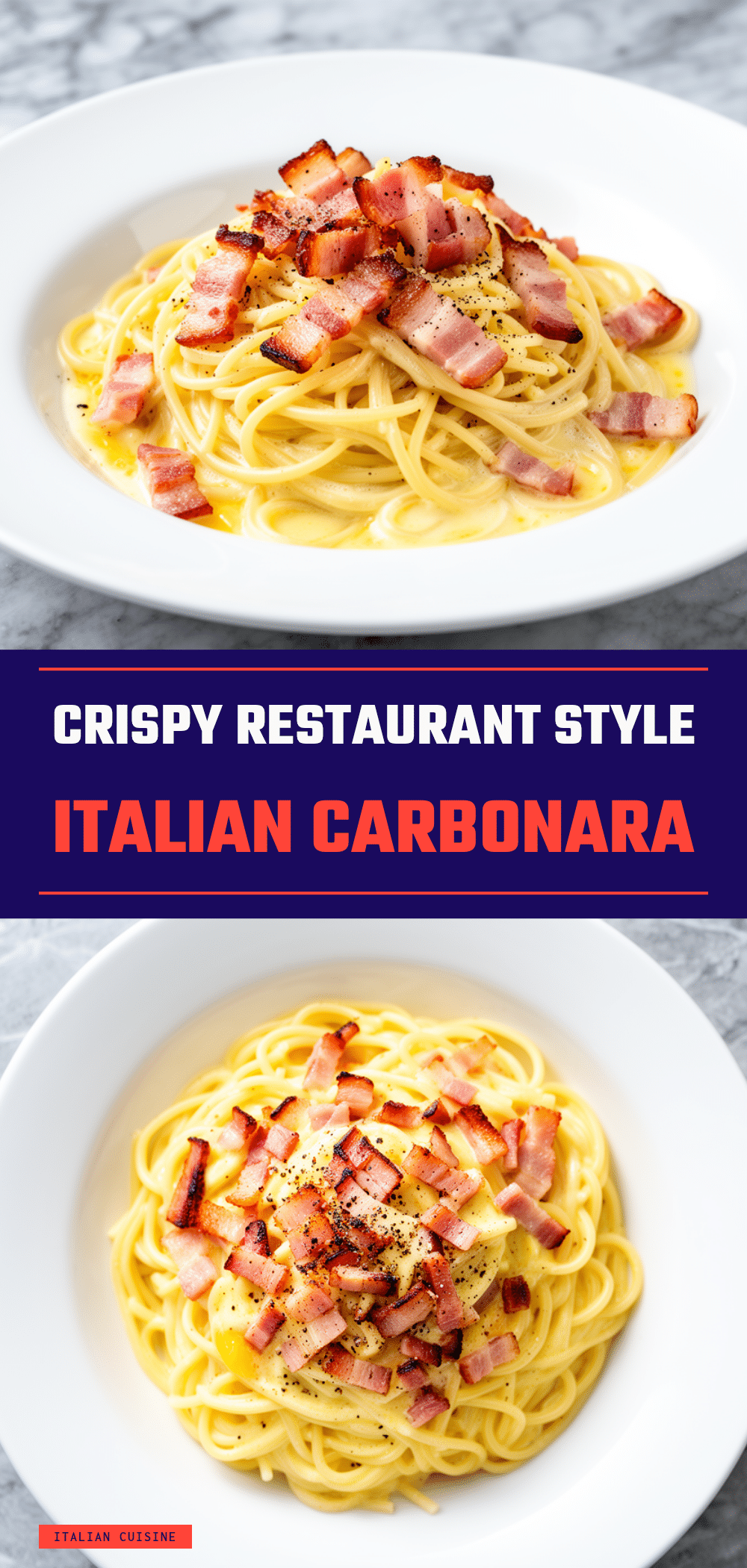
Authentic Italian Carbonara: Easy 5-Ingredient Dinner
- Total Time: 25 minutes
- Yield: 4 servings 1x
Description
An authentic Italian carbonara recipe that uses only five ingredients—eggs, cheese, pork, pasta, and black pepper—to create a creamy, luxurious sauce without any cream. This dish is faster than delivery and offers restaurant-quality flavor at home.
Ingredients
- 8 ounces (225g) Guanciale or Pancetta, sliced
- 3 large egg yolks
- 1 large whole egg
- 1 cup (100g) Pecorino Romano Cheese, freshly grated
- 1 pound (450g) Dry Spaghetti or Rigatoni
- 1 to 2 teaspoons Freshly Cracked Black Pepper
- 1 tablespoon Salt (for pasta water)
Instructions
- In a heatproof bowl, whisk the eggs and egg yolks together until smooth. Add the grated Pecorino Romano and about three-quarters of the cracked black pepper. Whisk until a thick, paste-like consistency forms. Set aside.
- Place a large skillet over medium heat. Add the sliced pancetta or guanciale without adding oil or butter. Cook undisturbed for a few minutes until golden, then flip and continue cooking until crispy and browned on all sides (8-10 minutes).
- Remove the crispy pork with a slotted spoon and set aside on a paper towel, leaving the rendered fat in the pan.
- Bring a large pot of heavily salted water to a boil. Add the pasta and cook until al dente. About two minutes before the pasta is done, scoop out 1.5 cups of starchy pasta water and set aside. Drain the pasta without rinsing.
- Reduce the heat under the skillet with the pork fat to low. Add the drained pasta to the skillet and toss to coat in the fat for one minute.
- Remove the skillet from the heat entirely and let it cool for about 30 seconds.
- Pour the egg and cheese mixture over the pasta. Immediately start tossing and stirring vigorously with tongs. The residual heat will gently cook the eggs into a creamy sauce.
- If the sauce is too thick, add reserved pasta water a tablespoon at a time until a glossy, creamy consistency is reached.
- Stir in the crispy pancetta pieces (reserving a few for garnish). Taste and add more black pepper if desired. Serve immediately on warm plates, topped with reserved pancetta and a final crack of black pepper.
Notes
The key to authentic carbonara is temperature control. Always remove the pan from the heat before adding the egg mixture to prevent scrambling. Use freshly grated cheese, as pre-grated cheese contains anti-caking agents that prevent smooth melting. Save the starchy pasta water; it is essential for emulsifying the sauce. Do not freeze this dish as the eggs and cheese do not freeze well.
- Prep Time: 5 minutes
- Cook Time: 20 minutes
- Category: Main Course
- Cuisine: Italian
Nutrition
- Serving Size: 1 plate
- Calories: 650
- Sodium: 900
- Fat: 28
- Saturated Fat: 10
- Carbohydrates: 70
- Protein: 28
Keywords: Italian, Carbonara, Pasta, Pancetta, Guanciale, Egg Sauce, Weeknight Dinner, 5-Ingredient Recipe, Authentic Italian