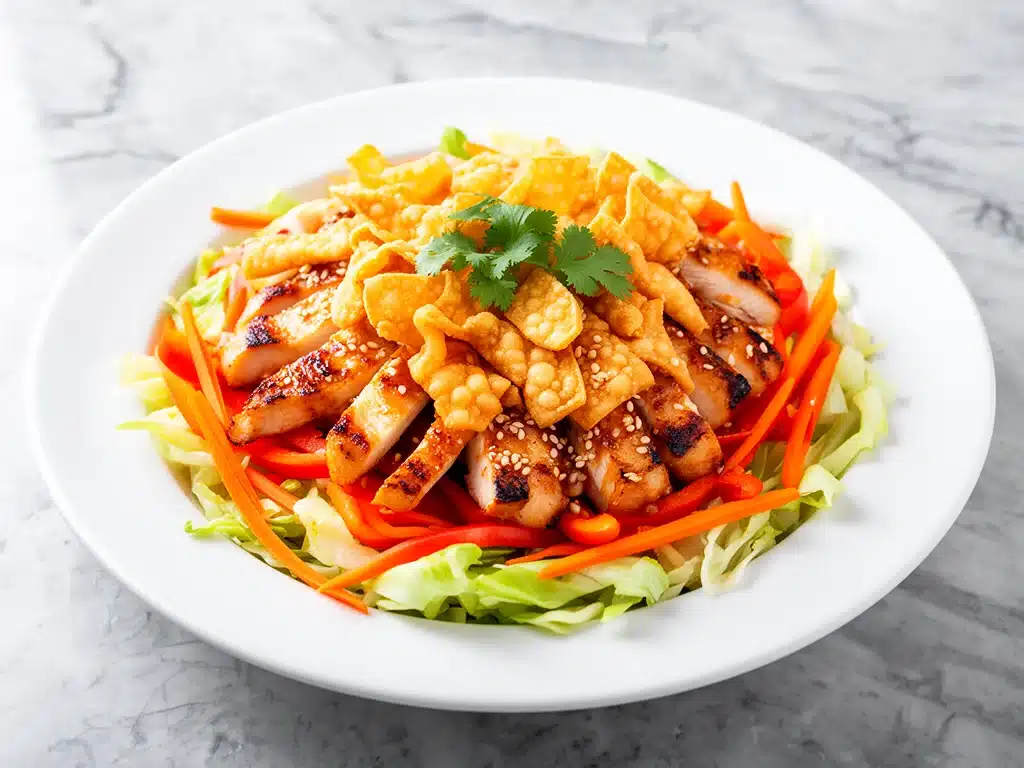
Last Tuesday, I stood in my kitchen at 6:45 PM feeling that familiar knot of dread tighten in my stomach. You know the one. It’s the “what’s for dinner?” panic that hits right after you’ve kicked off your shoes, checked your email one last time, and realized you have absolutely zero energy to cook. My husband was asking about takeout, my kids were circling the fridge like sharks, and I was staring at a half-empty vegetable drawer containing a sad, wilting bunch of cilantro and three carrots.
I was ready to order Thai food. Again. But then I remembered a salad I’d been making on repeat for the last month. It’s this Crunchy Asian Sesame Chicken Salad—a 15-minute miracle that tastes like it came from a trendy bistro but costs pennies and takes less time than waiting for a delivery driver to knock.
I threw together what I had: rotisserie chicken, whatever crunchy veggies were left, and a quick sesame dressing. The result? My kids actually ate their vegetables. My husband asked for seconds. And I didn’t spend a dime or wash a single dish from a takeout container. That night, I realized I didn’t need a complicated recipe. I needed a formula. And this Crunchy Asian Sesame Chicken Salad has become my go-to answer for those chaotic weeknights when I need dinner to just work.
I’ve tested this method so many times—sometimes with leftover roast beef, sometimes with tofu, sometimes with just shrimp—but the chicken version remains my absolute favorite. It’s sweet, savory, incredibly crunchy, and ready before the pizza guy can even put on his shoes. If you’re tired of the same old chicken dinner routine, this salad is the game-changer you didn’t know you needed.
Why You’ll Love This Crunchy Asian Sesame Chicken Salad
There are about ten reasons I keep making this salad, but here are the big ones that keep it in my regular rotation.
Stupid Simple — Seriously, if you can chop a cucumber and whisk a bowl, you can make this. I’ve walked my teenage daughter through it over FaceTime while she was at college. It’s foolproof.
Lightning Fast — 15 minutes from start to finish. And only 5 of those minutes are active chopping. The rest is just assembling. I make this on weeknights when I get home at 7 PM and have to eat before the dog’s dinner.
Zero Cooking Required — No stove, no oven, no pot to scrub. If you buy a rotisserie chicken or use leftovers from last night’s dinner, this is purely assembly. It’s the ultimate lazy chef’s dream.
Texture Heaven — Most chicken salads are mushy. This one is packed with crunch from cabbage, carrots, and nuts. Every bite has a different texture. It’s satisfying in a way that makes you forget it’s “just” a salad.
Pantry-Friendly Dressing — The dressing uses ingredients you probably already have: soy sauce, sesame oil, rice vinegar, honey, and ginger. You don’t need to make a special trip to the store.
Makes Amazing Leftovers — Actually tastes better the next day. The noodles soak up the dressing and get wonderfully chewy. I deliberately make extra for lunch throughout the week.
This is my go-to when I need dinner to just work. No complicated techniques, no weird ingredients, just reliable, delicious food that makes everyone happy. It’s fresh, it’s light, but it’s filling enough to keep you going until bedtime.
Ingredients You’ll Need for the Perfect Salad
Here’s the best part: you probably have most of this already in your kitchen. This looks like a long list, but most of it is pantry basics or fridge staples.
For the Salad Base
Rotisserie Chicken (2 cups, shredded / about 300g) — This is the secret weapon. Using store-bought rotisserie chicken saves 30 minutes of cooking time. I buy one every Sunday and use it for this salad throughout the week. If you don’t have one, poach two chicken breasts and shred them.
Red Cabbage (2 cups, shredded / about 150g) — This is what gives the salad its vibrant color and crunch. Purple cabbage holds up better than green cabbage in dressings. Shred it thinly with a knife or use a food processor.
Green Cabbage (1 cup, shredded / about 75g) — I like a mix of red and green for visual appeal, but red cabbage alone works fine. It adds a slightly peppery bite that balances the sweet dressing.
Carrots (2 medium, julienned or grated / about 100g) — Raw carrots add sweetness and crunch. Julienne them into matchsticks for that restaurant-style look, or grate them for a softer texture. I use a peeler for speed.
Cucumber (1 large, sliced into half-moons / about 150g) — English cucumbers are best because they have fewer seeds and less water. Regular cucumbers work too, but scoop out the seeds first so the salad doesn’t get watery.
Red Onion (½ medium, thinly sliced / about 50g) — Raw red onion can be sharp, so I soak the slices in ice water for 5 minutes before adding them. This mellows the bite. If you’re sensitive to raw onions, use green onions instead.
Cilantro (½ cup, chopped / about 30g) — Fresh cilantro adds a bright, herbal finish. If your family hates cilantro (it’s a genetic thing, apparently), use fresh mint or basil instead. Or just skip it.
For the Crunch Factor
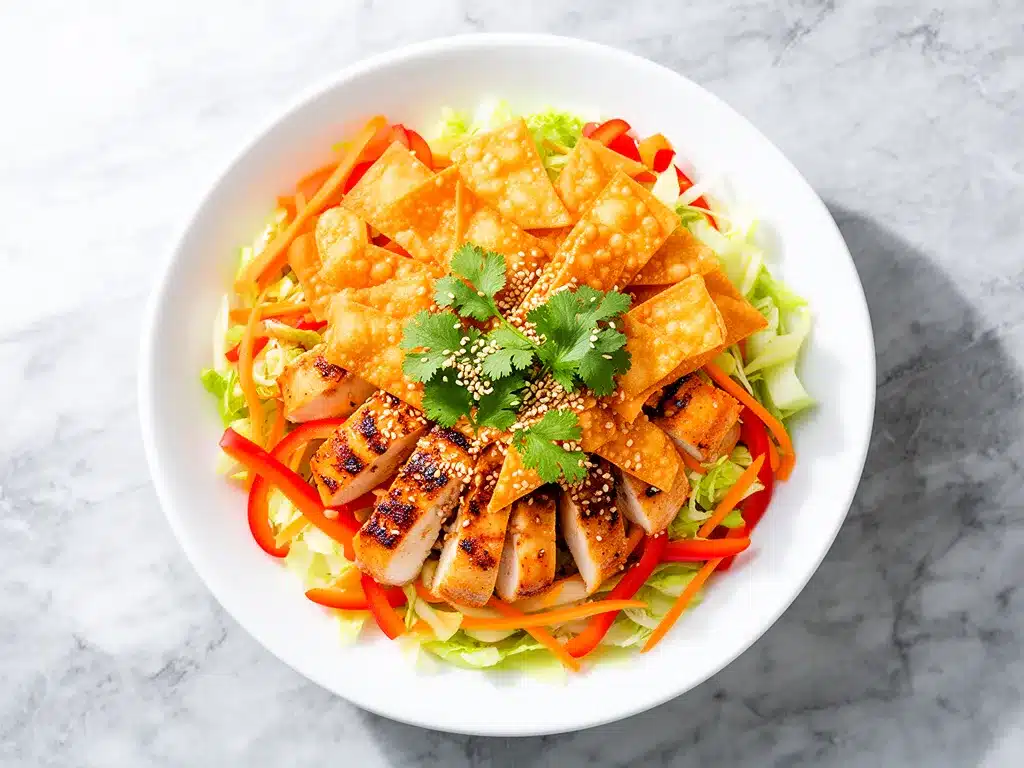
Roasted Sesame Seeds (2 tablespoons) — Essential for the Asian flavor profile. Toast them yourself for extra nuttiness, or buy them pre-toasted. Don’t skip this; it’s the signature flavor.
Crushed Peanuts or Almonds (½ cup / about 60g) — Adds protein and serious crunch. I use unsalted roasted peanuts. Crush them slightly with a mortar and pestle or a rolling pin. You can also use cashews or walnuts if you prefer.
Edamame (½ cup, shelled / about 75g) — Optional, but I love the pop of green beans. Frozen shelled edamame works great—just thaw them under warm water. Adds extra protein and texture.
For the Dressing
Soy Sauce (3 tablespoons / 45ml) — Use low-sodium soy sauce if you’re watching salt. Regular works too, just taste before adding extra salt. Coconut aminos is a good gluten-free alternative.
Rice Vinegar (2 tablespoons / 30ml) — Mild and slightly sweet. Do not use distilled white vinegar or apple cider vinegar; they’ll throw off the flavor profile. Look for “unseasoned” rice vinegar.
Sesame Oil (1 tablespoon / 15ml) — Toasted sesame oil has a strong, nutty flavor. Use the real stuff, not the “sesame flavored” oil. A little goes a long way. If you add too much, it tastes bitter.
Honey (1 tablespoon / 20g) — Balances the salt and acid. You can use maple syrup for a vegan version, but honey gives it that classic Asian takeout sweetness.
Fresh Ginger (1 teaspoon, grated / about 5g) — Grate it finely. If you don’t have fresh ginger, use ½ teaspoon of ground ginger, but fresh is so much brighter and zingier.
Garlic (1 clove, minced / about 5g) — Fresh garlic only. No jarred garlic in this recipe. It adds a savory depth that ties everything together.
Sriracha or Chili Flakes (½ teaspoon, optional) — For a little heat. I add this if I’m craving a kick. Start with less if you’re sensitive to spice.
Optional Add-ins
Soba Noodles (1 cup, cooked and cooled / about 100g) — Buckwheat noodles make this a more filling meal. I sometimes add them for lunch prep. Rinse them under cold water after cooking to stop the cooking process.
Avocado (1, sliced) — Adds creaminess. I add this right before serving so it doesn’t brown. Great for a healthier fat boost.
Mango (½ cup, diced) — For a tropical twist. Sweet mango pairs beautifully with the savory-sweet dressing. Perfect for summer.
Equipment Needed
You don’t need fancy equipment for this. Here’s what I actually use.
Large Mixing Bowl — I use a 5-quart stainless steel bowl. It needs to be big enough to toss the salad without spilling. A glass bowl works too, but I prefer metal for durability.
Small Jar or Bowl — For whisking the dressing. I use a mason jar with a lid and shake it vigorously. It’s faster than whisking in a bowl and easier to clean.
Sharp Knife — For chopping cabbage and slicing cucumbers. A sharp knife makes julienning carrots and slicing red onion much safer and faster.
Peeler — For stripping carrot ribbons or julienning carrots. My favorite tool for quick veggie prep.
Colander — If you’re using edamame or adding noodles, you’ll need this for rinsing and draining.
Spatula or Tongs — For tossing the salad. Tongs give you better control for mixing everything evenly.
Optional but nice:
- Food Processor — With a slicing blade, it shreds cabbage and carrots in seconds. Worth it if you make this often.
- Mortar and Pestle — For crushing peanuts and grating ginger. Fun to use, but not necessary.
How to Make It: Step-by-Step
Alright, let’s make this! I’m walking you through exactly how I do it, including the little tricks I’ve picked up.
Step 1: Prep Your Chicken (2 minutes)
If you’re using a rotisserie chicken, shred the meat with two forks or your hands. Remove any skin or bones. I usually save the skin for chicken stock later. If you’re cooking chicken breasts, poach them in simmering water for 12-15 minutes until cooked through, then shred. Let the chicken cool completely before adding it to the salad. Warm chicken wilts the veggies.
Step 2: Chop the Veggies (5 minutes)
Shred the red and green cabbage into thin strips. You want them fine enough to eat easily but chunky enough to hold up. Julienne the carrots into matchsticks. Slice the cucumber into half-moons. Thinly slice the red onion. If you’re sensitive to raw onion, soak the slices in ice water for 5 minutes, then drain. Chop the cilantro. Set all veggies aside in a large bowl.
Step 3: Make the Dressing (2 minutes)
In a small jar or bowl, combine the soy sauce, rice vinegar, sesame oil, honey, grated ginger, minced garlic, and sriracha (if using). Whisk or shake vigorously until the honey is fully dissolved and the mixture is emulsified. Taste and adjust. Want it sweeter? Add more honey. Want it saltier? Add more soy sauce. Want it tangier? Add more rice vinegar.
Step 4: Assemble the Salad (3 minutes)
Add the shredded chicken to the bowl with the veggies. Pour the dressing over everything. Use tongs to toss the salad gently but thoroughly. You want every piece of chicken and every strand of cabbage coated in dressing. Add the crushed peanuts and sesame seeds. Toss one more time.
Step 5: Chill and Serve (Optional but Recommended)
Let the salad sit in the fridge for 10-15 minutes before serving. This allows the flavors to meld and the cabbage to soften slightly. It’s not strictly necessary, but it makes a huge difference in flavor. Serve cold or at room temperature. Garnish with extra peanuts, sesame seeds, and a wedge of lime if you like.
Total Time: About 15 minutes (5 minutes active, 10 minutes mostly hands-off)
Built-in Troubleshooting:
- S Salad too dry? Add more dressing, a tablespoon at a time. The cabbage absorbs dressing quickly.
- S Salad too wet? You added too much dressing or the veggies released water. Add more crunch (peanuts, seeds) or a few more slices of cucumber to balance it out.
- S Flavors too strong? Add a splash of water or a bit more honey to mellow it out.
Expert Tips & Tricks
Here’s everything I’ve learned from making this dozens of times. These tips will save you from my mistakes.
Toast Your Nuts and Seeds
Never use raw nuts or seeds in this salad. Toast them in a dry pan over medium heat for 2-3 minutes until fragrant. This releases their natural oils and adds a depth of flavor that makes the salad taste expensive. I learned this the hard way with a bland salad that tasted like raw peanuts.
Don’t Overdress
Start with half the dressing and add more as needed. Cabbage and other veggies will release water as they sit, so the salad will get wetter over time. It’s better to under-dress and add more later than to start with a soupy salad.
Use Cold Chicken
Warm chicken wilts the cabbage and makes the salad soggy. If you’re cooking chicken specifically for this, let it cool completely in the fridge before shredding. Leftover rotisserie chicken is already cold, which is perfect.
Balance the Textures
The key to a great salad is contrast. You want crunch (cabbage, nuts), chew (chicken, noodles), and creaminess (avocado, if using). Don’t skip the crunchy elements—they’re what make this salad addictive.
Make Ahead Strategy
I prep the veggies on Sunday and store them in airtight containers. The chicken is also prepped. During the week, I just toss everything together with the dressing. It takes 5 minutes and tastes fresh. The dressing keeps in the fridge for a week.
Variations & Substitutions
Once you’ve nailed the basic version, here’s how you can mix it up. I’ve tried all of these.
Shrimp Version
Swap chicken for cooked shrimp. I use frozen shrimp, thawed and sautéed quickly with garlic. Shrimp cooks in 2 minutes and adds a nice seafood twist.
Tofu Version
Use firm tofu, pressed and cubed. Pan-fry the tofu until crispy, then cool it. It soaks up the dressing beautifully. Great for a vegetarian protein boost.
Spicy Kick
Add 1 teaspoon of chili garlic sauce or double the sriracha. Serve with extra chili oil on top. Perfect for heat lovers.
Tropical Twist
Add diced mango and swap peanuts for cashews. Use coconut aminos instead of soy sauce. It’s sweet, savory, and perfect for summer.
Noodle Version
Add cooked soba or rice noodles. This turns the salad into a more filling meal. Great for lunch prep. Cook noodles according to package directions, rinse with cold water, and toss with a little sesame oil to prevent sticking.
Dietary Modifications:
- Gluten-Free: Use tamari or coconut aminos instead of soy sauce. Check your sesame oil and rice vinegar labels to ensure they’re gluten-free.
- Dairy-Free: This recipe is naturally dairy-free. Just ensure your honey is vegan if you’re strict.
- Vegan: Swap chicken for tofu or chickpeas. Use maple syrup instead of honey.
- Low-Carb: Skip the noodles and edamame. Use more chicken and veggies. Zucchini noodles are a good substitute for soba noodles.
Serving & Storage
How to Serve
I usually serve this straight from the bowl at the dinner table. It looks rustic and colorful. But here are other ways I’ve enjoyed it:
- On a Bed of Greens: Serve the salad over mixed greens for a lighter version.
- In Lettuce Cups: Use butter lettuce or romaine leaves as cups. Fun for appetizers or lunch.
- With Rice: Serve over steamed jasmine rice for a more traditional Asian meal.
Toppings Bar
When I have guests, I put out: extra peanuts, sesame seeds, chili flakes, lime wedges, and crispy wonton strips. Everyone customizes their bowl.
Storage Instructions
Refrigerator:
Store in an airtight container for up to 3 days. The salad will get softer as it sits, but it still tastes good. Store the dressing separately if you’re meal prepping for more than a day.
Reheating:
This salad is best served cold or at room temperature. Do not reheat it. The chicken and veggies will become soggy and unappetizing.
Freezing:
Do not freeze this salad. The cabbage and cucumbers will turn mushy when thawed. Make it fresh or store in the fridge for up to 3 days.
Pro Tip:
If leftovers are drying out, stir in a splash of water or a bit more dressing when reheating (if you must reheat, though I don’t recommend it). Bring back that creamy texture.
Nutrition Information
I’m not a nutritionist, but here’s the breakdown if you’re tracking.
Per Serving (based on 4 servings):
- Calories: 320
- Protein: 25g
- Carbs: 20g
- Fiber: 4g
- Sugar: 10g
- Fat: 16g
- Saturated Fat: 2g
- Cholesterol: 60mg
- Sodium: 600mg
What’s Good:
- High protein from chicken and nuts
- Rich in fiber from veggies
- Healthy fats from sesame oil and nuts
- Low in saturated fat
What to Know:
- Higher in sodium from soy sauce (use low-sodium to reduce)
- Contains nuts and soy
- Can be made gluten-free and vegan
My Take:
Look, this is a balanced meal with protein, veggies, and healthy fats. It’s not a diet recipe, but it’s way better than takeout. When I want to make it lighter, I use less dressing and more veggies. But usually? I just eat a reasonable portion and enjoy it.
Final Thoughts
So that’s my go-to Crunchy Asian Sesame Chicken Salad! I’ve probably talked your ear off at this point, but when you make a recipe this often, you have a lot to say about it.
This has saved weeknight dinners more times than I can count. It’s my answer to “what’s for dinner” when I’m tired, don’t want takeout, and still want something that tastes really good. My kids are happy, my husband’s happy, and I’m happy because I’m not stressed about cooking.
Make it yours! Try different add-ins, swap in your favorite vegetables, adjust the spice level. The best recipes are the ones you adapt to your family’s tastes. If you’re looking for other quick meals, check out our Chicken Caesar Wraps for a similar flavor profile in a handheld format. Or try our Ham Cheese Pretzel Bites if you need a snack that’s ready in minutes.
If you make this, drop a comment and let me know what you think! I love hearing how recipes turn out in your kitchen. And if something doesn’t work, tell me that too—I’m here to help troubleshoot.
Happy cooking! And I hope your kitchen smells half as good as mine does right now.
Frequently Asked Questions
Can I use cooked rice instead of noodles?
Absolutely. Cooked jasmine or brown rice works great. Just make sure it’s cooled before adding it to the salad so it doesn’t wilt the veggies. I often use rice when I have leftovers from last night’s dinner.
How do I store leftover dressing?
Store it in an airtight jar in the fridge for up to a week. The sesame oil may solidify when cold, but just let it sit at room temperature for 10 minutes and whisk it back together. It’s fine.
Can I make this ahead for a dinner party?
Yes! Prep all the veggies and the dressing 2 days ahead. Toss everything together right before serving. If you’re serving it as an appetizer, keep it chilled until the last minute. It holds up well for a few hours.
Why did my salad get watery?
Cabbage and cucumbers release water over time. If you’re meal prepping, store the dressing separately and toss it right before eating. If you’ve already tossed it, add more crunch (nuts, seeds) to absorb the excess liquid.
Can I use bottled ginger instead of fresh?
You can, but fresh tastes so much better. Bottled ginger can be spicy and metallic. If you must use it, use half the amount because it’s concentrated. Grating fresh ginger takes 30 seconds and makes a huge difference.
How do I make this spicier?
Add more sriracha, chili flakes, or a dash of chili garlic sauce. You can also add sliced jalapeños or fresh chili peppers. Start with a little and taste as you go.
Can I freeze this salad?
No. The veggies will turn mushy when thawed. Make it fresh or store in the fridge for up to 3 days. It’s best enjoyed fresh.
Pin This Recipe!
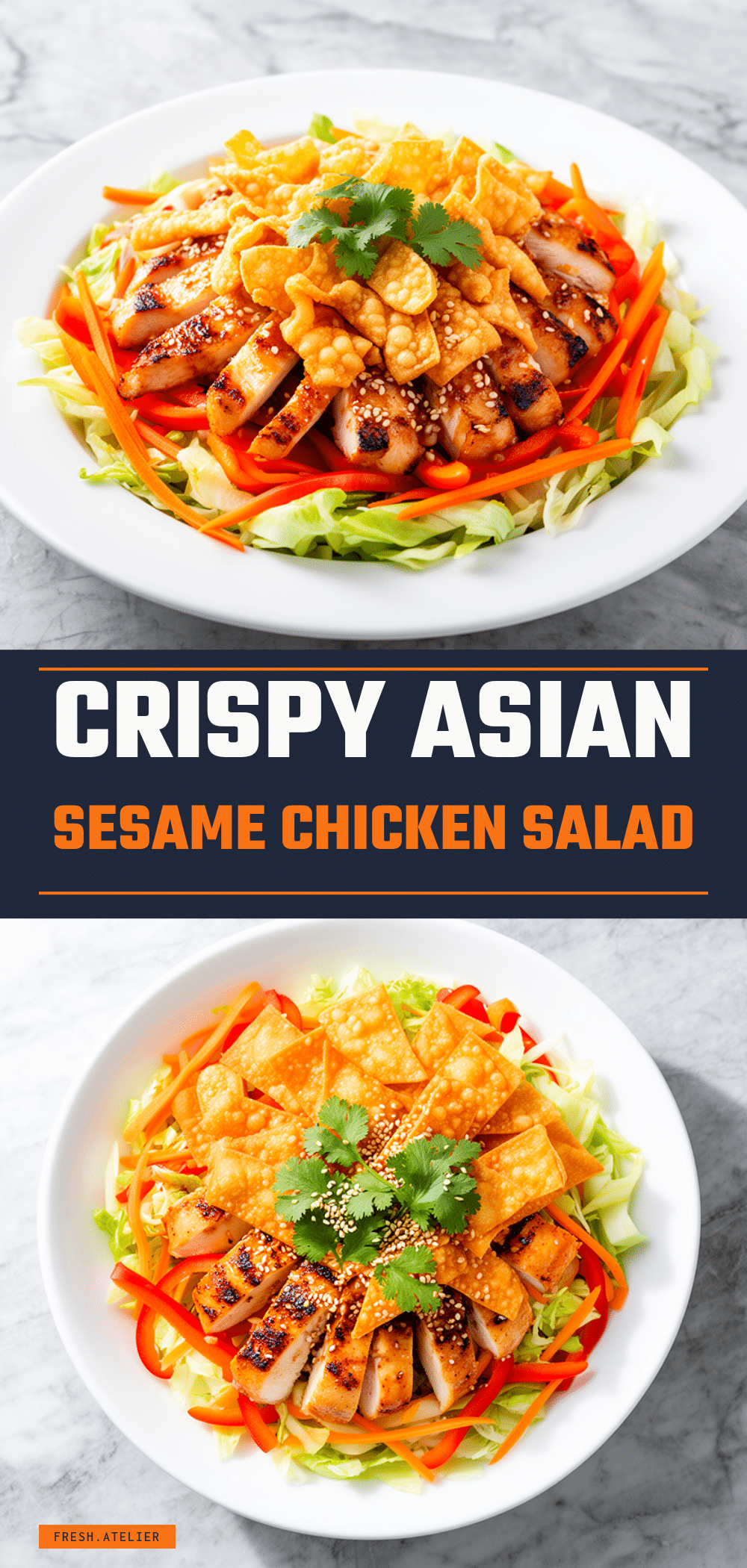
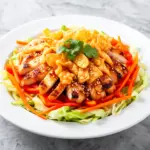
Crunchy Asian Sesame Chicken Salad
- Total Time: 15 minutes
- Yield: 4 servings 1x
Description
A 15-minute weeknight meal featuring rotisserie chicken, crunchy vegetables, and a savory-sweet sesame dressing. This salad is light, satisfying, and requires zero cooking.
Ingredients
- 2 cups shredded rotisserie chicken
- 2 cups shredded red cabbage
- 1 cup shredded green cabbage
- 2 medium carrots, julienned or grated
- 1 large cucumber, sliced into half-moons
- 1/2 medium red onion, thinly sliced
- 1/2 cup chopped fresh cilantro
- 2 tablespoons roasted sesame seeds
- 1/2 cup crushed peanuts or almonds
- 1/2 cup shelled edamame (optional)
- 3 tablespoons soy sauce
- 2 tablespoons rice vinegar
- 1 tablespoon toasted sesame oil
- 1 tablespoon honey
- 1 teaspoon fresh ginger, grated
- 1 clove garlic, minced
- 1/2 teaspoon sriracha or chili flakes (optional)
Instructions
- Shred the rotisserie chicken, removing any skin or bones. Ensure the chicken is cold before adding to the salad.
- Shred the red and green cabbage into thin strips. Julienne the carrots and slice the cucumber into half-moons. Thinly slice the red onion and soak in ice water for 5 minutes to mellow the bite, then drain.
- Chop the cilantro and set all vegetables aside in a large mixing bowl.
- In a small jar or bowl, combine soy sauce, rice vinegar, sesame oil, honey, grated ginger, minced garlic, and sriracha. Whisk or shake vigorously until emulsified.
- Add the shredded chicken to the bowl with the vegetables. Pour the dressing over everything and toss thoroughly with tongs to coat evenly.
- Add the crushed peanuts and sesame seeds. Toss one more time.
- Let the salad sit in the fridge for 10-15 minutes to allow flavors to meld before serving cold or at room temperature.
Notes
Use cold chicken to prevent wilting the vegetables. Toast nuts and seeds for better flavor. Store dressing separately if meal prepping to keep the salad crisp. Do not freeze this salad as the vegetables will become mushy.
- Prep Time: 15 minutes
- Cook Time: 0 minutes
- Category: Main Course
- Cuisine: Asian
Nutrition
- Serving Size: 1 bowl
- Calories: 320
- Sugar: 10
- Sodium: 600
- Fat: 16
- Saturated Fat: 2
- Carbohydrates: 20
- Fiber: 4
- Protein: 25
Keywords: Asian chicken salad, sesame chicken, weeknight dinner, rotisserie chicken recipe, healthy salad, quick meals, gluten-free options, meal prep