It was a Tuesday night in November, the kind where the wind howls against the windows and the house feels cold no matter how high you turn the thermostat. I was exhausted. My brain was fried, my energy was at zero, and the only thing I wanted was something warm, soft, and deeply comforting. But I didn’t want takeout. I wanted to feel like I’d cooked something special, even if I was operating on autopilot.
I opened the fridge and found a half-peeled butternut squash, a stick of butter that was starting to go rancid (oops), and a packet of dried sage I’d bought for a soup months ago. That’s it. That was the inventory. Most recipes would have told me to go to the store. Instead, I remembered a technique I’d seen years ago: using the natural starches in the squash to bind the dough, with almost no flour.
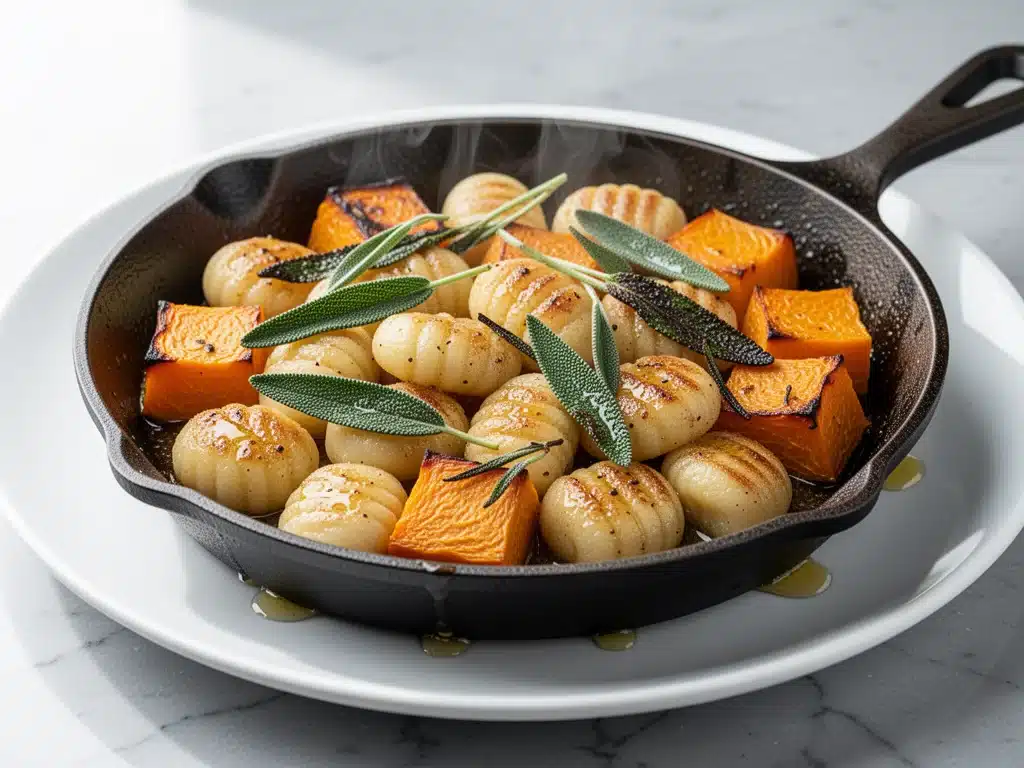
I threw together what I thought would be a mediocre, mushy disaster. Twenty minutes later, I was sitting at the table with my fork digging into pillowy, golden-brown pillows of dough, coated in nutty brown butter and crispy sage leaves. My kids, who usually pick at dinner, asked for seconds. Actually, seconds. That’s the moment I knew I had found a winner.
This butternut squash sage gnocchi isn’t just a recipe; it’s a mood. It’s the culinary equivalent of a weighted blanket. It’s soft, it’s savory, it’s sweet in just the right way, and it comes together so fast that you can have dinner on the table before you’ve even taken off your coat. I’ve made this for dinner parties where people asked for the recipe, and I’ve made it on rainy Sundays when I didn’t want to move. It works every single time.
The best part? You don’t need to be a pasta master. You don’t need fancy equipment. You just need a fork, a pan, and a willingness to embrace the comfort. If you’ve been looking for a way to use up that winter squash gathering dust in your pantry, or if you just want to feel like a gourmet chef without the effort, this is it. Let’s get cooking.
Why You’ll Love This Recipe
There are about a million reasons I keep coming back to this butternut squash sage gnocchi, but let’s be real—you don’t care about my emotional connection to roasted vegetables. You care about whether this dinner will actually work for your life. Here’s the breakdown:
- It’s Stupidly Simple — Seriously, if you can roast a vegetable and boil water, you can make this. I’ve walked my teenage son through the entire process over the phone while I was on a work call. He didn’t mess it up. You won’t either.
- Lightning Fast — From start to finish, this takes about 30 minutes. That includes roasting the squash (which is mostly hands-off) and making the gnocchi. On busy weeknights, I roast the squash in the morning and finish it up at night. It’s the ultimate low-stress dinner.
- Pantry-Friendly — You probably have 80% of these ingredients already. Squash, flour, butter, sage, parmesan. These aren’t obscure items you’ll need to hunt for at a specialty store. It’s basic stuff, but it tastes like you spent hours simmering a sauce.
- Crowd-Pleaser — I’ve served this to my vegetarian sister, my meat-loving dad, and even my picky eater neighbor’s kid. Everyone loves it. The sweet squash balances the savory sage and salty cheese perfectly. It’s a flavor profile that just works.
- Makes Amazing Leftovers — Actually, this tastes even better the next day. The flavors meld together, and the gnocchi gets a slightly firmer bite. I deliberately make extra for lunch. It reheats beautifully in the brown butter sauce.
- Budget-Smart — Feeds 4-6 people for under $15. Squash is cheap in the fall and winter. Butter is cheap. Flour is cheap. This is a high-end tasting dish that costs pennies compared to ordering it at a restaurant.
This is my go-to when I need dinner to just work. No complicated techniques, no weird ingredients, just reliable, delicious food that makes everyone happy. It’s the kind of meal that makes you forget about your stress for an hour.
Ingredients You’ll Need
Here’s the best part: you probably have most of this already. This recipe relies on quality over quantity. Because there are so few ingredients, each one matters. I’m particular about three things here, and I’ll tell you exactly why.
For the Dough
Butternut squash (2 pounds / 900g, peeled and cubed) — This is the star. Look for a squash that feels heavy for its size. That means it’s juicy and sweet. I roast it until it’s fork-tender, then mash it. Don’t use canned pumpkin puree; it’s too watery and sweet. You need the texture of fresh roasted squash.
All-purpose flour (1 ½ to 2 cups / 180-240g) — You don’t need much. This is what binds the squash. Start with 1 ½ cups. You might need a little more depending on how wet your squash is. The dough should be soft but not sticky. If it sticks to your hands, add a sprinkle more flour.
Egg (1 large, beaten) — Just one egg. It helps bind the dough. Some recipes skip it, but I find the egg makes the gnocchi a bit more tender. Room temperature is best, but cold works fine.
Salt (1 teaspoon) — For seasoning the dough. Don’t skip this. It brings out the sweetness of the squash.
For the Sauce
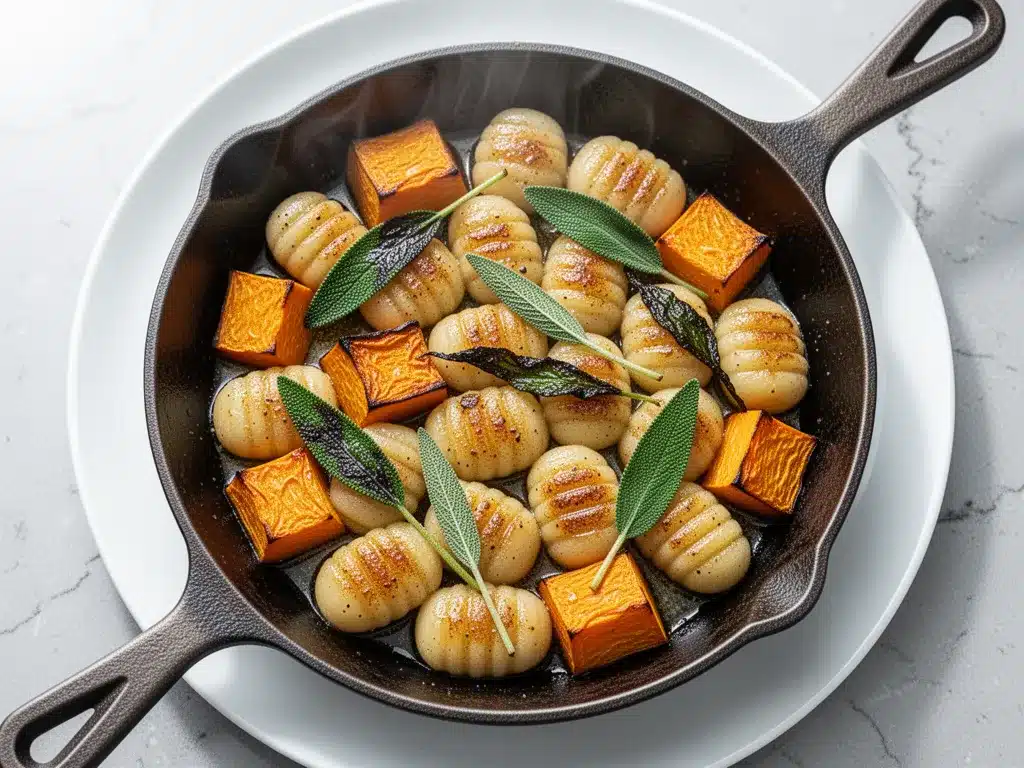
Unsalted butter (½ cup / 115g) — This is non-negotiable. You need enough butter to make a proper brown butter sauce. Use good quality butter. If you use salted butter, reduce the salt in the dough and don’t add extra salt at the end.
Fresh sage leaves (1 large handful / about 30 leaves) — Fresh is best. The sage crisps up in the butter and adds this incredible aromatic flavor. If you can’t find fresh sage, you can use dried, but you’ll need to crush it and add it later. It won’t be as pretty, but it’ll still taste good.
Garlic (2 cloves, minced) — Just a little bit. It adds depth without overpowering the squash. I like to mince it finely so it infuses the butter evenly.
Parmesan cheese (½ cup / 50g, freshly grated) — Buy the block and grate it yourself. Pre-grated cheese has anti-caking agents that make it clumpy in the sauce. Freshly grated melts into the butter like magic.
Red pepper flakes (½ teaspoon) — Optional, but I highly recommend it. It adds a tiny kick that cuts through the richness of the butter and cheese.
Optional Add-ins
Walnuts or pecans (½ cup, toasted and chopped) — I love adding nuts for crunch. It contrasts with the soft gnocchi. Toast them in a dry pan for 2 minutes before chopping. It brings out their natural oils.
Pine nuts (¼ cup, toasted) — A bit fancy, but delicious. I use these when I have guests.
Balsamic glaze (drizzle) — A tiny drizzle at the end adds a nice acidic contrast. I keep a bottle in the pantry for this exact purpose.
Personal Tips
- Squash Prep: If you’re short on time, buy pre-peeled and cubed butternut squash. It’s a bit more expensive, but it saves 15 minutes of chopping. I do this on busy weeks.
- Flour Amount: Every squash is different. Some are wetter than others. Trust your eyes. The dough should be soft, like playdough. If it’s sticky, add flour. If it’s crumbly, add a teaspoon of water.
- Storage: Fresh gnocchi doesn’t last long. Cook it the same day you make it. If you have extra dough, you can freeze it raw on a baking sheet, then transfer to a bag. Cook from frozen later.
Equipment Needed
You don’t need fancy equipment for this. Here’s what I actually use.
Rimmed baking sheet — I use a half-sheet pan. You need space to spread the squash out so it roasts instead of steams. A smaller pan will overcrowd the squash and make it soggy. My old, dented sheet pan works fine.
Fork or potato masher — For mashing the roasted squash. A fork gives a slightly chunkier texture, which I prefer. A masher makes it smoother. Either works.
Large skillet — 12-inch works best for the sauce. I prefer stainless steel or cast iron because they hold heat well, but non-stick works too. Just make sure it’s big enough to toss the gnocchi without spilling.
Sharp knife — For chopping the squash. This is the hardest part of the recipe. A sharp chef’s knife is essential. Dull knives make you cry more—learned this the hard way with a stubborn squash.
Cutting board — Any size works. I use a large plastic one for easier cleanup.
Measuring cups and spoons — Pretty standard stuff. Dollar store versions work fine.
Colander — For draining the gnocchi. Or just use tongs to transfer them directly from the boiling water to the sauce pan. I do this when I’m lazy.
Small bowl — For the beaten egg.
Optional but nice:
- Pastry brush — For brushing the squash with olive oil before roasting.
- Microplane grater — For the parmesan. It grates finer than a box grater, which helps it melt.
How to Make It: Step-by-Step
Alright, let’s make this! I’m walking you through exactly how I do it, including the little tricks I’ve picked up.
Step 1: Roast the Squash (45-60 minutes)
Preheat your oven to 400°F (200°C). Peel the butternut squash. This is the only hard part. Cut off the top and bottom, then use a sharp knife to slice off the skin. Cut the squash in half, scoop out the seeds, and cube the flesh into 1-inch pieces. Toss them with a tablespoon of olive oil, salt, and pepper. Spread them out on your baking sheet. Don’t crowd them! If they’re touching, they’ll steam. Roast for 30-40 minutes until they’re tender and caramelized. Let them cool completely. This is crucial. Hot squash will make the dough soggy.
Step 2: Mash and Mix the Dough (10 minutes)
Once the squash is cool, mash it in a large bowl. You want it smooth, but a few small lumps are fine. Add the beaten egg and 1 teaspoon of salt. Mix well. Now, add the flour. Start with 1 ½ cups. Mix with a fork or your hands. The dough should come together. If it’s too sticky, add more flour, one tablespoon at a time. You want a soft, pliable dough. Don’t overwork it! Overworking makes the gnocchi tough. Shape it into a ball and set it aside.
Step 3: Shape the Gnocchi (10 minutes)
Divide the dough into 4 pieces. Take one piece and roll it into a long snake, about ¾-inch thick. Cut the snake into 1-inch pieces. You can leave them round, or roll them gently against a fork to create ridges. The ridges help hold the sauce. Place them on a floured baking sheet. Repeat with the other pieces. Don’t worry if they’re not perfect. Homemade gnocchi is supposed to be rustic.
Step 4: Boil the Gnocchi (5 minutes)
Bring a large pot of salted water to a boil. It should taste like the ocean. Drop the gnocchi in batches. They’ll sink to the bottom at first. Wait for them to float to the surface. Once they float, let them cook for another 1-2 minutes. Use a slotted spoon to remove them. Don’t overcook them! They’ll be tender. Transfer them directly to your skillet with the sauce.
Step 5: Make the Brown Butter Sage Sauce (5 minutes)
While the water boils, heat the butter in a large skillet over medium heat. Let it melt and start to foam. Keep stirring. The butter will turn golden brown and smell nutty. This is brown butter. It takes about 3-5 minutes. Watch it closely! It can go from perfect to burnt in seconds. Once it’s golden, add the sage leaves and minced garlic. Cook for 1 minute until the sage is crispy and the garlic is fragrant.
Step 6: Combine and Serve (2 minutes)
Add the boiled gnocchi to the skillet. Toss everything together until the gnocchi is coated in the brown butter sauce. Add the grated parmesan cheese and red pepper flakes. Toss again. The cheese will melt into the sauce. Taste and adjust salt if needed. Serve immediately with extra parmesan and crispy sage leaves on top.
Total Time: About 30 minutes (10 minutes active, 20 minutes mostly hands-off)
Expert Tips & Tricks
Here’s everything I’ve learned from making this dozens of times. These tips will save you from my mistakes.
Cool the Squash Completely
This is the #1 tip. If the squash is warm, it will cook the egg and make the dough sticky and gummy. I usually roast the squash in the morning and let it cool on the counter. Then I finish the gnocchi at night. It’s the best way to manage your time.
Don’t Overwork the Dough
Gnocchi is supposed to be soft and pillowy. If you knead it like bread, it will become dense and chewy. Mix until it just comes together. If you need to add more flour, do it gently. The less you handle it, the better.
Watch the Brown Butter
Brown butter is amazing, but it burns easily. The milk solids sink to the bottom and turn brown quickly. Once you see it turn golden and smell that nutty aroma, take it off the heat. You can even pour it into a heatproof bowl to stop the cooking.
Salt the Water Generously
Your pasta water should taste like seawater. Gnocchi is bland on its own. The salt in the water seasons the dough from the inside out. I use about 1 tablespoon salt per pound of water.
Use a Slotted Spoon
When transferring gnocchi from the boiling water to the sauce, use a slotted spoon. You don’t want to add all that starchy water to the butter sauce. It can make it greasy. Just the gnocchi.
Common Mistakes (and how to avoid them):
- Mistake: Dough is too sticky — Fix: Add more flour, one tablespoon at a time. But remember, some stickiness is okay. It’s easier to add flour than to fix a dry dough.
- Mistake: Gnocchi is tough — Fix: You overworked the dough. Next time, mix less. Also, don’t boil them for too long. They’re done when they float.
- Mistake: Sauce is too greasy — Fix: You probably didn’t let the butter brown enough, or you added too much water. Brown butter emulsifies better. Toss the gnocchi vigorously in the sauce to help it bind.
Variations & Substitutions
Once you’ve nailed the basic version, here’s how you can mix it up. I’ve tried all of these.
Salami Gnocchi
Add diced salami to the brown butter sauce. Fry it until crispy before adding the sage. It adds a spicy, salty crunch. My husband loves this version.
Mushroom Gnocchi
Sauté sliced mushrooms with the sage. Cremini or shiitake mushrooms work great. They add an earthy depth that pairs perfectly with the squash.
Spinach Gnocchi
Add fresh spinach to the skillet at the end. It wilts quickly and adds a pop of green. It’s a great way to sneak in some veggies.
Lighter Version
Use half-and-half instead of all butter, and reduce parmesan to ¼ cup. It’s lighter but still tasty. I make this when I’m trying to be “healthy.”
Dairy-Free
Replace butter with olive oil or vegan butter, and parmesan with nutritional yeast. It’s different but still works. My lactose-intolerant friend requests this version.
Gluten-Free
Use gluten-free flour blend. Look for one that has xanthan gum in it. The texture will be slightly different, but it’s still good. I’ve used Bob’s Red Mill and it works well.
Serving & Storage
How to Serve:
I usually serve this straight from the skillet at the dinner table—it looks rustic and stays warm. But here are other ways I’ve enjoyed it:
Side Dishes:
- Simple green salad with balsamic vinaigrette
- Roasted broccoli or green beans
- Garlic bread (obviously)
Toppings Bar:
When I have guests, I put out: extra parmesan, red pepper flakes, crispy sage leaves, toasted walnuts, and a drizzle of balsamic glaze. Everyone customizes their bowl.
Storage Instructions:
- Refrigerator: Store in an airtight container for up to 2 days. The gnocchi will soften, but it’s still good. Reheat gently in the skillet with a splash of water.
- Freezing: You can freeze raw gnocchi. Place them on a baking sheet and freeze until solid. Then transfer to a bag. Cook from frozen—just add a minute to the boiling time. Do not freeze cooked gnocchi; it gets mushy.
Reheating:
Best method: Add to a skillet with a splash of water or broth over low heat. Stir until heated through.
Microwave method: Heat in 30-second intervals, stirring between. Add a splash of water to keep it moist.
Nutrition Information
I’m not a nutritionist, but here’s the breakdown if you’re tracking.
Per Serving (based on 4 servings):
- Calories: 480
- Protein: 12g
- Carbs: 65g
- Fiber: 5g
- Sugar: 8g
- Fat: 18g
- Saturated Fat: 9g
- Sodium: 450mg
What’s Good:
- High in fiber from the squash
- Good source of Vitamin A
- Contains calcium from parmesan
What to Know:
- Higher in carbs from the flour and squash
- Contains dairy
- Moderate sodium (use low-sodium broth if needed)
Look, this is comfort food with butter and cheese. It’s not a diet recipe. But it’s way better than takeout, costs less, and I know exactly what’s in it. When I want to make it lighter, I use the half-and-half version and load up on vegetables. But usually? I just eat a reasonable portion and enjoy it.
Final Thoughts
So that’s my go-to butternut squash sage gnocchi! I’ve probably talked your ear off at this point, but when you make a recipe this often, you have a lot to say about it.
This has saved weeknight dinners more times than I can count. It’s my answer to “what’s for dinner” when I’m tired, don’t want takeout, and still want something that tastes really good. My kids are happy, my husband’s happy, and I’m happy because I’m not stressed about cooking.
Make it yours! Try different add-ins, swap in your favorite vegetables, adjust the garlic (though more is always better in my opinion). The best recipes are the ones you adapt to your family’s tastes.
If you make this, drop a comment and let me know what you think! I love hearing how recipes turn out in your kitchen. And if something doesn’t work, tell me that too—I’m here to help troubleshoot.
Happy cooking! And I hope your kitchen smells half as good as mine does right now.
Frequently Asked Questions
Can I use fresh gnocchi instead of homemade?
Yes! Store-bought gnocchi works fine. Just boil it according to the package directions. It won’t be as soft as homemade, but it’s a great time-saver. I use it when I’m really in a rush.
Why did my gnocchi turn out gummy?
Usually, this means the dough was too wet or you overworked it. Make sure your squash is completely cool before mixing. Also, don’t knead the dough like bread. Mix until it just comes together.
Can I freeze the gnocchi?
Yes, you can freeze raw gnocchi. Place them on a baking sheet and freeze until solid. Then transfer to a bag. Cook from frozen—just add a minute to the boiling time. Do not freeze cooked gnocchi; it gets mushy.
What if I can’t find fresh sage?
You can use dried sage, but you’ll need to crush it and add it later in the cooking process. It won’t be as crispy or pretty, but it’ll still taste good. I’d recommend using half the amount of dried sage as fresh.
Can I make this ahead for a dinner party?
Sort of. Roast the squash ahead of time. Make the gnocchi dough and shape it, then freeze it raw. Cook it fresh right before serving. It won’t be quite as good as fresh-made, but it’s close and saves you stress during the party.
How do I reheat leftovers without it getting dry?
Add a splash of water or broth to a skillet, add your leftover gnocchi, and heat gently over low heat, stirring frequently. The extra liquid brings back the creamy texture. Microwave sort of works but tends to dry it out.
Can I double this recipe?
Absolutely! Double everything and use your biggest pot. The cooking times stay the same. I do this when I’m meal-prepping or feeding a crowd. Just make sure your skillet is big enough for the sauce—you might need to use two pans or a very large skillet.
Pin This Recipe!
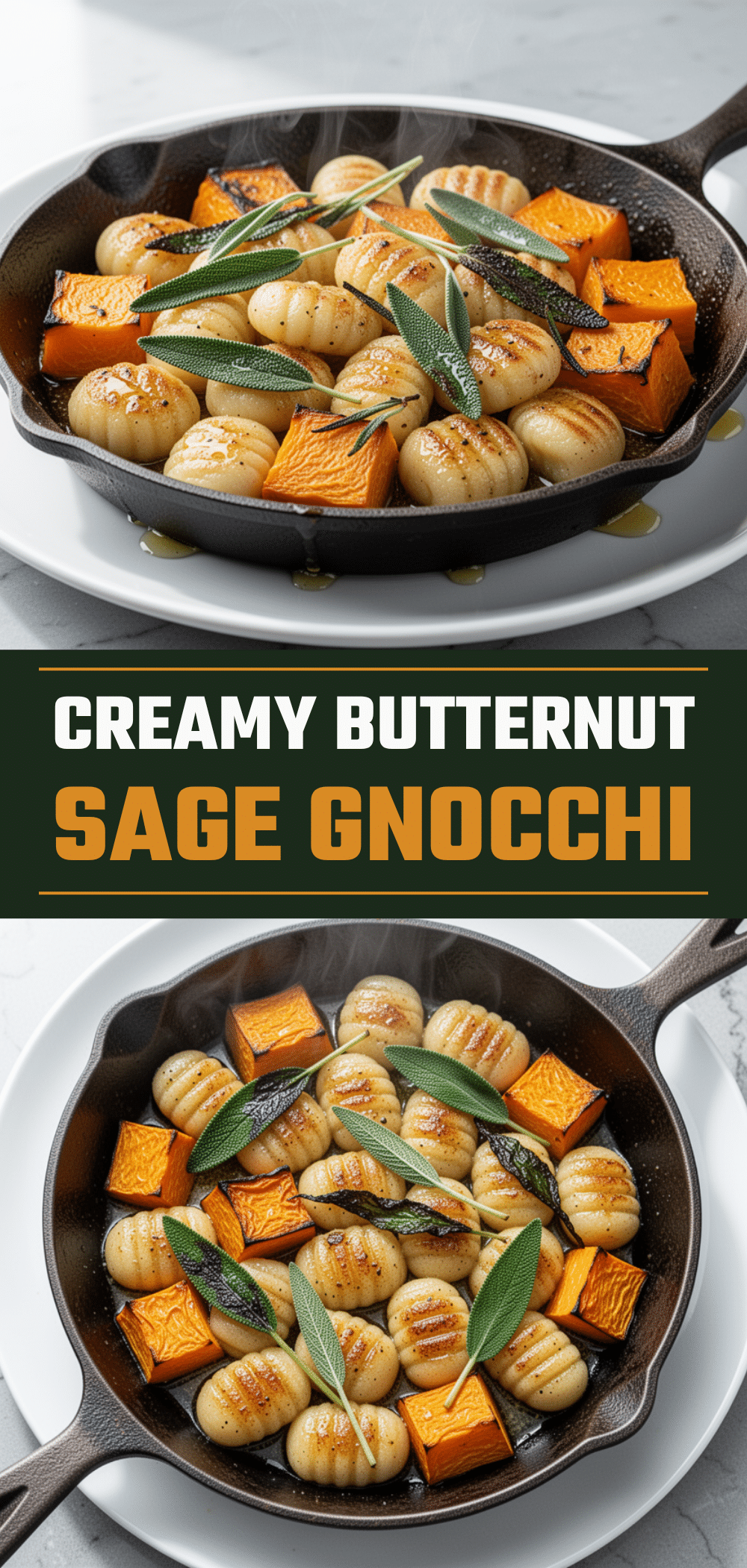
Butternut Squash Sage Gnocchi: 3-Ingredient Comfort Food
- Total Time: 30 minutes
- Yield: 4 servings 1x
Description
A simple, comforting weeknight dinner featuring pillowy homemade gnocchi made with roasted butternut squash, tossed in a nutty brown butter sauce with crispy sage and parmesan cheese.
Ingredients
- 2 pounds (900g) butternut squash, peeled and cubed
- 1 ½ to 2 cups (180-240g) all-purpose flour
- 1 large egg, beaten
- 1 teaspoon salt
- ½ cup (115g) unsalted butter
- 1 large handful (about 30 leaves) fresh sage leaves
- 2 cloves garlic, minced
- ½ cup (50g) freshly grated parmesan cheese
- ½ teaspoon red pepper flakes (optional)
- 1 tablespoon olive oil (for roasting squash)
- Salt and pepper (for roasting squash)
Instructions
- Preheat oven to 400°F (200°C). Peel and cube the butternut squash into 1-inch pieces. Toss with olive oil, salt, and pepper, then spread on a rimmed baking sheet.
- Roast the squash for 30-40 minutes until tender and caramelized. Let cool completely.
- Mash the cooled squash in a large bowl. Add the beaten egg and 1 teaspoon of salt, mixing well.
- Add 1 ½ cups of flour and mix until a soft, pliable dough forms. Add more flour if sticky, but do not overwork the dough.
- Divide dough into 4 pieces. Roll each into a ¾-inch thick snake and cut into 1-inch pieces. Optionally roll against a fork for ridges.
- Bring a large pot of salted water to a boil. Drop gnocchi in batches and cook until they float, then cook for 1-2 more minutes. Remove with a slotted spoon.
- While gnocchi boils, melt butter in a large skillet over medium heat until it turns golden brown and smells nutty (brown butter).
- Add sage leaves and minced garlic to the brown butter; cook for 1 minute until sage is crispy.
- Add boiled gnocchi to the skillet, tossing to coat. Add parmesan cheese and red pepper flakes, tossing until cheese melts.
- Serve immediately with extra parmesan and crispy sage.
Notes
Ensure the squash is completely cool before mixing into the dough to prevent the egg from cooking and making the dough gummy. Do not overwork the dough to keep the gnocchi pillowy. Brown butter burns easily, so watch it closely. You can freeze raw gnocchi on a baking sheet before transferring to a bag for later use.
- Prep Time: 20 minutes
- Cook Time: 10 minutes
- Category: Main Course
- Cuisine: Italian
Nutrition
- Serving Size: 1 serving
- Calories: 480
- Sugar: 8
- Sodium: 450
- Fat: 18
- Saturated Fat: 9
- Carbohydrates: 65
- Fiber: 5
- Protein: 12
Keywords: butternut squash, gnocchi, sage, brown butter, comfort food, vegetarian, easy dinner, weeknight meal, homemade pasta