Last October, I was standing in my kitchen at 6:45 PM, staring at a pile of unwashed dishes and a half-empty fridge. My husband had called to say he was running late, my kids were already arguing over who got the iPad, and I had absolutely zero inspiration for dinner. The usual routine of “chop veggies, sauté protein, hope for the best” felt impossible. I was too tired to think, too stressed to cook, and definitely too hungry to order takeout.
So, I did what any desperate home cook does: I opened the pantry, grabbed the bottle of maple syrup that had been sitting there since Thanksgiving last year, pulled out some Dijon mustard, and tossed in whatever chicken thighs were left in the freezer. I didn’t plan it. I didn’t measure anything precisely. I just threw everything onto a sheet pan and shoved it into the oven.
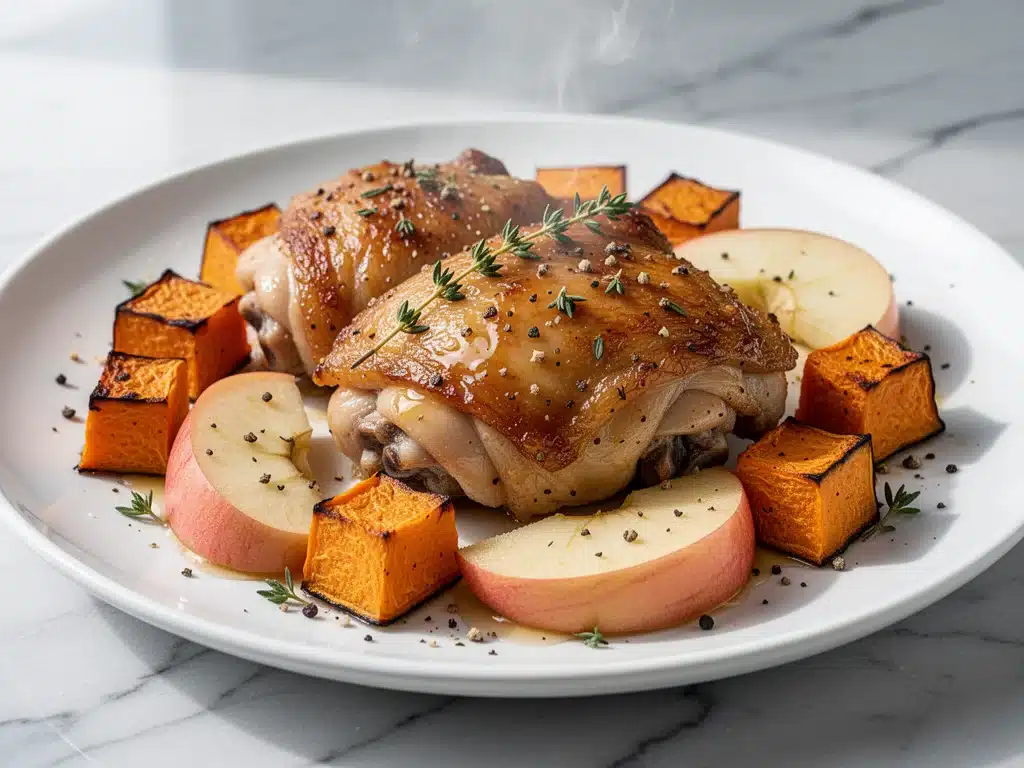
Twenty minutes later, the smell of caramelized onions, sweet maple, and savory mustard filled the house. It was the kind of smell that makes your stomach growl and your kids stop fighting. When I pulled the pan out, the chicken thighs were golden, sticky, and perfectly cooked. The sauce had reduced into this incredible glossy glaze that coated everything. My husband walked in, took one bite, and said, “This is the best thing you’ve made in months.” And honestly? He was right.
That accidental dinner became a Tuesday night staple. I’ve made these fall sheet pan maple Dijon chicken thighs at least twenty times since then. I’ve tweaked the ratios, tested different vegetables, and figured out exactly how to get that perfect balance of sweet and savory without burning the sugar. It’s my go-to when I’m exhausted, when the weather turns crisp, and when I need dinner to just work. No fancy techniques, no standing over the stove stirring for an hour. Just throw it on a pan, put the kids to bed, and let the oven do the heavy lifting.
If you’re looking for a dinner that tastes like a cozy autumn evening but takes less effort than making a sandwich, this is it. It’s sweet, it’s savory, it’s sticky, and it’s incredibly forgiving. Let me show you how to make it.
Why You’ll Love This Sheet Pan Chicken Recipe
There are about ten reasons I keep making this, but let’s be real—you don’t need more complicated recipes. You need dinner that works. Here’s why these maple Dijon chicken thighs have earned a permanent spot in my weekly rotation:
- Zero Active Prep — Seriously, if you can chop a potato and drizzle sauce, you can make this. I’ve made this while my toddler sat on the counter eating cheese cubes. It’s that simple.
- One Pan Cleanup — This is the biggest selling point. One baking sheet. One bowl for the sauce. That’s it. No pots to scrub, no pans to soak. My husband handles the dishes on these nights because I’m too busy relaxing, and he doesn’t even complain.
- Perfectly Juicy Chicken — Bone-in, skin-on thighs are the only way to go here. They don’t dry out in the oven like breasts can. They stay moist, tender, and flavorful, even if you leave them in for five extra minutes.
- Sweet and Savory Magic — The combination of maple syrup and Dijon mustard is chef-approved for a reason. The mustard cuts the sweetness, and the maple gives it that rich, caramelized finish. It’s addictive.
- Meal Prep Friendly — I make a double batch on Sundays. These reheat beautifully in the fridge for up to four days, and they actually taste great cold or reheated in the microwave. It’s my secret weapon for busy work weeks.
This is my answer to “what’s for dinner” when I have no energy. It’s comforting, it’s budget-friendly, and it makes my house smell amazing. Plus, it pairs perfectly with those crispy air fryer Brussels sprouts if you want to add some extra greens to your plate.
Ingredients You’ll Need
Here’s the best part: you probably have most of this already. This recipe relies on pantry staples and basic freezer items. I’m particular about three ingredients here, and I’ll tell you exactly why.
For the Chicken and Veggies
Chicken thighs (2 pounds / 900g) — Bone-in, skin-on. Do not use boneless. Boneless thighs cook too fast and lose their texture. Bone-in keeps the meat juicy and adds flavor to the pan juices. I buy a family pack and freeze them in portions.
Yellow onions (2 medium, chopped / about 300g) — I use chunks, not fine dice. You want them to caramelize in the oven, not turn to mush. Yellow onions are sweetest for roasting.
Red potatoes (1.5 pounds / 700g) — Cut into 1-inch cubes. Red potatoes hold their shape better than russets when roasted. You want them tender but not falling apart. Yukon Golds work too.
Broccoli florets (2 cups / 150g) — Or cauliflower if you prefer. I add these in the last 15 minutes so they get charred but don’t burn. If you want a lighter side, try a crisp cucumber tomato feta salad on the side for freshness.
For the Maple Dijon Glaze
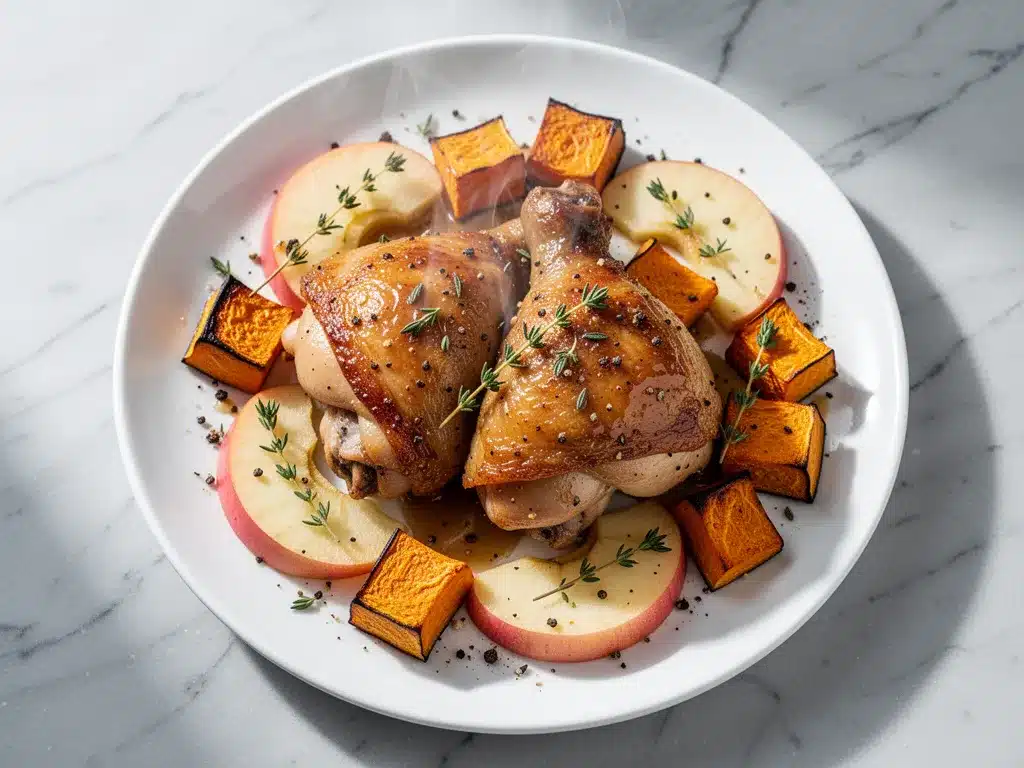
Maple syrup (¼ cup / 60ml) — Use real maple syrup, not pancake syrup. The fake stuff has corn syrup and weird flavors. I keep a bottle of Grade B maple syrup for cooking because it has a stronger, deeper flavor.
Dijon mustard (2 tablespoons / 30g) — Not the mild yellow stuff. Dijon has that sharp, tangy kick that balances the sweet maple. Grey Poupon or Maille are my favorites, but any good Dijon works.
Garlic (4 cloves, minced / about 2 tablespoons) — Fresh only. Minced garlic infuses the oil and creates that base flavor. I know it takes extra time, but it’s worth it. If you’re being lazy, you can use jarred, but fresh tastes way better.
Olive oil (3 tablespoons / 45ml) — Just a neutral oil or regular olive oil. You don’t need fancy extra virgin for roasting; it’s too expensive and can burn.
Apple cider vinegar (1 tablespoon / 15ml) — This is the secret ingredient. It adds acidity to cut through the richness of the chicken skin and maple. Don’t skip it. It brightens the whole dish.
Dried thyme (1 teaspoon) — Thyme pairs beautifully with maple and chicken. If you don’t have thyme, rosemary works, but thyme is more traditional for this flavor profile.
Salt and black pepper — Generous amounts. I use about 1 teaspoon of kosher salt and ½ teaspoon of pepper for the whole batch.
Optional Add-ins
Sweet potatoes — Swap half the red potatoes for cubed sweet potatoes. They get incredibly sweet and caramelized.
Apple slices — Toss in 1 cored apple, sliced thick. It sounds weird, but apples and maple are best friends. It adds a nice crunch.
Sausage — Add sliced kielbasa or chicken sausage. It makes the dish heartier and more like a stew.
Equipment Needed
You don’t need fancy equipment for this. Here’s what I actually use.
Large rimmed baking sheet — I use a half-sheet pan (18×13 inches). It needs to be large enough that the chicken and veggies aren’t overcrowded. If they’re piled on top of each other, they’ll steam instead of roast. I have a few old ones from college that still work fine.
Small mixing bowl — For whisking the sauce. Any bowl works.
Whisk — To emulsify the oil and mustard. A fork works in a pinch.
Sharp knife and cutting board — For chopping onions and potatoes. Dull knives make you cry more—learned this the hard way.
Measuring cups and spoons — Standard stuff. Dollar store versions work fine.
Parchment paper or silicone mat — I use parchment for easy cleanup. It prevents the maple syrup from sticking and burning to the pan. If you use a silicone mat, you don’t even need that.
How to Make It: Step-by-Step
Alright, let’s make this! I’m walking you through exactly how I do it, including the little tricks I’ve picked up over the last year.
Step 1: Prep Your Oven and Pan (5 minutes)
Preheat your oven to 400°F (200°C). Line your large baking sheet with parchment paper or a silicone mat. This is non-negotiable if you want easy cleanup. The maple syrup will bubble and caramelize, and it will be a nightmare to scrub off a bare pan.
Step 2: Chop Your Veggies (10 minutes)
While the oven heats, chop your onions into large chunks. Cube your potatoes into 1-inch pieces. If you’re adding broccoli, break it into florets. Keep the pieces uniform so they cook evenly. I don’t measure this part—I just eyeball it and make sure everything is roughly the same size.
Step 3: Make the Glaze (3 minutes)
In a small bowl, whisk together the olive oil, maple syrup, Dijon mustard, minced garlic, apple cider vinegar, dried thyme, salt, and pepper. Whisk until the mixture is smooth and slightly thickened. The oil and vinegar will want to separate, so give it a good stir right before you use it.
Step 4: Toss the Chicken and Veggies (5 minutes)
Place the chicken thighs and chopped veggies on the prepared baking sheet. Pour about three-quarters of the glaze over the chicken and veggies. Use your hands or tongs to toss everything together, making sure the chicken is well-coated. The skin should be golden and sticky. Save the remaining glaze for basting later.
Step 5: Roast the Chicken (20 minutes)
Place the pan in the preheated oven. Roast for 20 minutes. The chicken should start to brown, and the veggies should be tender. If you’re adding broccoli, toss it onto the pan now. It only needs 15 minutes to char without burning.
Step 6: Baste and Finish (10 minutes)
Remove the pan from the oven. Brush the chicken thighs with the remaining glaze. This gives that final sticky, glossy finish. Return to the oven and roast for another 10-15 minutes, or until the chicken reaches an internal temperature of 165°F (74°C) and the potatoes are fork-tender. The edges of the veggies should be crispy and browned.
Step 7: Rest and Serve (5 minutes)
Take the pan out of the oven and let the chicken rest for 5 minutes. This lets the juices redistribute so the meat stays moist. Sprinkle with fresh parsley or chopped chives if you have them. Serve immediately with the pan juices spooned over the top.
Total Time: About 45 minutes (15 minutes active, 30 minutes hands-off)
Expert Tips & Tricks
Here’s everything I’ve learned from making this dozens of times. These tips will save you from my mistakes.
- Don’t Crowding the Pan — This is the #1 mistake. If your pan is too full, the veggies steam instead of roast. Use two pans if you have to. There’s nothing worse than soggy, steamed potatoes when you’re looking for crispy.
- Use Real Maple Syrup — I’ve tried pancake syrup once, and it tasted like artificial sugar. Real maple syrup has a depth of flavor that makes the dish taste gourmet. It’s worth the extra dollar.
- Pat the Chicken Dry — Before adding the glaze, pat the chicken skin dry with a paper towel. Moisture prevents browning. You want crispy skin, not steamed skin.
- Check the Temperature — Chicken thighs are forgiving, but don’t overcook them. Use a meat thermometer. 165°F is the safe zone, but they’re actually best at 175°F because the connective tissue breaks down more. If you like tender, fall-off-the-bone chicken, go for 180°F.
- Save the Pan Juices — After you take the chicken out, scrape up the brown bits from the bottom of the pan. That’s flavor gold. Mix it with a splash of water or broth and pour it over the chicken at the table.
If you’re looking for other ways to use up chicken thighs, check out this high protein buffalo chicken bowl for a completely different flavor profile.
Variations & Substitutions
Once you’ve nailed the basic version, here’s how you can mix it up. I’ve tried all of these.
Spicy Maple Dijon
Add 1 teaspoon of cayenne pepper or red pepper flakes to the glaze. It adds a nice kick that balances the sweetness. My friend who loves heat always asks for this version.
Herb Garden
Skip the thyme and use fresh rosemary and sage. Chop them finely and mix into the glaze. It gives it a more rustic, herbal flavor that’s perfect for holiday dinners.
Veggie-Heavy
Double the veggies and halve the chicken. Add carrots, parsnips, or butternut squash. The maple glaze makes even the most bitter veggies taste sweet and delicious. This is my go-to for getting my kids to eat vegetables.
Gluten-Free
Make sure your Dijon mustard and maple syrup are certified gluten-free (most are, but check labels). Serve with rice or quinoa instead of potatoes. Everything else is naturally gluten-free.
Dairy-Free
This recipe is naturally dairy-free! Just make sure your chicken isn’t injected with a butter solution (check the label). Serve with a side of low carb cauliflower mac and cheese if you want something creamy.
Serving & Storage
How to Serve: I usually serve this straight from the baking sheet at the dinner table—it looks rustic and stays warm. But here are other ways I’ve enjoyed it:
- Sides: Mashed potatoes, roasted green beans, or a simple green salad with vinaigrette.
- Toppings: Fresh chopped parsley, cracked black pepper, or a drizzle of extra maple syrup if you like it sweeter.
- Wine Pairing: A crisp Pinot Grigio or a light-bodied Pinot Noir works great. The acidity cuts through the richness of the chicken.
Storage Instructions:
Refrigerator: Store leftovers in an airtight container for up to 4 days. The sauce will thicken in the fridge—totally normal.
Reheating: Best method: Add to a skillet with a splash of chicken broth or water over low heat. Stir until heated through. Microwave method: Heat in 30-second intervals, stirring between. Add a splash of water if it’s too thick.
Freezing: This doesn’t freeze well because the potatoes get mushy when thawed. Make it fresh or store in the fridge for up to 4 days.
Pro tip: If leftovers are drying out, stir in a tablespoon of butter and a splash of milk when reheating. Brings back that creamy texture.
Nutrition Information
I’m not a nutritionist, but here’s the breakdown if you’re tracking.
Per Serving (based on 4 servings):
- Calories: 520
- Protein: 35g
- Carbs: 45g
- Fiber: 4g
- Sugar: 18g
- Fat: 22g
- Saturated Fat: 5g
- Cholesterol: 110mg
- Sodium: 450mg
What’s Good: High protein, good fiber from the veggies, and complex carbs from the potatoes. The maple syrup adds natural sugar, but it’s balanced by the savory elements.
What to Know: Higher in calories from the chicken skin and maple syrup. Contains no dairy. Moderate sodium (use low-sodium broth if needed).
My Take: Look, this is comfort food. It’s not a diet recipe. But it’s way better than takeout, costs less, and I know exactly what’s in it. When I want to make it lighter, I use less maple syrup and more veggies. But usually? I just eat a reasonable portion and enjoy it.
Final Thoughts
So that’s my go-to fall sheet pan maple Dijon chicken thighs! I’ve probably talked your ear off at this point, but when you make a recipe this often, you have a lot to say about it.
This has saved weeknight dinners more times than I can count. It’s my answer to “what’s for dinner” when I’m tired, don’t want takeout, and still want something that tastes really good. My kids are happy, my husband’s happy, and I’m happy because I’m not stressed about cooking.
Make it yours! Try different add-ins, swap in your favorite vegetables, adjust the garlic (though more is always better in my opinion). The best recipes are the ones you adapt to your family’s tastes.
If you make this, drop a comment and let me know what you think! I love hearing how recipes turn out in your kitchen. And if something doesn’t work, tell me that too—I’m here to help troubleshoot.
Happy cooking! And I hope your kitchen smells half as good as mine does right now.
Frequently Asked Questions
Can I use chicken breasts instead of thighs?
You can, but the result will be different. Chicken breasts are leaner and can dry out in the oven. If you use breasts, reduce the cooking time by 5-10 minutes and check the temperature frequently. Aim for 165°F. I highly recommend sticking with thighs for this recipe because the fat content keeps them juicy with the sweet glaze.
Why did my sauce burn?
Maple syrup burns easily because of its sugar content. If your oven runs hot or you left the pan in too long, the edges can char. To prevent this, keep an eye on the last 10 minutes of cooking. If you see the edges browning too fast, cover the pan loosely with foil. Also, make sure you’re not using pure molasses or a syrup that’s too dark, as it burns faster.
Can I make this ahead for a dinner party?
Sort of. You can prep the veggies and mix the glaze up to 2 days ahead and store in the fridge. Assemble the pan right before you need to cook it. The chicken should be cooked fresh for the best texture. I do this all the time when I have guests—it saves me stress during the party.
Can I use honey instead of maple syrup?
You can, but the flavor will be different. Honey is sweeter and less complex than maple syrup. It will work, but you’ll lose that distinct “fall” flavor. If you use honey, reduce the amount slightly because it’s sweeter. I stick with maple for this specific recipe.
How do I reheat leftovers without it getting dry?
Add a splash of water or chicken broth to a skillet, add your leftover chicken and veggies, and heat gently over low heat, stirring frequently. The extra liquid brings back the saucy texture. Microwave sort of works but tends to dry it out. If you do microwave, definitely add a splash of water first and heat in short bursts, stirring between.
Can I double this recipe?
Absolutely! Double everything and use two baking sheets. Cook on separate racks in the oven, rotating them halfway through for even browning. The cooking times stay the same. I do this when I’m meal-prepping or feeding a crowd.
What sides go well with this?
I love serving this with classic French onion soup for a cozy meal, or some crusty bread to soak up the extra sauce. A simple green salad with a tangy vinaigrette also balances the sweetness perfectly.
Pin This Recipe!
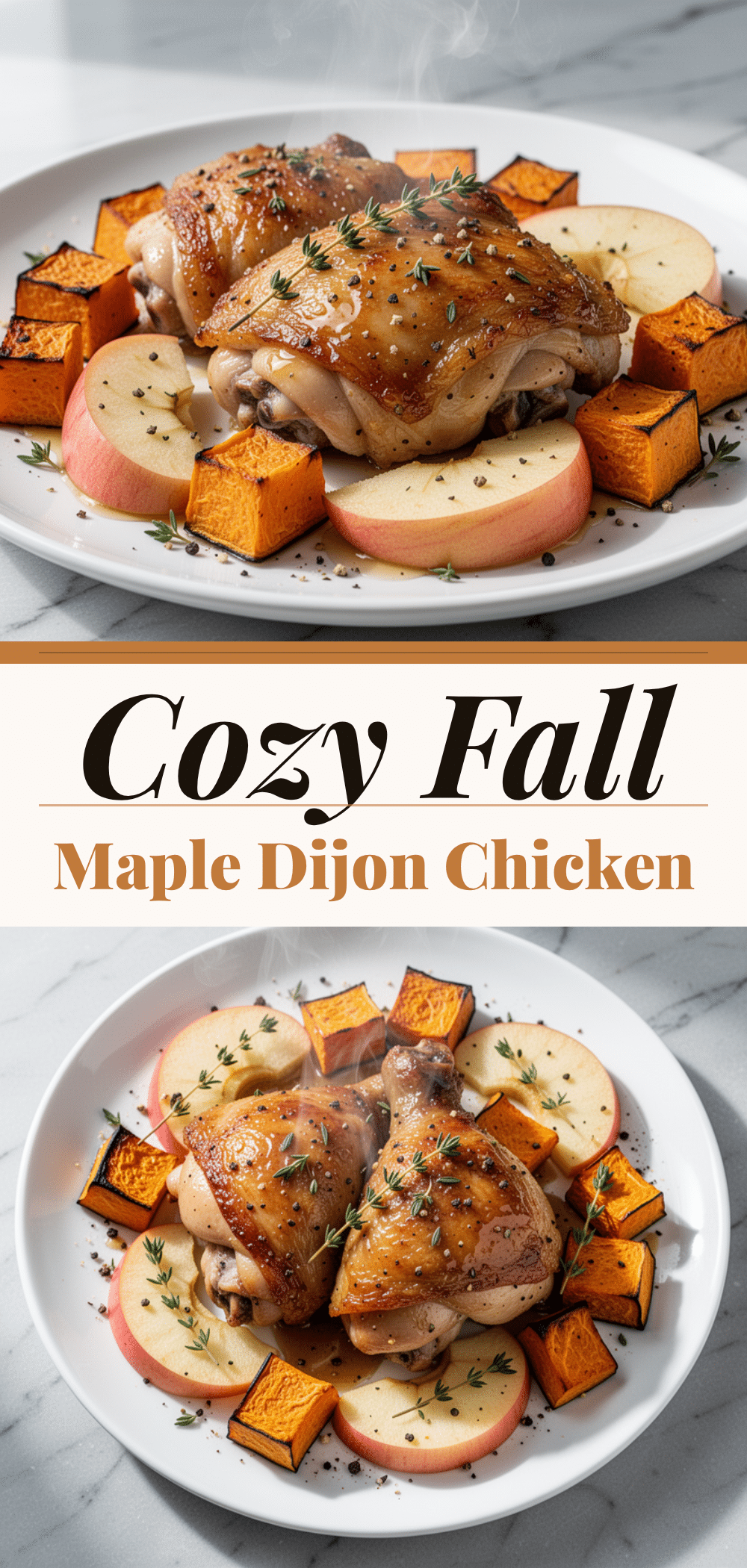
Fall Sheet Pan Maple Dijon Chicken Thighs
- Total Time: 45 minutes
- Yield: 4 servings 1x
Description
An easy, forgiving weeknight dinner featuring bone-in, skin-on chicken thighs roasted with potatoes and broccoli on a single sheet pan, coated in a sweet and savory maple Dijon glaze.
Ingredients
- 2 pounds bone-in, skin-on chicken thighs
- 2 medium yellow onions, chopped into large chunks
- 1.5 pounds red potatoes, cut into 1-inch cubes
- 2 cups broccoli florets
- 1/4 cup real maple syrup
- 2 tablespoons Dijon mustard
- 4 cloves garlic, minced
- 3 tablespoons olive oil
- 1 tablespoon apple cider vinegar
- 1 teaspoon dried thyme
- 1 teaspoon kosher salt
- 1/2 teaspoon black pepper
- Fresh parsley or chives for garnish (optional)
Instructions
- Preheat oven to 400°F (200°C). Line a large rimmed baking sheet with parchment paper or a silicone mat.
- Chop onions into large chunks and cube potatoes into 1-inch pieces. Break broccoli into florets if using.
- In a small bowl, whisk together olive oil, maple syrup, Dijon mustard, minced garlic, apple cider vinegar, dried thyme, salt, and pepper until smooth.
- Place chicken thighs and chopped veggies on the prepared baking sheet. Pour about three-quarters of the glaze over the chicken and veggies. Toss to coat, ensuring the chicken skin is sticky. Reserve the remaining glaze.
- Roast in the preheated oven for 20 minutes.
- Remove pan from oven. Add broccoli florets to the pan if not added earlier. Brush chicken thighs with the remaining reserved glaze.
- Return to oven and roast for another 10-15 minutes, or until chicken reaches an internal temperature of 165°F (74°C) and potatoes are fork-tender.
- Remove from oven and let chicken rest for 5 minutes before serving. Spoon pan juices over the top and garnish with fresh herbs if desired.
Notes
Do not crowd the pan; use two pans if necessary to ensure veggies roast rather than steam. Pat chicken skin dry before adding glaze for crispier results. Real maple syrup is recommended over pancake syrup for better flavor. Chicken thighs are best cooked to 175°F-180°F for fall-off-the-bone tenderness, though 165°F is the safety minimum. Leftovers can be stored in the fridge for up to 4 days but do not freeze well due to potato texture.
- Prep Time: 15 minutes
- Cook Time: 30 minutes
- Category: Main Course
- Cuisine: American
Nutrition
- Serving Size: 1 chicken thigh with
- Calories: 520
- Sugar: 18
- Sodium: 450
- Fat: 22
- Saturated Fat: 5
- Carbohydrates: 45
- Fiber: 4
- Protein: 35
Keywords: sheet pan dinner, maple Dijon chicken, weeknight dinner, easy chicken recipe, fall recipes, one pan meal, bone-in chicken thighs