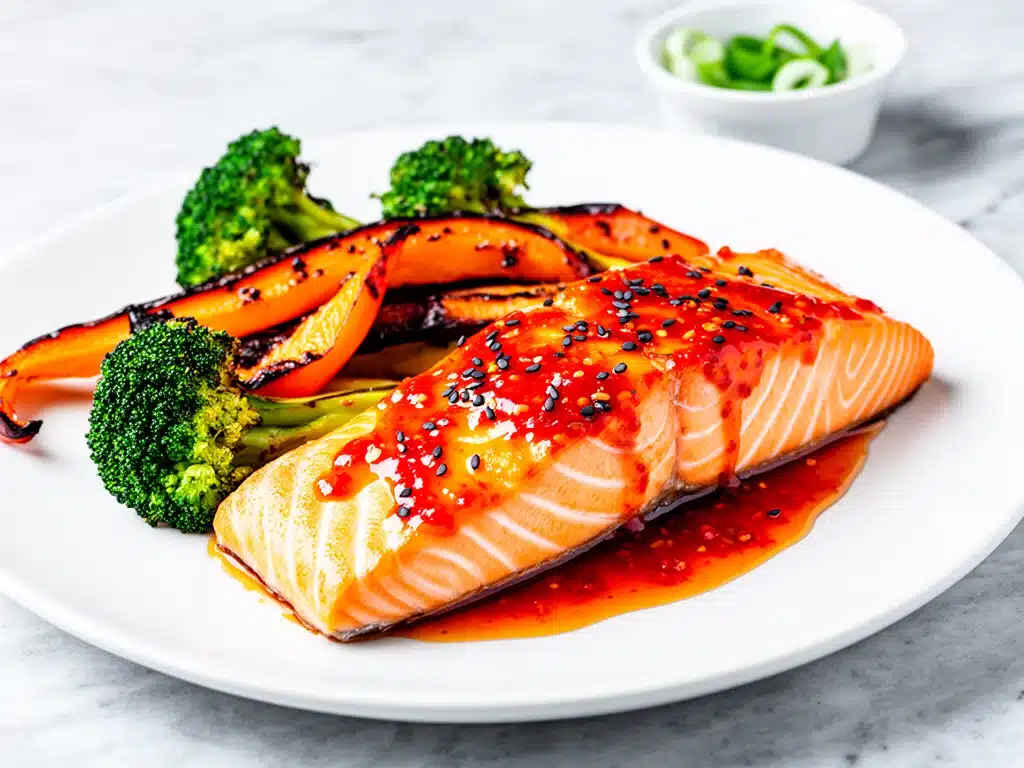
I have a confession to make: I used to be terrified of gochujang. Not because it’s spicy—though it definitely has a kick—but because it’s one of those ingredients that sits in the back of your pantry, gathering dust, while you reach for the ketchup every single time. I bought my first jar three years ago, convinced I’d finally be the person who makes “authentic” Korean food. For two years, it sat there. Then, last Tuesday, I came home from work exhausted, stared into a fridge that was 90% empty except for two salmon fillets and a bottle of honey, and decided to throw the gochujang jar into the trash. But then I stopped. I looked at it. I remembered how good that glaze smelled when I’d tasted it on a friend’s bulgogi years ago.
I whisked it together with honey, soy sauce, and a splash of sesame oil, threw it on the salmon, and added some broccoli. Fifteen minutes later, my kitchen smelled like a high-end Korean restaurant, and my kids—who usually pick the skin off their fish—asked for seconds. That was the moment the jar stopped collecting dust. Now, this gochujang honey glazed salmon for sheet pan dinners is my absolute lifeline during the busy work week. It’s sweet, it’s savory, it’s got that perfect bit of heat, and it requires almost zero cleanup. I’ve made this at least a dozen times since that Tuesday, tweaking the spice level and the veggies, and I can confidently say this is the easiest, most flavorful dinner I’ve discovered in years.
If you’re looking for a way to get dinner on the table without turning your kitchen into a war zone, you need to try this. It’s not just about the speed—though 15 minutes is hard to beat—it’s about the flavor profile. The gochujang brings this deep, fermented umami that regular hot sauce just can’t touch. Paired with the sticky sweetness of honey, it creates a glaze that caramelizes beautifully in the oven. And because it’s a sheet pan dinner, you’re not standing over a stove stirring something. You’re setting the timer, drinking a glass of wine, and actually relaxing. Let’s get into why this specific combination works so well and how you can make it happen tonight.
Why You’ll Love This Recipe
There are a few reasons I keep coming back to this gochujang honey glazed salmon for sheet pan dinners, but they all boil down to one thing: it just works. Every time. Here’s the real deal on why this recipe deserves a permanent spot in your weekly rotation.
- Actual 15-Minute Magic — Seriously, if you can chop vegetables and whisk a sauce, you can make this. I timed it. From pulling the salmon out of the fridge to putting the plate in the dishwasher, it’s 15 minutes. That’s less time than it takes to order and wait for takeout. I make this on nights when I’m mentally checked out from work and just need food that appears.
- One Pan, Zero Stress — The sheet pan method is my holy grail for weeknight cooking. You roast the salmon and veggies together, and the flavors mingle without mushing everything into a paste. Plus, cleanup is literally just throwing the pan in the dishwasher or wiping it down. No scrubbing pots, no washing three different bowls. My husband handles the cleanup sometimes now, which is a huge win in our house.
- Flavor That Packs a Punch — This isn’t bland diet food. The gochujang provides a complex, spicy-sweet heat that is addictive. The honey balances it out so it’s not just “hot,” but “deliciously hot.” Even my picky eaters, who usually stick to plain chicken nuggets, ask for this salmon. It’s become our family’s “special occasion” weeknight meal.
- Super Flexible with Veggies — This recipe is a sponge for whatever is in your crisper drawer. Broccoli? Yes. Asparagus? Perfect. Snap peas? Go for it. Bell peppers? Absolutely. I don’t measure the veggies; I just eyeball it and toss them in. It’s forgiving in a way that most fish recipes aren’t.
- Healthy Without Feeling Like It — Salmon is packed with omega-3s and protein. The veggies add fiber. It’s a nutritionally complete meal that doesn’t taste like you’re on a diet. It tastes like a treat. I love that I’m feeding my family something good for them without having to explain why they have to eat their greens.
This recipe has completely changed our Tuesday nights. It’s reliable, it’s fast, and it makes everyone happy. No complicated techniques, no weird ingredients you have to hunt down at a specialty store (gochujang is in almost every supermarket now), just reliable, delicious food.
Ingredients You’ll Need
Here’s the best part: you probably have most of this already. The gochujang might be the one item you need to grab, but honestly, once you buy it, you’ll use it for everything from stir-fries to marinades. Here’s exactly what you need to make this gochujang honey glazed salmon for sheet pan dinners, along with my honest thoughts on each ingredient.
For the Glaze
Gochujang (2 tablespoons / 30g) — This is the star. It’s a Korean fermented chili paste. Look for it in the Asian aisle of your local grocery store. If you can’t find it, I’ve tried mixing sriracha with a little soy sauce and brown sugar, but it’s not the same. Go the extra mile and get the real thing. It makes a huge difference.
Honey (3 tablespoons / 45ml) — This balances the heat and helps the glaze caramelize. I use regular honey, but if you have maple syrup, that works too for a slightly less sweet, more earthy flavor. Don’t use artificial sweeteners; they don’t caramelize the same way.
Soy Sauce (2 tablespoons / 30ml) — Adds salt and umami. I use low-sodium soy sauce because I want to control the saltiness, but regular works fine. If you’re avoiding gluten, use tamari.
Sesame Oil (1 teaspoon / 5ml) — Just a little goes a long way. It adds that nutty aroma that screams “Korean food.” Toasted sesame oil is best. If you don’t have it, skip it, but don’t substitute with olive oil; it won’t be right.
Garlic (2 cloves, minced / 1 tablespoon) — Fresh garlic only. No jarred stuff here. It’s strong enough to stand up to the gochujang. If you’re lazy, you can use garlic powder, but fresh tastes way better.
Fresh Ginger (1 teaspoon, grated / 5g) — Adds brightness and cuts through the richness of the salmon. I keep a knob of ginger in the fridge. If you don’t have fresh, use ½ teaspoon of ground ginger, but fresh is preferred.
Rice Vinegar (1 teaspoon / 5ml) — A splash of acid to brighten the whole sauce. If you don’t have rice vinegar, white wine vinegar or even a tiny bit of lemon juice works.
For the Sheet Pan
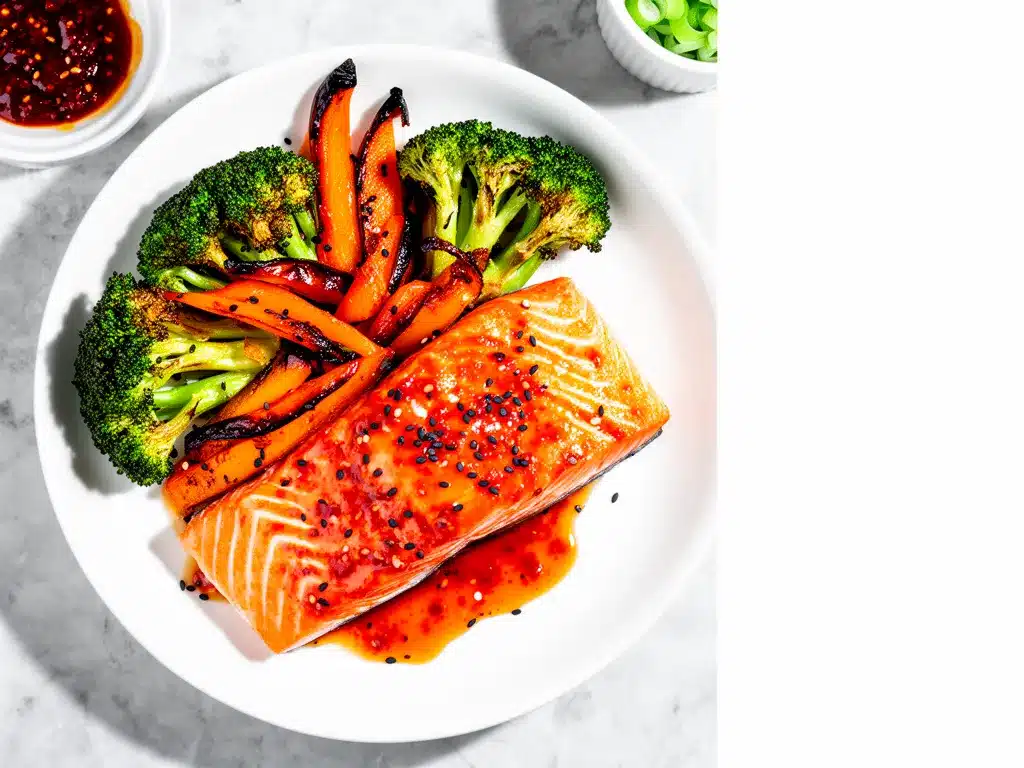
Salmon Fillets (1.5 pounds / 700g) — Look for wild-caught if you can afford it, but farmed is fine too. The key is that they’re roughly the same thickness so they cook evenly. I usually buy a 1.5-pound family pack. Skin-on or skin-off is your choice; I leave the skin on because it protects the fish from drying out.
Broccoli Florets (2 cups / 150g) — I use broccoli because it holds up well in the oven and gets slightly crispy edges. You can chop it into bite-sized pieces. Don’t make them too small or they’ll burn.
Red Bell Pepper (1 large, sliced / 150g) — Adds sweetness and color. Red peppers are sweeter than green ones, which pairs well with the honey. Slice them into strips about half an inch wide.
Green Onions (2 stalks, chopped) — For garnish. This adds a fresh, oniony crunch at the end. If you don’t have green onions, regular red onion works, but green onions look prettier and taste milder.
Sesame Seeds (1 tablespoon / 5g) — Toasted sesame seeds for garnish. They add a nice texture and visual appeal. You can buy them pre-toasted or toast them yourself in a dry pan for 2 minutes.
Optional Add-ins
Carrots (1 medium, sliced) — If you have kids, carrots are a safe bet. Slice them thinly so they cook as fast as the salmon.
Mushrooms (1 cup, sliced) — Cremini or button mushrooms add a meaty texture. They soak up the glaze beautifully.
Personal Tip: I always keep a jar of gochujang in my pantry now. It’s like a secret weapon. And for the salmon, I buy it fresh on Wednesdays or Sundays so it’s not sitting in the fridge for five days. Fresh fish makes a massive difference in taste.
Equipment Needed
You don’t need fancy equipment for this. Here’s what I actually use in my everyday kitchen.
- Large Sheet Pan — I use a standard 18×13 inch baking sheet. Line it with parchment paper for easy cleanup, or use a silicone baking mat. I prefer parchment because it prevents sticking, especially with the sticky honey glaze.
- Small Mixing Bowl — For whisking the sauce. Any small bowl works.
- Fork or Whisk — To mix the glaze. A fork works fine if you’re in a rush.
- Pastry Brush or Spoon — To brush the glaze onto the salmon. I use a silicone brush because it’s easy to clean.
- Knife and Cutting Board — For chopping the veggies. Sharp knife makes this faster and safer.
- Measuring Spoons — For the sauce ingredients. Accuracy matters here for the balance of sweet and spicy.
Tool Tip: Don’t skimp on the parchment paper. The honey will bubble and stick if you don’t use it, and you’ll be scraping your pan for 20 minutes. It’s worth the 10 seconds to tear off a sheet.
How to Make It: Step-by-Step
Alright, let’s make this! I’m walking you through exactly how I do it, including the little tricks I’ve picked up over time. This is going to be so easy you’ll wonder why you ever stressed about dinner.
Step 1: Prep Your Oven and Pan (2 minutes)
Preheat your oven to 400°F (200°C). This is a high heat that cooks the salmon quickly without drying it out, and it gets the veggies nice and tender. While the oven heats, line your sheet pan with parchment paper. Lightly spray the parchment with cooking spray or drizzle a little oil on it. This prevents the glaze from sticking.
Step 2: Make the Glaze (3 minutes)
In a small bowl, whisk together the gochujang, honey, soy sauce, sesame oil, minced garlic, grated ginger, and rice vinegar. Whisk until it’s smooth and combined. It should look like a thick, reddish-brown paste. Taste it—it should be spicy, sweet, and savory. If you want it sweeter, add a bit more honey. If you want it spicier, add a pinch of red pepper flakes. This is your base flavor, so get it right.
Step 3: Prep the Veggies and Salmon (3 minutes)
Chop your broccoli into florets and slice your bell pepper into strips. Toss them in a bowl with a little olive oil, salt, and pepper. Spread them out on one side of the prepared sheet pan. Pat the salmon fillets dry with paper towels. This is important—dry salmon gets a better sear and doesn’t steam. Place the salmon fillets on the other side of the pan. If they’re very thick, you can score the top lightly with a knife to help the glaze penetrate.
Step 4: Glaze and Roast (10 minutes)
Brush half of the glaze generously over the top of the salmon fillets. Don’t worry about the veggies; they’ll pick up flavor from the drippings. Put the sheet pan in the preheated oven. Roast for 10-12 minutes. The salmon is done when it flakes easily with a fork and is opaque throughout. The veggies should be tender and slightly charred at the edges. Keep an eye on it after 8 minutes—oven temperatures vary, and you don’t want to overcook the fish.
Step 5: Finish and Garnish (2 minutes)
Remove the pan from the oven. Brush the remaining glaze over the salmon while it’s still hot. This adds a fresh, sticky layer of flavor. Sprinkle with chopped green onions and toasted sesame seeds. Serve immediately while the salmon is hot and the veggies are crisp-tender.
Total Time: About 15 minutes (5 minutes prep, 10 minutes cook).
Troubleshooting: If the salmon is still translucent in the middle, give it another 2-3 minutes. If the veggies are burning but the salmon isn’t done, tent the pan with foil for the last few minutes. If the glaze is too thick, add a teaspoon of water to thin it out before brushing.
Expert Tips & Tricks
Here’s everything I’ve learned from making this dozens of times. These tips will save you from my mistakes.
- Don’t Overcook the Salmon — This is the #1 mistake. Salmon continues to cook slightly after you take it out of the oven. Pull it when it’s just barely opaque in the thickest part. It will finish cooking on the plate. Overcooked salmon is dry and rubbery, and no amount of glaze can fix that.
- Use Fresh Ginger — I know it’s a pain to grate, but fresh ginger has a bright, zesty flavor that powder just can’t match. It cuts through the richness of the fish. If you’re truly short on time, use ½ teaspoon of ginger powder, but fresh is worth the effort.
- Pat the Salmon Dry — Wet salmon steams instead of roasting. If the surface is wet, the glaze won’t stick well, and the fish won’t get that nice caramelized edge. Use paper towels to dry it thoroughly before adding the glaze.
- Adjust the Spice Level — Gochujang varies in heat depending on the brand. If you’re sensitive to spice, start with 1 tablespoon and add more to taste. If you love heat, use 3 tablespoons. You can also add a pinch of red pepper flakes for extra kick.
- Toast Your Sesame Seeds — Raw sesame seeds are fine, but toasted sesame seeds have a nutty, aromatic flavor that elevates the dish. Just pop them in a dry pan over medium heat for 2-3 minutes, shaking constantly, until they’re golden. It takes 2 minutes and makes a huge difference.
Pro Trick: If you have leftover glaze, don’t throw it out! It’s amazing as a dipping sauce for the veggies or as a dressing for a grain bowl with rice or quinoa. Save it in a small container in the fridge for up to 3 days.
Variations & Substitutions
Once you’ve nailed the basic version, here’s how you can mix it up. I’ve tried all of these, and they all work great.
- Shrimp Version — Swap the salmon for large shrimp. Shrimp cooks much faster, so reduce the roasting time to 6-8 minutes. The glaze is perfect for shrimp too. I make this version when I want something lighter.
- Chicken Thighs — You can use boneless, skinless chicken thighs. They take a bit longer to cook, so roast for 12-15 minutes. The gochujang glaze is classic with chicken, so this is a great alternative if you don’t eat fish.
- Vegetarian Bowl — Skip the salmon and roast extra veggies like cauliflower, sweet potatoes, and edamame. Serve over rice with a fried egg on top. The glaze ties it all together beautifully.
- Spicy Peanut Variation — Add 1 tablespoon of peanut butter to the glaze. It adds creaminess and richness, making it more like a satay sauce. This is a fun twist if you want a different flavor profile.
- Gluten-Free — Simply use tamari instead of soy sauce. Everything else is naturally gluten-free. I use this version when I’m cooking for gluten-sensitive friends.
- Dairy-Free — This recipe is already dairy-free, so no changes needed. It’s a great option for dairy-free diets.
Dietary Modifications: This recipe is naturally gluten-free if you use tamari. It’s also dairy-free and can be made paleo by swapping the honey for maple syrup and using coconut aminos instead of soy sauce. I love that it’s so adaptable.
Serving & Storage
This gochujang honey glazed salmon for sheet pan dinners is best served immediately, but here’s how to handle leftovers and pairings.
How to Serve
I usually serve this straight from the sheet pan to the table—it looks rustic and keeps warm. But here are other ways I’ve enjoyed it:
- Over Rice — Serve the salmon and veggies over steamed white rice, jasmine rice, or brown rice. The glaze makes an amazing sauce for the rice.
- In a Bowl — Layer rice, veggies, and salmon in a bowl for a grain bowl. Add some pickled vegetables for extra crunch.
- With Noodles — Toss the leftovers with soba noodles or rice noodles for a quick lunch the next day.
Side Dishes
- Cucumber Salad — A simple Asian-style cucumber salad with vinegar and sesame oil pairs perfectly with the rich salmon.
- Steamed Bok Choy — For a lighter green vegetable option.
- Edamame — Sprinkled with sea salt for a quick snack or side.
Storage Instructions
Refrigerator: Store leftovers in an airtight container for up to 3 days. The salmon will absorb more glaze, so it might taste even better the next day.
Reheating: Reheat in the microwave for 1-2 minutes, or in a skillet over low heat with a splash of water to keep it moist. Avoid the oven, as it can dry out the fish.
Freezing: I don’t recommend freezing this dish. The texture of the salmon changes when frozen and reheated, becoming mushy. It’s best eaten fresh.
Pro Tip
If you’re meal prepping, roast the veggies and make the glaze ahead of time. Cook the salmon fresh each night. This ensures the best texture and flavor.
Nutrition Information
I’m not a nutritionist, but here’s the breakdown if you’re tracking. This is per serving (based on 4 servings).
| Nutrient | Amount |
|---|---|
| Calories | 320 |
| Protein | 25g |
| Carbs | 18g |
| Fiber | 3g |
| Sugar | 12g |
| Fat | 14g |
| Saturated Fat | 2g |
| Cholesterol | 65mg |
| Sodium | 450mg |
What’s Good: High in protein and omega-3s. The veggies add fiber and vitamins. It’s a balanced meal.
What to Know: The sugar content comes from the honey, but it’s natural sugar. The sodium is moderate, mostly from the soy sauce. Use low-sodium soy sauce to reduce salt.
My Take: This is a healthy, satisfying meal. It’s not a diet food, but it’s nutritious and delicious. I love that I can get a good serving of protein and veggies in one pan.
Final Thoughts
So that’s my go-to gochujang honey glazed salmon for sheet pan dinners! I’ve probably talked your ear off at this point, but when you make a recipe this often, you have a lot to say about it. This has saved weeknight dinners more times than I can count. It’s my answer to “what’s for dinner” when I’m tired, don’t want takeout, and still want something that tastes really good. My kids are happy, my husband’s happy, and I’m happy because I’m not stressed about cooking.
Make it yours! Try different veggies, adjust the spice level, or swap the protein. The best recipes are the ones you adapt to your family’s tastes. If you make this, drop a comment and let me know what you think! I love hearing how recipes turn out in your kitchen. And if something doesn’t work, tell me that too—I’m here to help troubleshoot.
Happy cooking! And I hope your kitchen smells half as good as mine does right now.
Frequently Asked Questions
Can I use a different fish?
Absolutely! This glaze works well with cod, tilapia, or trout. Just adjust the cooking time based on the thickness of the fish. Thinner fillets will cook faster, so check them early. Salmon is my favorite because it’s fatty and stays moist, but any firm white fish works.
What is gochujang? Is it very spicy?
Gochujang is a Korean fermented chili paste. It’s spicy, but also sweet and savory. It’s not as hot as pure chili powder or sriracha. It has a deep, complex flavor. If you’re sensitive to spice, start with a smaller amount and add more to taste. Most people find it moderately spicy with a lot of depth.
Can I make this ahead of time?
You can prep the veggies and make the glaze ahead of time, but it’s best to cook the salmon fresh. If you leave the raw salmon in the glaze for too long, the acid in the vinegar can start to “cook” the fish (like ceviche), which changes the texture. So, mix the glaze and chop veggies up to 24 hours ahead, but combine and cook right before dinner.
Why did my salmon turn out dry?
Overcooking is the main culprit. Salmon cooks very quickly. Start checking it at 8 minutes. It’s done when it flakes easily with a fork and is opaque. If it’s still translucent in the middle, give it another minute or two. Also, make sure your oven is preheated properly. An oven that’s too cool will dry out the fish before it cooks through.
Can I use honey substitutes?
Yes, you can use maple syrup or agave nectar. They have similar sweetness and viscosity. Maple syrup will add a slightly different flavor, but it works well. Avoid artificial sweeteners, as they don’t caramelize the same way and can taste bitter.
How do I store leftovers?
Store leftovers in an airtight container in the fridge for up to 3 days. Reheat gently in the microwave or a skillet with a splash of water. The salmon will absorb more glaze, so it might taste even better the next day. Don’t freeze it, as the texture will suffer.
Pin This Recipe!
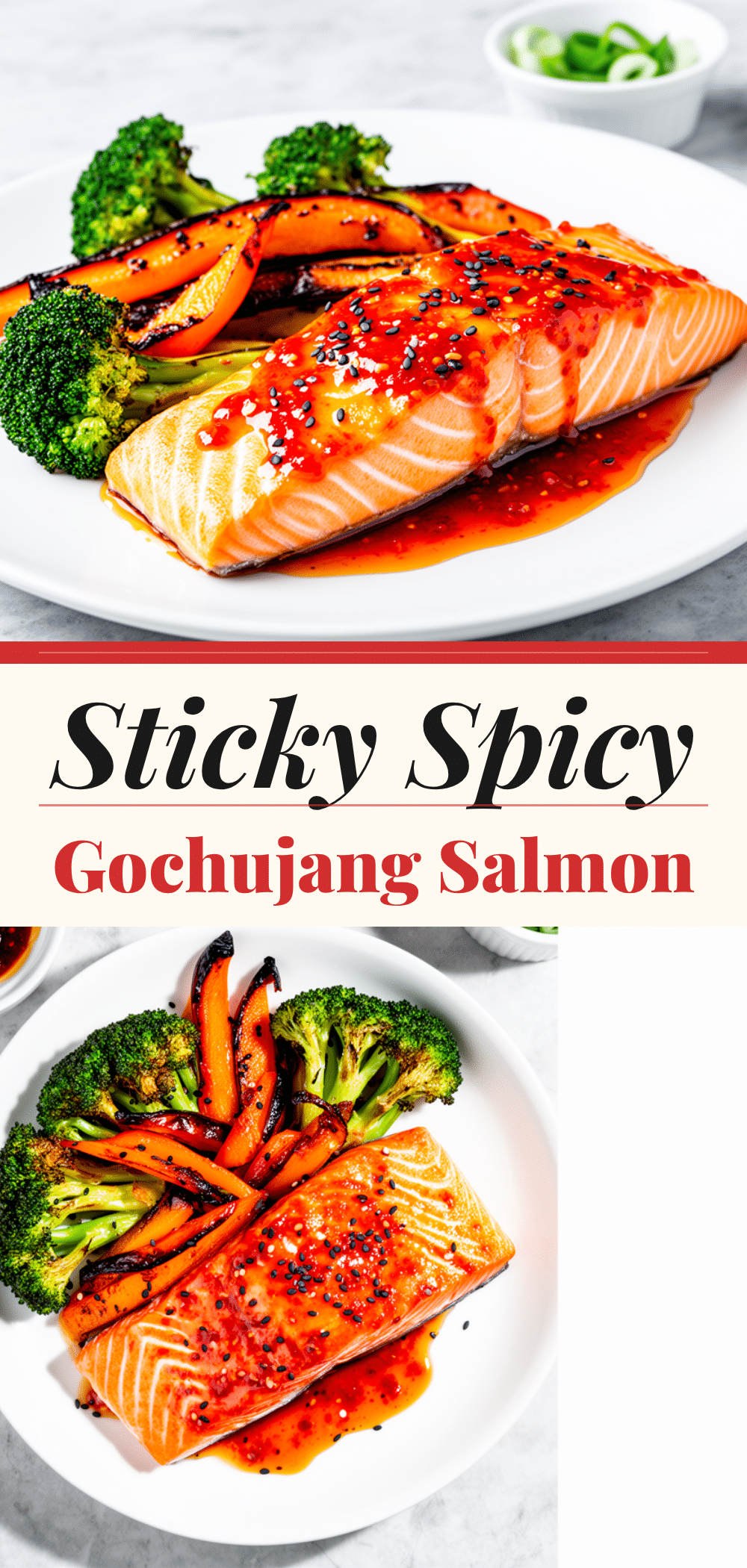
Gochujang Honey Glazed Salmon: 15-Minute Sheet Pan Dinner
- Total Time: 15 minutes
- Yield: 4 servings 1x
Description
A quick and flavorful weeknight dinner featuring salmon and vegetables roasted on a single sheet pan with a sweet, savory, and spicy gochujang honey glaze.
Ingredients
- 2 tablespoons gochujang
- 3 tablespoons honey
- 2 tablespoons soy sauce (or tamari for gluten-free)
- 1 teaspoon sesame oil
- 2 cloves garlic, minced
- 1 teaspoon fresh ginger, grated
- 1 teaspoon rice vinegar
- 1.5 pounds salmon fillets
- 2 cups broccoli florets
- 1 large red bell pepper, sliced
- 2 stalks green onions, chopped
- 1 tablespoon toasted sesame seeds
- Olive oil, salt, and pepper for veggies
- Parchment paper for sheet pan
Instructions
- Preheat oven to 400°F (200°C). Line a large sheet pan with parchment paper and lightly spray with cooking spray.
- In a small bowl, whisk together gochujang, honey, soy sauce, sesame oil, garlic, ginger, and rice vinegar until smooth.
- Chop broccoli and slice bell pepper. Toss with olive oil, salt, and pepper, then spread on one side of the prepared sheet pan.
- Pat salmon fillets dry with paper towels and place on the other side of the pan.
- Brush half of the glaze generously over the salmon fillets.
- Roast for 10-12 minutes, or until salmon flakes easily with a fork and veggies are tender.
- Remove from oven and brush remaining glaze over the hot salmon.
- Garnish with chopped green onions and toasted sesame seeds. Serve immediately.
Notes
Pat the salmon dry before glazing to ensure proper caramelization. Adjust spice level by varying the amount of gochujang. Do not freeze leftovers as the texture of the salmon will become mushy. Can be served over rice or in a grain bowl.
- Prep Time: 5 minutes
- Cook Time: 10 minutes
- Category: Main Course
- Cuisine: Korean
Nutrition
- Serving Size: 1 fillet with vegeta
- Calories: 320
- Sugar: 12
- Sodium: 450
- Fat: 14
- Saturated Fat: 2
- Carbohydrates: 18
- Fiber: 3
- Protein: 25
Keywords: gochujang, salmon, sheet pan dinner, quick dinner, healthy salmon, korean food, weeknight meals, honey glazed salmon


