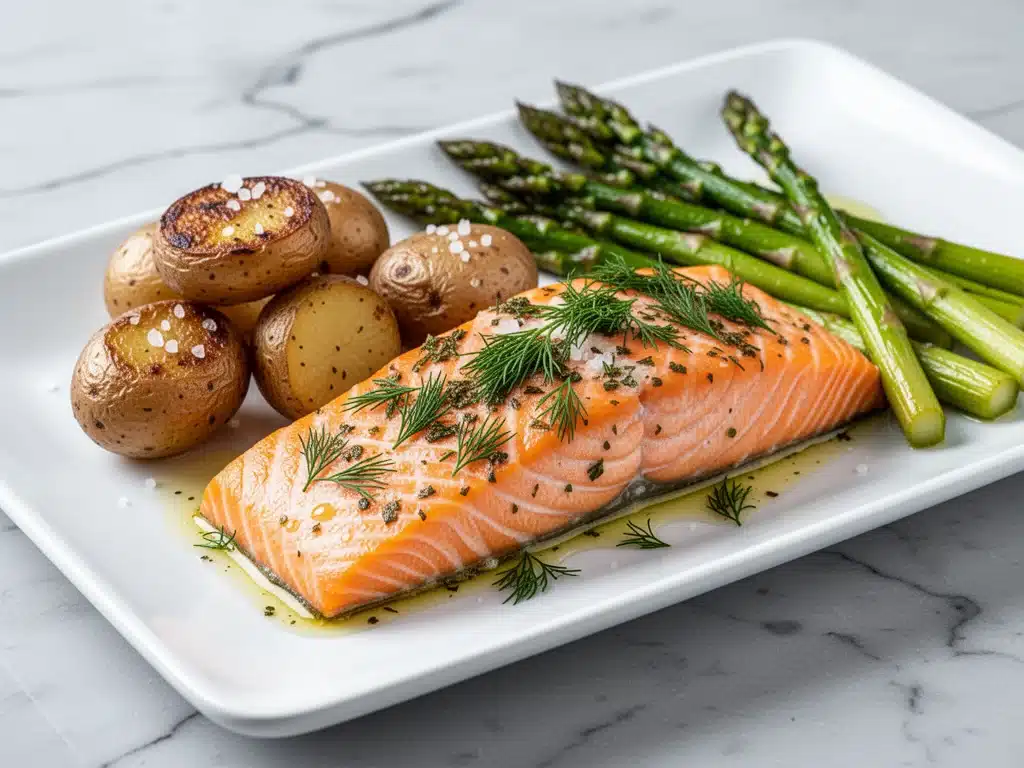
It was 6:15 PM on a Tuesday, and I was standing in my kitchen staring at the clock like it owed me money. The kids were arguing over who got the blue cup. The dog was whining because his bowl was technically empty (it wasn’t). And I had absolutely no idea what to cook. We had done the grocery run on Sunday, but somehow, the fridge looked like a crime scene of half-used ingredients and forgotten leftovers.
Usually, this is the moment where I cave. I’d be pulling out my phone to order takeout from that Thai place down the street or heating up some frozen pizza while apologizing to my family for my lack of culinary creativity. But that night, I remembered I had a couple of salmon fillets in the freezer and a bunch of asparagus that was starting to get a little limp.
I threw them on a sheet pan, slathered them in lemon and herbs, and shoved them into the oven. Thirty-five minutes later, the kitchen smelled like a fancy restaurant, not a stressed-out mom’s kitchen. The kids ate every bite. Even the pickiest one asked for seconds. And the best part? I didn’t have to wash a single pot or pan afterwards.
That was the night Sheet Pan Lemon Herb Salmon with Roasted Asparagus went from a “maybe” to a permanent fixture in our weekly rotation. It’s the ultimate cheat code for busy weeknights. You get a healthy, omega-rich protein, a side of roasted veggies, and zero cleanup stress. I’ve made this salmon recipe at least thirty times since that chaotic Tuesday, tweaking the herbs and lemon amounts until it was perfect. It’s tender, flaky, and packed with bright, fresh flavor that feels indulgent but takes almost no effort.
If you’re tired of the nightly “what’s for dinner” panic, you need this recipe in your life. It’s fast, it’s nutritious, and it tastes like you actually planned ahead (even though you didn’t).
Why You’ll Love This Sheet Pan Dinner
There are about a dozen reasons I keep coming back to this lemon herb salmon, but let’s be real—you don’t need all of them. You just need to know it works. Here’s the breakdown of why this meal is a total game-changer:
- Zero Active Fuss — Seriously, if you can squeeze a lemon and sprinkle salt, you can make this. The prep time is maybe 10 minutes. The rest is just waiting in the oven. I’ve made this while helping my kids with homework because I wasn’t standing over the stove.
- One Pan Wonder — This is the holy grail of weeknight cooking. You roast the salmon and asparagus on the same tray. Yes, the flavors mingle a little, but it’s a good thing. The salmon juices drip onto the asparagus, making the veggies taste incredible. And cleanup? Literally just toss the pan in the dishwasher or wipe it out.
- Ready in 30 Minutes — From preheat to plate, it takes less than half an hour. This is crucial for those nights when you get home late, hungry, and ready to eat. It’s faster than waiting for a delivery driver, and way cheaper than takeout.
- Healthy Without Being Boring — I know what you’re thinking: “Salmon and asparagus? Sounds like diet food.” But this isn’t sad, boiled fish. This is glazed, zesty, herb-crusted salmon that’s juicy and flavorful. The lemon cuts through the richness of the fish, and the asparagus gets slightly crispy and caramelized. It feels like a treat.
- Flexible and Forgiving — Don’t have asparagus? Swap it for broccoli or green beans. Out of fresh lemon? Use a splash of white wine vinegar. This recipe is sturdy. It won’t fail you even if you’re winging it.
- Great for Meal Prep — While it’s best fresh, the leftovers actually hold up well in the fridge for two days. I’ll sometimes make a double batch on Sunday to have quick lunches during the week, especially when paired with a crisp cucumber tomato feta salad for a complete, light meal.
This is my go-to when I need dinner to just work. No complicated techniques, no weird ingredients you have to hunt for, just reliable, delicious food that makes everyone happy.
Ingredients You’ll Need
Here’s the best part: you probably have most of this already. This recipe relies on fresh, simple ingredients that don’t require a special trip to the store. I’m particular about a few things here, so pay attention to the notes.
For the Salmon
Salmon Fillets (1.5 to 2 pounds / 680-900g) — This is the star. Look for fillets that are roughly the same thickness so they cook evenly. Wild-caught is great, but farmed works too if it’s sustainable. Ask your fishmonger to trim any large bones. I usually buy 4-6 fillets, depending on how hungry everyone is.
Extra Virgin Olive Oil (3 tablespoons / 45ml) — Use good quality here. It’s going to be a main flavor component. Don’t use the cheap stuff that tastes like cardboard. I keep a bottle of decent olive oil on my counter specifically for finishing dishes like this.
Fresh Lemon (2 medium lemons) — You need both the juice and the zest. The zest gives you that bright, aromatic punch that bottled lemon juice just can’t match. Squeeze the juice for the marinade and slice the other lemon for garnish later.
Garlic (4 cloves, minced / about 2 tablespoons) — Fresh only. No jarred garlic in this recipe. The heat of the oven will mellow the raw bite, but you want that fresh garlic flavor. If you’re in a rush, you can use a garlic press, but mincing it finely ensures you don’t get huge chunks of burnt garlic.
Dried Oregano (1 teaspoon) — Or dried thyme. Both work beautifully with lemon. I prefer oregano for a slightly more robust flavor, but thyme is more subtle. Fresh herbs work too, but add them at the end so they don’t burn.
Dried Parsley (1 teaspoon) — This is mostly for color and a fresh, grassy note. If you don’t have dried parsley, skip it. It’s not critical for flavor.
Red Pepper Flakes (½ teaspoon) — Optional, but I recommend it. It adds a tiny kick that balances the richness of the salmon. If you’re serving kids who hate spice, leave it out or use just a pinch.
Salt and Black Pepper — Kosher salt is my go-to because it’s easier to control. Freshly cracked black pepper adds a nice heat. Season the salmon generously.
For the Asparagus
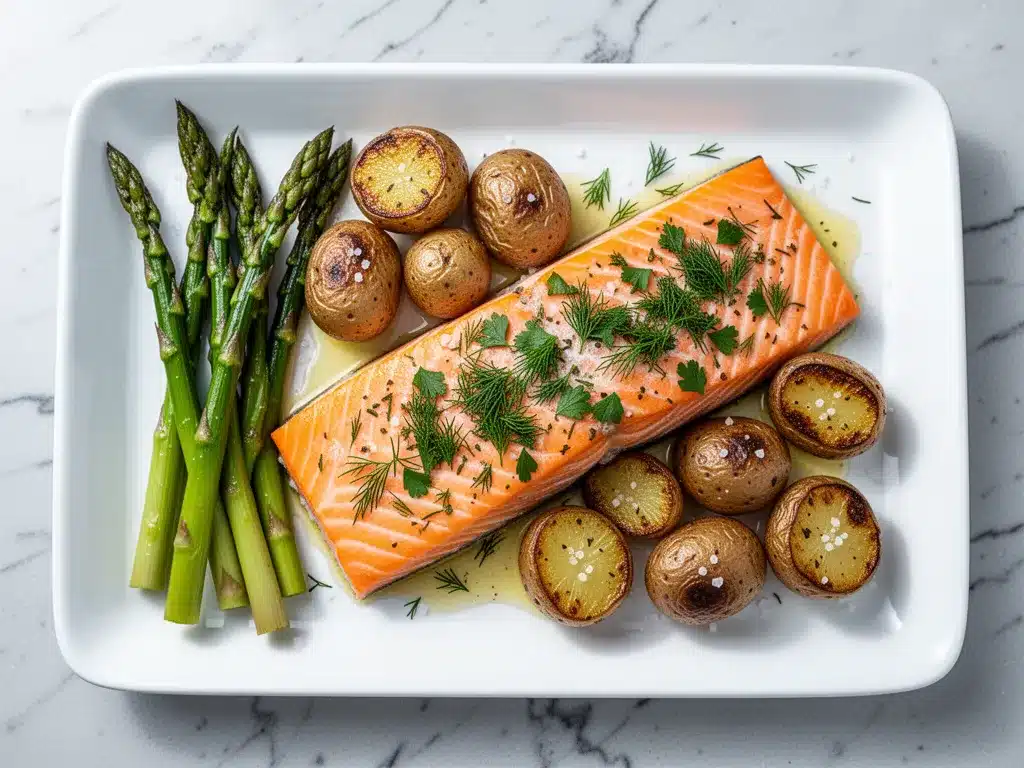
Fresh Asparagus (1 large bunch / about 1 pound / 450g) — Look for spears that are firm and have tight tips. Avoid any that are limp or woody at the bottom. The thickness matters—medium spears work best. If you get super thick spears, they might take longer to cook than the salmon.
Butter (2 tablespoons / 30g) — Melted. Butter adds a rich, savory depth that olive oil alone doesn’t provide. It helps the herbs stick to the asparagus and gives the veggies a nice sheen.
Lemon Zest (from one lemon) — Throw some on the asparagus too. It ties the whole dish together.
Optional Add-ins
Cherry Tomatoes (1 cup, halved) — I love throwing these in. They burst in the oven and add a sweet, acidic contrast. They cook in about the same time as the asparagus, so they fit right in.
Shallots (2 medium, sliced) — For a bit of oniony sweetness. Slice them thinly so they caramelize nicely.
Equipment Needed
You don’t need fancy equipment for this. Here’s what I actually use.
Large Sheet Pan — I use a standard half-sheet pan (13×18 inches). It needs to be big enough to hold the salmon and asparagus in a single layer. If they’re crowded, they’ll steam instead of roast, and you won’t get that nice texture. I use a heavy-duty aluminum pan because it conducts heat well.
Parchment Paper or Silicone Mat — I line my pan with parchment paper. It makes cleanup instant. Just crumple it up and toss it. If you hate waste, a silicone mat works great too, but it can be tricky to get the herbs to stick without oiling it first.
Small Bowl — For mixing the olive oil, lemon juice, and herbs. I keep a few small bowls on hand for mise en place.
Zester or Microplane — For getting that fine lemon zest. A regular grater works, but a microplane gives you the finest zest without the bitter white pith. I’m obsessed with my microplane—it’s like $3 and makes life easier.
Sharp Knife — For trimming the asparagus and slicing shallots. Dull knives make you cry more—learned this the hard way.
Pastry Brush — Optional, but helpful for brushing the oil and butter mixture over the asparagus evenly. I just use a spoon if I’m being lazy.
How to Make It: Step-by-Step
Alright, let’s make this! I’m walking you through exactly how I do it, including the little tricks I’ve picked up over the years.
Step 1: Prep Your Oven and Pan (5 minutes)
Preheat your oven to 400°F (200°C). This temperature is key. It’s hot enough to cook the salmon quickly and keep it moist, but not so hot that the herbs burn. Line your sheet pan with parchment paper. Lightly grease it with a little olive oil or cooking spray so nothing sticks.
Step 2: Prep the Asparagus (5 minutes)
Wash the asparagus and pat it dry. Moisture is the enemy of roasting. Trim the woody ends. Here’s the trick: hold one spear and bend it near the bottom. It will naturally snap at the point where the tough part meets the tender part. Use that spear as a guide to trim the rest. It’s way more accurate than guessing with a knife.
In a small bowl, melt the butter. Stir in half of the lemon zest, a pinch of salt, and pepper. Toss the asparagus in the butter mixture until evenly coated. Spread them out on one side of the sheet pan in a single layer. If they’re overlapping, they’ll get soggy.
Step 3: Season the Salmon (5 minutes)
Pat the salmon fillets dry with paper towels. This sounds minor, but drying the surface helps the seasoning stick and promotes better browning. In another small bowl, whisk together the olive oil, the juice of one lemon, the minced garlic, dried oregano, dried parsley, red pepper flakes, salt, and pepper.
Place the salmon on the other side of the sheet pan. Brush the mixture generously over the top of each fillet. You can also rub it into the sides. Don’t be shy with the seasoning—salmon is a rich fish that can handle bold flavors.
Step 4: Roast (15-20 minutes)
Put the pan in the preheated oven. Roast for 12-15 minutes if your fillets are thin (about 1 inch thick), or 15-20 minutes if they’re thicker. The salmon is done when it flakes easily with a fork and is opaque throughout. The asparagus should be tender-crisp and slightly browned at the tips.
Pro Tip: Check the salmon at the 12-minute mark. Ovens vary. You want it moist, not dry. If the asparagus is cooking faster than the salmon (rare, but happens with thin spears), you can move the salmon to a higher rack.
Step 5: Rest and Serve (2 minutes)
Remove the pan from the oven. Let the salmon rest for 2-3 minutes. This allows the juices to redistribute. If you cut into it immediately, all the moisture will run out, and you’ll end up with dry fish.
While it rests, squeeze a little fresh lemon juice over everything. Garnish with fresh parsley or extra lemon slices. Serve immediately.
Expert Tips & Tricks
Here’s everything I’ve learned from making this dozens of times. These tips will save you from my mistakes.
Don’t Overcook the Salmon — This is the #1 mistake. Salmon continues to cook even after you take it out of the oven. Pull it when it looks just barely done in the center. It will finish cooking on the plate. Overcooked salmon is dry and rubbery, and nobody wants that.
Use a Meat Thermometer — If you’re unsure, use an instant-read thermometer. You want the internal temperature to reach 125°F (52°C) for medium-rare, or 135°F (57°C) for medium. If you prefer well-done, go up to 145°F (63°C), but it might be a bit drier. I aim for 130°F.
Pat the Fish Dry — I know I said this, but I’ll say it again. Wet salmon doesn’t sear or roast well. It steams. Use paper towels to get it as dry as possible before seasoning.
Room Temperature Ingredients — If your salmon is freezing cold from the fridge, it will cook unevenly. Let it sit on the counter for 10-15 minutes before cooking. This helps it cook more evenly.
Toast the Spices — For an extra flavor boost, you can lightly toast the oregano and red pepper flakes in a dry pan for 30 seconds before mixing them with the oil. It releases their essential oils. It’s a fancy trick, but it makes a difference.
Common Mistakes
- Mistake: Asparagus is mushy. Fix: You roasted it too long or crowded the pan. Make sure there’s space between the spears.
- Mistake: Salmon is dry. Fix: Overcooked. Next time, pull it 2 minutes earlier.
- Mistake: Herbs are burnt. Fix: Your oven was too hot, or the herbs were too close to the heating element. Keep an eye on it.
Variations & Substitutions
Once you’ve nailed the basic version, here’s how you can mix it up. I’ve tried all of these.
Dijon Crusted Salmon — Instead of the herb-oil mixture, brush the salmon with Dijon mustard and press some panko breadcrumbs on top. It adds a nice crunch. This pairs well with the asparagus.
Asian-Inspired — Swap the olive oil for sesame oil. Use soy sauce, ginger, and garlic instead of lemon and oregano. Sprinkle with sesame seeds and green onions after roasting. It’s a totally different vibe but just as easy.
Mediterranean Style — Add kalamata olives and cherry tomatoes to the pan. Use fresh dill and mint instead of oregano. Serve with a side of mediterranean ground beef gyro bowl components if you want to stretch the meal.
Garlic Butter Lover’s — Double the butter in the asparagus mixture. Add extra minced garlic. It’s rich, decadent, and irresistible.
Veggie Swap — No asparagus? Use broccoli florets, green beans, or even zucchini slices. They all roast beautifully on the same pan. Just adjust cooking time slightly—zucchini cooks faster than asparagus.
Gluten-Free & Dairy-Free — This recipe is naturally gluten-free. For dairy-free, swap the butter for olive oil or coconut oil. Everything else is naturally dairy-free.
Serving & Storage
How to Serve: I usually serve this straight from the pan at the dinner table—it looks rustic and stays warm. But here are other ways I’ve enjoyed it:
Side Dishes: This meal is pretty complete on its own, but if you want more carbs, serve it with homemade sourdough bread for dipping in the lemony juices. A simple green salad with vinaigrette is also perfect. Or, if you’re feeling hearty, add some roasted potatoes to the pan (they take longer, so add them 15 minutes before the salmon).
Wine Pairing: Not a wine expert, but my wine-snob friend says a crisp Sauvignon Blanc or a Pinot Grigio works great with the lemon. If you prefer red, a light Pinot Noir won’t overpower the fish.
Storage Instructions:
Refrigerator: Store leftovers in an airtight container for up to 3 days. The salmon will keep well, and the asparagus is still tasty cold or reheated.
Reheating: Best method: Reheat in a 350°F oven for 10 minutes, or until warm. This keeps the texture better than the microwave. Microwave method: Heat in 30-second intervals. Be careful not to overheat, or the salmon will get rubbery.
Freezing: I don’t recommend freezing this. The asparagus gets mushy when thawed, and the salmon can lose its texture. It’s best made fresh.
Nutrition Information
I’m not a nutritionist, but here’s the breakdown if you’re tracking. This is a high-protein, low-carb meal that’s packed with healthy fats.
Per Serving (based on 4 servings):
- Calories: 380
- Protein: 34g
- Carbs: 8g
- Fiber: 3g
- Fat: 24g
- Saturated Fat: 6g
- Cholesterol: 85mg
- Sodium: 320mg
What’s Good: High in omega-3 fatty acids from the salmon, which are great for heart and brain health. Good source of protein. Low in carbs, making it keto-friendly.
What to Know: The calorie count depends on the size of the fillets and how much oil/butter you use. If you’re watching sodium, use low-sodium broth or skip added salt until the end.
My Take: Look, this is healthy food. It’s not diet food, but it’s nutritious and satisfying. When I want to make it lighter, I use less butter and more lemon juice. But usually? I just enjoy the richness and know I’m feeding my family good stuff.
Final Thoughts
So that’s my go-to sheet pan lemon herb salmon! I’ve probably talked your ear off at this point, but when you make a recipe this often, you have a lot to say about it.
This has saved weeknight dinners more times than I can count. It’s my answer to “what’s for dinner” when I’m tired, don’t want takeout, and still want something that tastes really good. My kids are happy, my husband’s happy, and I’m happy because I’m not stressed about cooking.
Make it yours! Try different herbs, swap in your favorite vegetables, adjust the lemon. The best recipes are the ones you adapt to your family’s tastes. If you make this, drop a comment and let me know what you think! I love hearing how recipes turn out in your kitchen.
Happy cooking! And I hope your kitchen smells half as good as mine does right now.
Frequently Asked Questions
Can I use frozen salmon?
A: You can, but it’s tricky. Thaw it completely in the fridge overnight and pat it very dry. Frozen salmon releases more water, so you might need to roast it a few minutes longer. Fresh is always better for this recipe, but frozen works in a pinch.
Why did my salmon turn out dry?
A: It was probably overcooked. Salmon cooks quickly, and it’s easy to leave it in too long. Check it at 12 minutes. It should flake easily but still look slightly translucent in the very center. It will finish cooking on the plate.
Can I cook this at a different temperature?
A: 400°F is the sweet spot. If you go lower (350°F), it will take longer and might dry out. If you go higher (425°F), the herbs might burn before the fish is cooked. Stick to 400°F for best results.
How do I know when the asparagus is done?
A: It should be tender but still have a slight crunch (al dente). The tips should be slightly browned and crispy. If they’re limp and green, they need more time. If they’re dark brown and shriveled, they’re overdone.
Can I add potatoes to the sheet pan?
A: Yes! But potatoes take longer to cook. Cut them into small cubes (1/2 inch) and toss them in oil. Roast them for 15 minutes first, then add the salmon and asparagus for the final 15 minutes. This ensures everything finishes at the same time.
What’s the best way to trim asparagus?
A: The bend test. Hold one spear and bend it. It snaps at the perfect spot. Use that as a guide for the rest. It’s foolproof and ensures you don’t waste any edible parts.
Can I make this ahead of time?
A: You can prep the ingredients and store them in the fridge for up to 4 hours before cooking. Season the salmon and toss the asparagus in oil, cover, and refrigerate. When you’re ready, just pop them in the oven. Don’t leave the seasoned salmon out on the counter for too long.
Pin This Recipe!
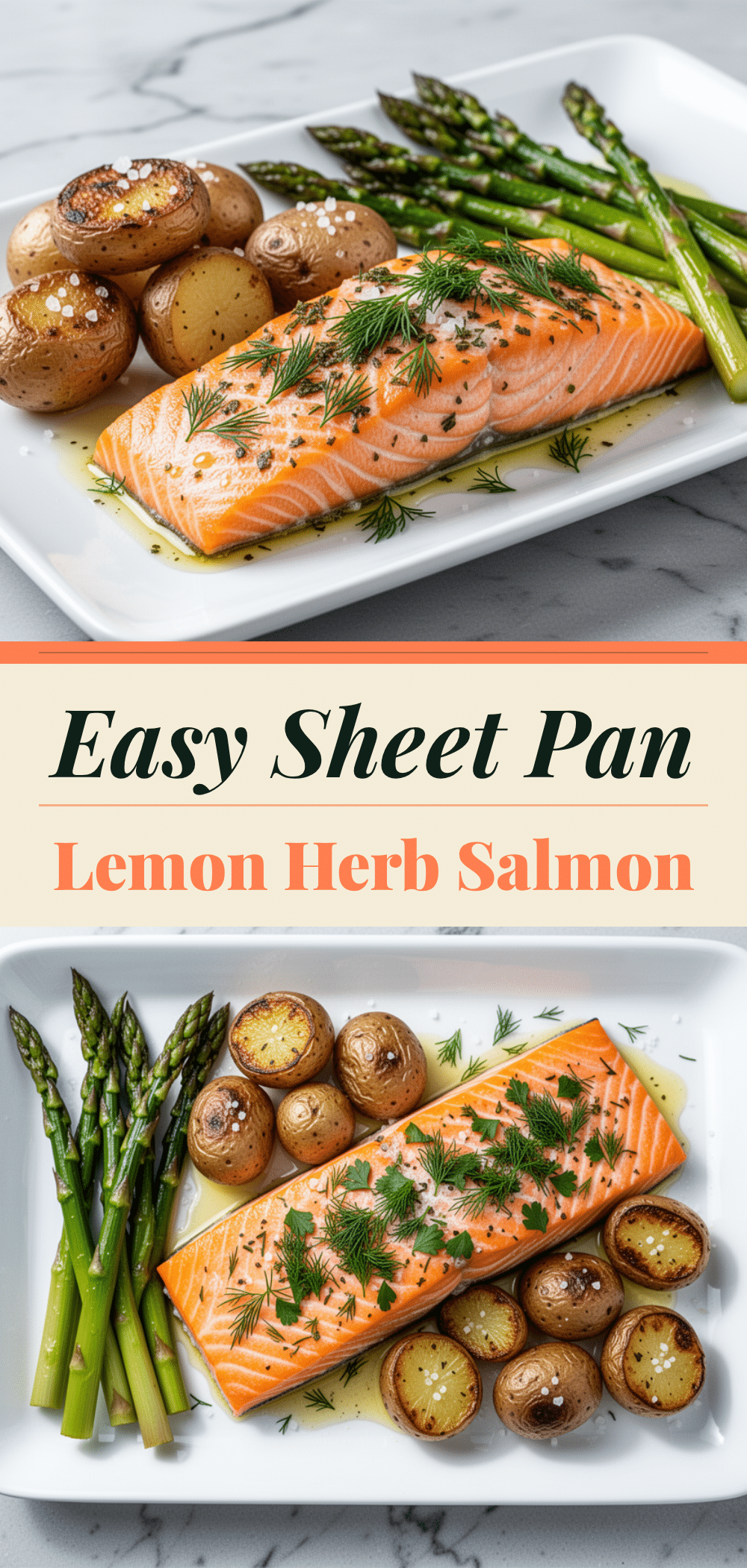
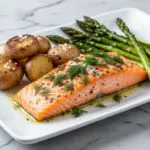
Sheet Pan Lemon Herb Salmon with Roasted Asparagus
- Total Time: 35 minutes
- Yield: 4 servings 1x
Description
A quick and healthy weeknight dinner featuring tender, flaky salmon fillets and roasted asparagus seasoned with lemon, herbs, and garlic, all cooked on a single sheet pan for easy cleanup.
Ingredients
- 1.5 to 2 pounds salmon fillets
- 3 tablespoons extra virgin olive oil
- 2 medium lemons (juice and zest)
- 4 cloves garlic, minced
- 1 teaspoon dried oregano
- 1 teaspoon dried parsley
- 1/2 teaspoon red pepper flakes (optional)
- Salt and black pepper to taste
- 1 large bunch fresh asparagus (about 1 pound)
- 2 tablespoons butter, melted
- 1 cup cherry tomatoes, halved (optional)
- 2 medium shallots, sliced (optional)
Instructions
- Preheat oven to 400°F (200°C). Line a large sheet pan with parchment paper and lightly grease.
- Wash and pat dry the asparagus. Trim the woody ends by bending a spear to find the snap point. Toss asparagus with melted butter, half the lemon zest, salt, and pepper. Spread on one side of the sheet pan.
- Pat salmon fillets dry. In a small bowl, whisk together olive oil, juice of one lemon, minced garlic, oregano, parsley, red pepper flakes, salt, and pepper.
- Place salmon on the other side of the sheet pan. Brush the lemon-herb mixture generously over the fillets.
- Roast for 12-15 minutes for thin fillets or 15-20 minutes for thicker fillets, until salmon flakes easily and asparagus is tender-crisp.
- Remove from oven and let salmon rest for 2-3 minutes. Squeeze fresh lemon juice over everything and garnish with parsley or lemon slices before serving.
Notes
Pat the salmon dry before seasoning to ensure better browning. Do not overcrowd the pan to allow proper roasting. Salmon continues to cook after removal from the oven, so pull it when it looks just barely done. For dairy-free, substitute butter with olive oil.
- Prep Time: 15 minutes
- Cook Time: 20 minutes
- Category: Main Course
- Cuisine: American
Nutrition
- Serving Size: 1 salmon fillet and
- Calories: 380
- Sugar: 2
- Sodium: 320
- Fat: 24
- Saturated Fat: 6
- Carbohydrates: 8
- Fiber: 3
- Protein: 34
Keywords: sheet pan dinner, lemon herb salmon, roasted asparagus, healthy weeknight meals, easy seafood, gluten-free dinner, omega-3 rich