
There is a specific kind of magic that happens when the air turns crisp and the leaves start dropping. It’s that time of year when my kitchen transforms into the warmest, most comforting room in the house. Last November, I was dealing with a particularly brutal cold snap. The kind where the wind howls and you just want to stay under three blankets all day. I didn’t feel like cooking anything complicated. I didn’t want to chop a dozen different vegetables or stand over a hot stove for hours. So, I grabbed a butternut squash, some onions, a little bit of cream, and just let it simmer.
Twenty minutes later, the entire house smelled like a fall bakery. My partner walked in, took one deep breath, and literally sighed with relief. That bowl of soup didn’t just warm us up; it reset our entire evening. It was creamy, slightly sweet, perfectly spiced, and required zero stress. That’s the beauty of this butternut squash soup. It’s not just a recipe; it’s a hug in a bowl. And the best part? It’s stupidly simple. If you can roast a vegetable and blend it, you can make restaurant-quality soup at home.
I’ve made this easy fall recipe at least fifteen times since that first blustery night. I’ve tweaked the spice levels, tried different roasting methods, and even tested it with my picky-eater niece (who asked for seconds). Every single time, it comes out silky, rich, and deeply flavorful. I’m sharing my favorite method today because I know how much you’ll love it. This isn’t one of those complicated recipes that requires a special blender or rare spices. It’s pantry-friendly, budget-smart, and tastes like autumn itself.
Why You’ll Love This Butternut Squash Soup
Once you try this creamy butternut squash soup, you’re never going back to the canned stuff from the grocery store. Trust me, I used to buy the cheap cans until I realized how easy it is to make from scratch. Here’s why this recipe has completely taken over my fall dinner rotation:
- Stupid Simple — Seriously, if you can chop an onion, you can make this. I’ve walked my teenage son through it over FaceTime, and he nailed it. No fancy techniques, no tempering chocolate, no folding egg whites. Just chop, roast, blend, eat.
- Lightning Fast — It takes about 45 minutes from start to finish, but only 15 minutes of that is active work. The rest is just the oven doing its thing. I make this on weeknights when I get home at 6pm and need dinner to just work.
- Pantry-Friendly — You probably have 90% of these ingredients already. Butternut squash, onions, garlic, vegetable broth, and a little cream. I keep squash in my pantry all fall because it lasts for weeks. It’s my go-to when the weather turns bad and I don’t want to go to the store.
- Crowd-Pleaser — I’ve served this to my vegetarian sister, my meat-loving dad, and even my friend who claims to “hate vegetables.” Everyone asks for the recipe. The sweetness of the squash balances the savory spices perfectly.
- Makes Amazing Leftovers — Actually tastes better the next day. The flavors meld together overnight. I deliberately make a double batch so I have lunch for three days straight. It reheats beautifully in the microwave.
- Budget-Smart — Feeds 6-8 people for under $10. That’s less than half the cost of a bowl at a nice restaurant. Squash is incredibly cheap in the fall, making this one of the most economical meals you can make.
This is my go-to when I need dinner to just work. No complicated techniques, no weird ingredients, just reliable, delicious food that makes everyone happy. It’s the perfect companion to a slice of homemade sourdough bread for dipping. Seriously, the crusty bread is half the experience.
Ingredients You’ll Need
Here’s the best part: you probably have most of this already. This recipe relies on simple, whole ingredients that let the natural sweetness of the squash shine. I’m particular about a few things here, and I’ll tell you exactly why.
For the Base
Butternut squash (1 large, about 3-4 lbs / 1.5-2 kg) — Look for one that feels heavy for its size and has a matte, tan skin. Avoid shiny skins; that means it was picked too early. I buy whole squash and cube it myself—it’s cheaper and tastes better than pre-cut bags. If you’re lazy, pre-cubed works, but it’s more expensive.
Yellow onion (1 medium, diced / about 200g) — Sweet onions work too, but yellow gives better depth. White onions are too sharp for this. Dice it fine so it melts into the soup.
Garlic (4 cloves, minced / about 2 tablespoons) — Yes, four cloves. Don’t skimp. Fresh only—no jarred garlic in this recipe. The flavor is too subtle to hide behind artificial garlic.
Butter (2 tablespoons / 30g) — I use unsalted butter. It adds richness and helps brown the onions. Olive oil works too, but butter makes it feel more indulgent.
Vegetable broth (4 cups / 960ml) — I use low-sodium so I can control the salt. Homemade broth is amazing if you have it, but a good store-bought brand like Pacific or Imagine works perfectly. Avoid the cheap carton stuff if you can help it.
For the Flavor

Heavy cream (½ cup / 120ml) — Full-fat only. Half-and-half makes it too thin. Trust me on this. The cream is what makes it luxuriously creamy. If you want it lighter, use coconut cream, but the dairy is traditional.
Cinnamon (1 teaspoon) — Ground cinnamon. It adds warmth without making it taste like dessert. It’s the secret weapon here.
Nutmeg (¼ teaspoon) — Freshly grated is best, but ground is fine. Just a pinch. It adds that cozy, holiday vibe.
Salt and black pepper — To taste. I usually use about 1 teaspoon salt and ½ teaspoon pepper, but adjust to your preference.
Optional Add-ins:
Apple (1 small, peeled and diced) — Adds a tart brightness that cuts the sweetness. I love this variation.
Ginger (1 teaspoon, grated) — Adds a spicy kick. Great for colds.
Maple syrup (1 tablespoon) — If your squash isn’t very sweet, a little maple helps. I rarely need it, but it’s nice to have on hand.
Equipment Needed
You don’t need fancy equipment for this. Here’s what I actually use.
Large roasting pan or baking sheet — I use a 9×13 inch pan. Needs to fit the squash cubes comfortably so they roast instead of steam. Line it with parchment paper for easy cleanup. I’m obsessed with my parchment paper—makes cleanup a breeze.
Large Dutch oven or heavy-bottomed pot — I use a 6-quart Dutch oven. It needs to hold all the ingredients comfortably. My ancient pot from college still works fine. Cast iron is great because it retains heat well.
Immersion blender — This is the game-changer. I use my stick blender to puree the soup right in the pot. It saves dishes and makes the texture perfectly smooth. If you don’t have one, a regular blender works too, but you’ll need to blend in batches. Be careful with hot liquid in a regular blender—it can explode if you’re not careful. I always vent the lid and cover it with a towel.
Sharp knife — For chopping the squash. Dull knives make you cry more—learned this the hard way. A sturdy chef’s knife is essential here.
Peeler — For the optional apple. Or just chop it with the skin on if you’re in a hurry.
How to Make It: Step-by-Step
Alright, let’s make this! I’m walking you through exactly how I do it, including the little tricks I’ve picked up over the years.
Step 1: Roast the Squash (30-35 minutes)
Preheat your oven to 400°F (200°C). Peel the butternut squash and remove the seeds. Cube it into 1-inch pieces. Try to keep them even so they cook at the same rate. Toss the cubes with 1 tablespoon of olive oil, salt, and pepper. Spread them out in a single layer on your roasting pan. Don’t crowd them! If they’re touching, they’ll steam instead of roast. Roast for 25-30 minutes until tender and slightly caramelized at the edges. This roasting step is crucial—it concentrates the flavor and adds a nutty depth that boiling can’t achieve. I’ve tried boiling, and it’s just not the same.
Step 2: Sauté the Aromatics (5 minutes)
While the squash roasts, heat the butter in your large pot over medium heat. Add the diced onion and cook for 3-4 minutes until soft and translucent. Add the minced garlic and cook for 1 more minute, stirring constantly. The garlic should smell amazing but not brown—browned garlic tastes bitter. This is your flavor base. Take your time here. If you rush it, the soup will taste flat.
Step 3: Combine and Simmer (15 minutes)
Add the roasted squash (and any juices from the pan) to the pot with the onions. Pour in the vegetable broth. Scrape up any browned bits from the bottom of the pot—those are flavor bombs. Bring it to a boil, then reduce the heat to low. Cover and simmer for 10-15 minutes. This helps the flavors meld together. The squash will get even softer and start to break down.
Step 4: Blend Until Smooth (2 minutes)
Remove the pot from the heat. Use your immersion blender to puree the soup directly in the pot. Blend until completely smooth. If you’re using a regular blender, let the soup cool slightly, then blend in batches. Be sure to vent the lid and cover it with a towel to prevent steam burns. Blend until there are no lumps left. This is where the magic happens. The soup should look glossy and silky.
Step 5: Add Cream and Season (2 minutes)
Stir in the heavy cream, cinnamon, nutmeg, salt, and pepper. Taste and adjust. Does it need more salt? More pepper? A pinch of nutmeg? This is your chance to make it perfect. Simmer on low heat for another 2 minutes to heat everything through. Don’t let it boil after adding the cream, or it might curdle. Just warm it through gently.
Step 6: Serve
Ladle into bowls. I usually top mine with a drizzle of cream, a sprinkle of parsley, and a crack of black pepper. It’s simple, but it looks beautiful. Serve immediately with crusty bread or crackers.
Total Time: About 45 minutes (15 minutes active, 30 mostly hands-off).
Expert Tips & Tricks
Here’s everything I’ve learned from making this dozens of times. These tips will save you from my mistakes.
Roast, Don’t Boil
This is the #1 tip. Roasting the squash first concentrates the sugars and adds a caramelized flavor that boiling just can’t match. I tried skipping this step once to save time, and the soup tasted flat and watery. Now I never skip it. It’s worth the extra 30 minutes.
Don’t Skimp on Salt
Your soup needs enough salt to make the sweetness pop. If it tastes bland, it probably needs more salt, not more sugar. I use about 1 teaspoon of salt per 4 cups of broth, but taste as you go. Undersalted soup tastes boring no matter how good the ingredients are.
Fresh Nutmeg is Best
Grated nutmeg has a completely different aroma than pre-ground. If you can, buy a whole nutmeg and grate it fresh. It’s a tiny investment that makes a huge difference. My husband can tell when I’ve been lazy and used pre-ground. He’ll even complain about it. (He’s dramatic, but he’s right.)
Smooth Texture is Key
Make sure you blend until completely smooth. Any lumps of squash or onion will ruin the creamy texture. If you’re using a regular blender, blend longer than you think you need to. It takes patience, but the result is worth it.
Common Mistakes (and how to avoid them)
Mistake: Soup is too thin
Fix: Let it simmer uncovered for a few more minutes to reduce. Or add a little more squash if you have it.
Mistake: Soup is too thick
Fix: Add more broth or water, a quarter cup at a time, until it reaches your desired consistency.
Mistake: Soup tastes bland
Fix: Add more salt, or a splash of acid like lemon juice or apple cider vinegar. Acid brightens up sweet soups.
Variations & Substitutions
Once you’ve nailed the basic version, here’s how you can mix it up. I’ve tried all of these.
Spicy Butternut Squash Soup
Add 1 teaspoon of cayenne pepper or a diced jalapeño when you sauté the onions. It adds a nice kick that contrasts with the sweetness. This is my favorite version when I want something with more punch.
Curried Butternut Squash Soup
Swap the cinnamon and nutmeg for 1 tablespoon of curry powder. Add a can of coconut milk instead of heavy cream. It’s creamy, tropical, and incredibly flavorful. I serve this with crispy crispy air fryer Brussels sprouts on the side. The combination is perfect.
Apple Cider Butternut Squash Soup
Replace half the vegetable broth with apple cider. Add a diced apple when you sauté the onions. It adds a tart, fruity note that’s amazing in the fall. This is my go-to when I have leftover apple cider.
Lighter Version
Use half-and-half instead of heavy cream, or skip the cream entirely. You can also use less butter. It’s still good, just less rich. I make this when I’m trying to be “healthy,” but honestly, I usually just eat a reasonable portion and enjoy the full version.
Dietary Modifications
Vegan: Use olive oil instead of butter, and coconut milk instead of heavy cream. It’s creamy and delicious. My vegan friends love this version.
Gluten-Free: This recipe is naturally gluten-free. Just make sure your broth is certified gluten-free if you’re sensitive.
Dairy-Free: Same as vegan. Use olive oil and coconut milk. The coconut flavor is subtle and works well with the squash.
Serving & Storage
How to Serve:
I usually serve this straight from the pot at the dinner table—it looks rustic and stays warm. But here are other ways I’ve enjoyed it:
- Crusty Bread: A slice of homemade sourdough bread is essential for dipping. The crunch contrasts with the smooth soup.
- Roasted Seeds: Save the seeds from the squash, roast them with salt and paprika, and sprinkle on top. Adds crunch and saves waste.
- Fresh Herbs: Parsley, chives, or even a little thyme. Green garnish makes it look professional.
- Croutons: Homemade or store-bought. I love the crunch.
Storage Instructions:
Store in an airtight container for up to 4 days in the fridge. The soup will thicken in the fridge—totally normal. Reheat gently on the stove with a splash of broth or milk to thin it out. It freezes well too! Let it cool completely, then freeze in portions for up to 3 months. Thaw in the fridge overnight and reheat gently. I do this all the time to have soup ready for busy weeks.
Pro tip: If leftovers are drying out, stir in a tablespoon of butter and a splash of milk when reheating. Brings back that creamy texture.
Nutrition Information
I’m not a nutritionist, but here’s the breakdown if you’re tracking. This is per serving (based on 6 servings).
- Calories: 220
- Protein: 4g
- Carbs: 28g
- Fiber: 5g
- Sugar: 8g
- Fat: 12g
- Saturated Fat: 7g
- Cholesterol: 35mg
- Sodium: 450mg
What’s Good: High in fiber and vitamins A and C from the squash. It’s a nutritious, veggie-packed meal. What to Know: Higher in calories from the cream and butter. Contains dairy. Moderate sodium (use low-sodium broth to reduce). Look, this is comfort food with cream. It’s not a diet recipe. But it’s way better than takeout, costs less, and I know exactly what’s in it. When I want to make it lighter, I use the half-and-half version. But usually? I just enjoy it.
Final Thoughts
So that’s my go-to creamy butternut squash soup! I’ve probably talked your ear off at this point, but when you make a recipe this often, you have a lot to say about it. This has saved weeknight dinners more times than I can count. It’s my answer to “what’s for dinner” when I’m tired, don’t want takeout, and still want something that tastes really good. My kids are happy, my partner’s happy, and I’m happy because I’m not stressed about cooking.
Make it yours! Try different add-ins, swap in your favorite spices, adjust the cream (though more is always better in my opinion). The best recipes are the ones you adapt to your family’s tastes. If you make this, drop a comment and let me know what you think! I love hearing how recipes turn out in your kitchen. And if something doesn’t work, tell me that too—I’m here to help troubleshoot. Happy cooking! And I hope your kitchen smells half as good as mine does right now.
Frequently Asked Questions
Q: Can I use canned butternut squash puree?
A: You can, but the flavor won’t be as rich. Fresh roasted squash has a caramelized depth that canned puree lacks. If you’re short on time, canned works in a pinch, but I highly recommend roasting it yourself. It’s worth the extra 30 minutes.
Q: My soup turned out watery—what happened?
A: Usually means you used too much broth or didn’t simmer long enough. Let it simmer uncovered for 10-15 minutes to reduce. Or add a little more squash if you have it. You can also thicken it with a slurry of cornstarch and water, but that’s not traditional.
Q: Can I make this ahead for a dinner party?
A: Absolutely! Make the soup up to 2 days ahead and store in the fridge. Reheat gently before serving. It actually tastes better after the flavors have melded overnight. Just add the cream right before serving to keep it fresh.
Q: Why did my soup get lumpy?
A: You didn’t blend it long enough, or you blended it while it was still too hot in a regular blender (which can cause separation). Use an immersion blender for the smoothest texture. If you use a regular blender, blend longer than you think you need to.
Q: Can I freeze this soup?
A: Yes, but the texture might change slightly due to the cream. It’s best to freeze the soup before adding the cream, then add fresh cream when you reheat. Or freeze the whole thing—it’ll still taste good, just a bit grainier. I usually freeze it without cream for best results.
Q: What’s the best way to store leftovers?
A: In an airtight container in the fridge for up to 4 days. The soup will thicken in the fridge. Reheat with a splash of broth or milk to thin it out. It freezes well too! Let it cool completely, then freeze in portions for up to 3 months.
Q: Can I use sweet potatoes instead?
A: Yes! Sweet potato soup is delicious and very similar. Just follow the same method. Sweet potatoes are sweeter, so you might need less sugar or maple syrup. It’s a great variation if you can’t find butternut squash.
Pin This Recipe!
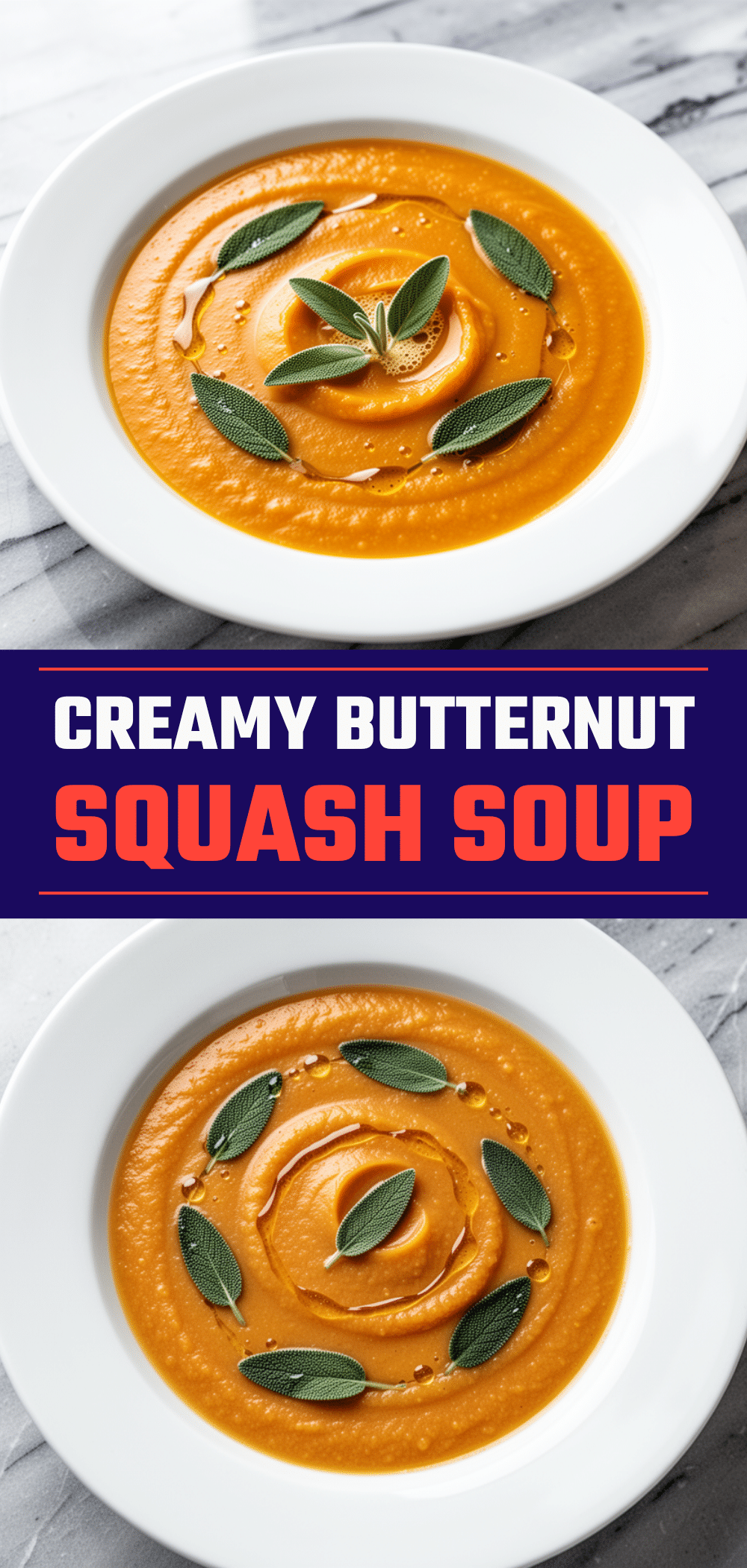

Butternut Squash Soup: Best Easy Fall Recipe
- Total Time: 45 minutes
- Yield: 6 servings 1x
Description
A creamy, comforting, and easy-to-make butternut squash soup that roasts the squash for deep flavor. This pantry-friendly recipe is ready in 45 minutes and perfect for fall.
Ingredients
- 1 large butternut squash (about 3–4 lbs / 1.5–2 kg), peeled, seeded, and cubed into 1-inch pieces
- 1 medium yellow onion, diced
- 4 cloves garlic, minced
- 2 tablespoons unsalted butter
- 1 tablespoon olive oil (for roasting)
- 4 cups low-sodium vegetable broth
- ½ cup heavy cream
- 1 teaspoon ground cinnamon
- ¼ teaspoon nutmeg (freshly grated preferred)
- 1 teaspoon salt (or to taste)
- ½ teaspoon black pepper (or to taste)
Instructions
- Preheat oven to 400°F (200°C). Toss squash cubes with 1 tablespoon olive oil, salt, and pepper. Spread in a single layer on a parchment-lined baking sheet and roast for 25-30 minutes until tender and caramelized.
- While squash roasts, melt butter in a large Dutch oven or heavy-bottomed pot over medium heat. Add diced onion and cook for 3-4 minutes until soft. Add garlic and cook for 1 minute until fragrant.
- Add roasted squash and any pan juices to the pot. Pour in vegetable broth, scraping up browned bits from the bottom. Bring to a boil, then reduce heat to low, cover, and simmer for 10-15 minutes.
- Remove pot from heat. Use an immersion blender to puree the soup until completely smooth. Alternatively, blend in batches using a standard blender (vent lid carefully).
- Stir in heavy cream, cinnamon, nutmeg, salt, and pepper. Simmer on low for 2 minutes to heat through without boiling.
- Ladle into bowls and serve immediately with crusty bread or desired garnishes.
Notes
Roasting the squash is crucial for concentrated flavor. If using a regular blender, let soup cool slightly and vent the lid to prevent steam burns. For a vegan version, substitute butter with olive oil and heavy cream with coconut milk. The soup tastes better the next day as flavors meld.
- Prep Time: 15 minutes
- Cook Time: 30 minutes
- Category: Main Course
- Cuisine: American
Nutrition
- Serving Size: 1 bowl
- Calories: 220
- Sugar: 8
- Sodium: 450
- Fat: 12
- Saturated Fat: 7
- Carbohydrates: 28
- Fiber: 5
- Protein: 4
Keywords: butternut squash soup, fall recipe, easy soup, vegetarian soup, creamy soup, comfort food, gluten-free, vegan option