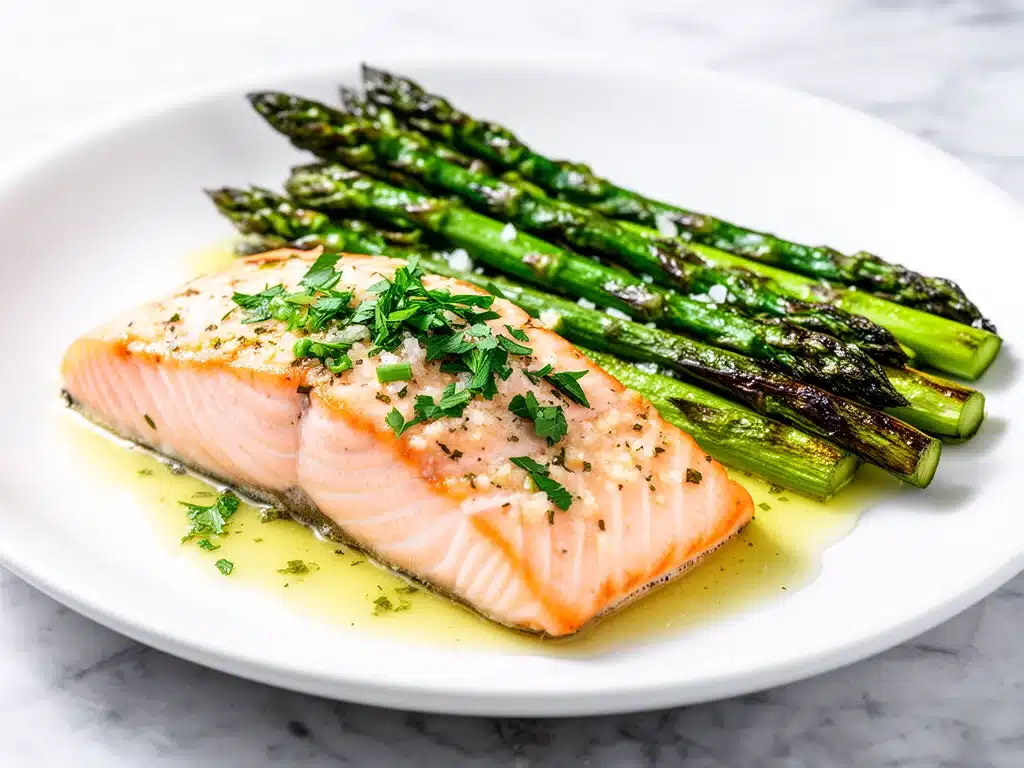
Last Tuesday, I was standing in my kitchen at 6:45 PM, staring at a calendar that looked more like a crime scene than a schedule. Back-to-school season had officially begun, which meant my evenings were now a whirlwind of soccer practice, homework stress, and the relentless question, “What’s for dinner?” I was exhausted. I didn’t have the energy to chop twenty different vegetables, and I definitely didn’t have the patience to wait for a slow cooker to do its thing. I needed something that tasted fancy enough to make my family feel special, but fast enough to prevent a meltdown before 7:30.
So, I did what I always do when the clock is ticking: I opened the freezer. There, buried under a bag of frozen peas, was a gorgeous piece of wild-caught salmon. I also had a bunch of asparagus that had been sitting in the crisper drawer looking a little tired. It was a classic combo, sure, but I wanted to elevate it without spending an hour in the kitchen. That night, I threw together a quick garlic butter sauce, tossed the asparagus on the same sheet pan, and slid everything into the oven. Fifteen minutes later, my kitchen smelled like a five-star restaurant, and my kids actually asked for seconds.
That was the night I realized that garlic butter salmon with roasted asparagus wasn’t just a good weeknight dinner—it was a lifesaver. Since then, I’ve made this exact meal at least a dozen times. It’s become the anchor of our Tuesday and Thursday routine. The best part? It requires almost zero active effort. You don’t need to be a chef to pull this off. You just need a sheet pan, a small skillet for the sauce, and a willingness to embrace the magic of garlic. If you’re tired of takeout menus and staring into an empty fridge, this garlic butter salmon recipe is your new best friend. It’s healthy, it’s elegant, and it proves that good food doesn’t always have to be complicated.
Why You’ll Love This Garlic Butter Salmon Recipe
There are about ten reasons I keep coming back to this dish, but let’s be real: you want to know why it works for your life, not just mine. Here’s why this garlic butter salmon with roasted asparagus has permanently replaced my weeknight stress:
- Stupid Simple Prep — Seriously, if you can open a package and pour butter, you can make this. I’ve walked my teenage son through it over FaceTime while I was at work. There’s no complex technique here. Just chop, drizzle, and bake.
- Lightning Fast — 15 minutes from start to finish. That’s it. The salmon cooks in the same time it takes to boil water for pasta. I make this on nights when I get home at 7:30 PM and still want to sit down to a hot meal by 8:00 PM.
- One-Pan Wonder — Well, technically one sheet pan for the veggies/fish and one small skillet for the sauce, but cleanup is a breeze. I hate doing dishes, so any recipe that minimizes the sink load is a winner in my book.
- Crowd-Pleaser — I’ve served this to my pescatarian niece, my meat-loving husband, and my picky eater cousin. Everyone loves it. The garlic butter sauce is the universal language of “please eat your vegetables.”
- Healthy Without Being Boring — This isn’t diet food. It’s rich, creamy, and flavorful. But it’s packed with omega-3s and fiber. It feels indulgent, but I don’t feel sluggish after eating it. That’s a rare combination.
- Budget-Smart — Salmon can be pricey, but a single fillet goes a long way. Plus, asparagus is often affordable in season. This feeds two people generously for under $20, which is less than what I’d spend on Uber Eats delivery fees alone.
This is my go-to when I need dinner to just work. No complicated techniques, no weird ingredients you have to hunt for, just reliable, delicious food that makes everyone happy and leaves you with time to actually relax.
Ingredients You’ll Need
Here’s the best part: you probably have most of this already. The beauty of this garlic butter salmon recipe is its simplicity. I’m particular about three ingredients here, and I’ll tell you exactly why they matter.
For the Salmon and Asparagus
Salmon fillets (4 pieces, about 6 oz each / 170g each) — I use wild-caught sockeye or king salmon because they have better flavor and texture than farmed. Look for fillets that are uniform in thickness so they cook evenly. If you can’t find salmon, trout works too, but salmon is the gold standard here.
Asparagus spears (1 bunch, about 1 pound / 450g) — Pick spears that are bright green and firm. Avoid ones that are woody or limp at the ends. You’ll snap off the tough bottom parts before roasting. I like medium-thick spears; too thin and they burn, too thick and they’re raw in the middle.
Extra virgin olive oil (2 tablespoons / 30ml) — Use good quality here. It’s the primary fat roasting the veggies, so it needs to taste good. I keep a bottle of decent olive oil on my counter. Don’t use the cheap stuff from the grocery store bottom shelf.
Garlic powder (1 teaspoon / 5g) — For the dry rub on the fish. It gives that savory backbone without burning like fresh garlic might in a quick roast.
Dried oregano (½ teaspoon / 1g) — Adds a subtle herbal note that pairs perfectly with the fish. If you don’t have oregano, thyme works well too.
Salt and black pepper — Kosher salt is best because it’s easier to control. Freshly cracked pepper adds a nice bite.
For the Garlic Butter Sauce
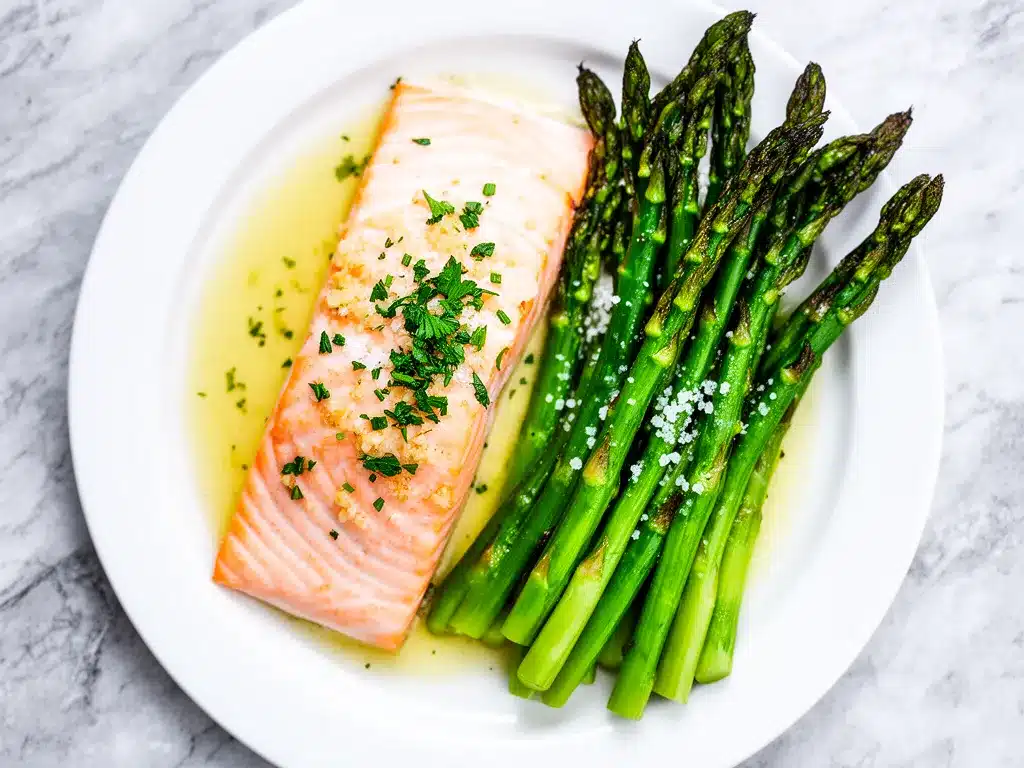
Unsalted butter (4 tablespoons / 55g) — This is non-negotiable. You want the richness of butter without the extra salt throwing off the balance. Salted butter can make the dish too salty, especially if you’re using salty fish.
Fresh garlic (4 cloves, minced / about 2 tablespoons) — Yes, four cloves. Don’t skimp. This is the star of the sauce. Fresh only—no jarred garlic in this recipe. Jarred garlic has a metallic aftertaste that ruins the elegance of the dish.
Lemon juice (1 tablespoon / 15ml) — Freshly squeezed. Bottled lemon juice tastes like cleaning product. The acid cuts through the richness of the butter and brightens the whole dish.
Red pepper flakes (½ teaspoon) — Optional, but I recommend it. Just a pinch adds a warm background heat that keeps the flavor from being one-note.
Fresh parsley (2 tablespoons, chopped) — For garnish. It adds color and a fresh herbal finish. Dried parsley doesn’t work here; it needs to be fresh.
Substitutions and Swaps
No fresh lemon? Use a splash of white wine vinegar, though it won’t be as bright. Can’t find asparagus? Broccoli florets or green beans work great in this setup. Just adjust the roasting time slightly—broccoli takes about the same time, green beans might take 2 minutes longer. I also love using this same sauce over soft baked ham and cheese pretzel bites for a completely different vibe, but it really shines on seafood.
Equipment Needed
You don’t need fancy equipment for this. Here’s what I actually use. You probably have everything in your kitchen right now.
Large sheet pan — I use a standard 13×18 inch baking sheet. It needs to fit the salmon and asparagus without crowding them. If they’re touching, they’ll steam instead of roast. I line mine with parchment paper for easy cleanup. If you’re environmentally conscious or hate parchment, a silicone mat works too.
Small saucepan or skillet — A 6-inch or 8-inch skillet is perfect for melting the butter and garlic. I use a small stainless steel pan because it heats evenly and doesn’t have non-stick coating issues with high heat.
Sharp knife — For trimming the asparagus and mincing the garlic. A dull knife makes you cry more—literally and figuratively. Learn this the hard way.
Cutting board — Any size works. I use a plastic one for veggies and a separate one for raw fish to avoid cross-contamination. It’s a safety thing.
Measuring spoons — Pretty standard stuff. Dollar store versions work fine for this.
Tongs — For flipping the salmon if needed, and for tossing the asparagus. Tongs are way better than a fork because they don’t poke holes in the fish.
Whisk or fork — Just to emulsify the butter and lemon juice at the end. You don’t need a fancy whisk.
Optional but nice: Apastry brush for brushing the salmon with oil. But honestly, I just use my fingers. It’s faster.
How to Make It: Step-by-Step
Alright, let’s make this! I’m walking you through exactly how I do it, including the little tricks I’ve picked up over years of making this garlic butter salmon with roasted asparagus.
Step 1: Prep the Oven and Pan (2 minutes)
Preheat your oven to 400°F (200°C). This temperature is key. It’s hot enough to roast the asparagus quickly and crisp up the edges, but gentle enough to cook the salmon through without drying it out. Line your sheet pan with parchment paper. This is my non-negotiable. I’ve tried foil, and it sticks. Parchment is worth the extra second.
Step 2: Prep the Asparagus (3 minutes)
Wash the asparagus and pat it completely dry. Moisture is the enemy of roasting. If it’s wet, it steams. Hold one spear and bend it; it will snap naturally where the woody part ends. Discard the tough ends. Toss the spears on the sheet pan with 1 tablespoon of olive oil, salt, and pepper. Spread them out in a single layer. Don’t pile them up.
Step 3: Prep the Salmon (2 minutes)
Pat the salmon fillets dry with paper towels. This sounds minor, but dry fish sears better and absorbs seasoning better. Place them skin-side down on the sheet pan, nestled next to the asparagus. If your fillets are very large, you might need to use two pans, but usually, four 6-oz fillets fit comfortably.
Season the salmon generously with salt, pepper, garlic powder, and oregano. Drizzle the remaining 1 tablespoon of olive oil over the fish. Rub it in gently. You want the seasoning to stick.
Step 4: Roast Everything (10-12 minutes)
Slide the sheet pan into the preheated oven. Bake for 10-12 minutes. Here’s the thing: ovens vary. Start checking at 10 minutes. The salmon is done when it flakes easily with a fork and is opaque throughout. The asparagus should be tender-crisp, with some browned, caramelized edges. If the asparagus is done before the salmon, just remove the veggies and keep cooking the fish. But usually, they finish together perfectly.
Step 5: Make the Garlic Butter Sauce (2 minutes)
While the fish is roasting, melt the butter in your small skillet over medium heat. Once melted and foaming, add the minced garlic and red pepper flakes. Stir constantly for about 1 minute. You want the garlic to smell amazing and turn golden. Do NOT let it brown or burn. Burnt garlic tastes bitter and ruins the whole dish. If it starts to smoke, take it off the heat immediately.
Remove from heat and stir in the lemon juice. It will sizzle and foam—that’s good. Whisk it together until smooth.
Step 6: Combine and Serve (1 minute)
Take the sheet pan out of the oven. Spoon the hot garlic butter sauce generously over the salmon and asparagus. Sprinkle with fresh parsley. Serve immediately while it’s hot and sizzling.
Total Time: About 15 minutes (5 minutes prep, 10 minutes cooking). It’s that fast.
Expert Tips & Tricks
Here’s everything I’ve learned from making this dozens of times. These tips will save you from my mistakes.
The Parchment Paper Rule
I cannot stress this enough. Line your pan. Salmon skin sticks to metal like crazy. If you don’t use parchment, you’ll spend 20 minutes scraping charred fish off your pan. Parchment makes cleanup a 5-second rinse. It’s worth the tiny cost.
Don’t Overcook the Salmon
Salmon continues to cook after it comes out of the oven (carryover cooking). Pull it out when it’s just barely opaque in the center. It will finish cooking on the plate. Overcooked salmon is dry and rubbery. We want moist and flaky. Use the fork test: gently twist a fork into the thickest part. If it flakes easily, it’s done.
Garlic Timing is Critical
Minced garlic burns incredibly fast. I’ve ruined sauce twice by getting distracted checking the oven. Set a timer for 60 seconds when you add the garlic. Stir every 10 seconds. Smell it. When it smells nutty and fragrant, it’s ready. If it smells sharp or acrid, it’s burning.
Snap, Don’t Cut, the Asparagus
As I mentioned, bending the spear tells you exactly where the woody part ends. Cutting it blindly often leaves tough bits that are unpleasant to eat. Trust the snap. It’s a natural guide.
Room Temperature Fish
If you have time, let the salmon sit out for 15 minutes before cooking. Cold fish going into a hot oven cooks unevenly. It’s not a huge deal, but it helps. I usually forget, so I just cook it a minute longer. No biggie.
Variations & Substitutions
Once you’ve nailed the basic version, here’s how you can mix it up. I’ve tried all of these.
Lemon Herb Variation
Add 1 teaspoon of dried thyme and the zest of one lemon to the butter sauce. It’s brighter and more floral. Great for spring.
Spicy Cajun Version
Swap the oregano and garlic powder for Cajun seasoning. Add an extra pinch of red pepper flakes. Totally different vibe—spicy and smoky. My husband loves this version when he wants something with a kick.
Asian-Inspired Glaze
Skip the butter sauce. Whisk together 2 tablespoons soy sauce, 1 tablespoon honey, 1 teaspoon sesame oil, and 1 minced garlic clove. Brush over the salmon before roasting. It’s sweet, salty, and savory. Amazing with steamed rice.
Dietary Modifications
Dairy-Free: Swap the butter for olive oil or avocado oil. The sauce will be lighter, but still delicious. Just mix the garlic and lemon juice with the oil.
Low-Carb/Keto: This recipe is naturally low-carb. Serve it with cauliflower rice or zucchini noodles instead of potatoes or bread. It pairs beautifully with healthy green apple spinach smoothie for a balanced day, though the smoothie is more of a breakfast thing.
Gluten-Free: Naturally gluten-free. Just ensure your seasonings don’t have hidden gluten (rare, but check labels).
Serving & Storage
How to serve this masterpiece. I usually serve this straight from the sheet pan at the dinner table—it looks rustic and stays warm. But here are other ways I’ve enjoyed it:
Side Dishes
This meal is pretty complete on its own, but if you want to add more:
- Garlic Mashed Potatoes — Classic pairing. The buttery sauce soaks into the potatoes perfectly.
- Quinoa or Rice — Good for soaking up extra sauce if you’re making a lot.
- Simple Green Salad — A light arugula salad with lemon vinaigrette cuts through the richness.
Storage Instructions
Refrigerator: Store leftovers in an airtight container for up to 2 days. The salmon will dry out slightly, so don’t expect it to be as perfect as day one.
Reheating: Best method: Add a splash of water or broth to a skillet, cover, and heat gently over low heat. This steams it back to life. Microwave method: Heat in 30-second intervals, but it tends to get rubbery. I usually eat leftovers cold in a salad the next day. Honestly, cold salmon on greens is delicious.
Freezing: I don’t recommend freezing this. The texture of cooked salmon changes when frozen and thawed—it becomes mushy. It’s better fresh.
Nutrition Information
I’m not a nutritionist, but here’s the breakdown if you’re tracking. This is per serving (based on 2 servings).
Per Serving:
- Calories: 450
- Protein: 35g
- Carbs: 8g
- Fiber: 3g
- Sugar: 2g
- Fat: 30g
- Saturated Fat: 12g
- Cholesterol: 95mg
- Sodium: 350mg
What’s Good: High in protein and omega-3 fatty acids. Good source of fiber from the asparagus. Low in carbs.
What to Know: Higher in calories from the butter and salmon fat. Contains dairy. Moderate sodium.
My Take: Look, this is comfort food with butter. It’s not a diet recipe. But it’s way better than takeout, costs less, and I know exactly what’s in it. When I want to make it lighter, I reduce the butter to 2 tablespoons and add more lemon. But usually? I just enjoy the richness. It’s a treat.
Final Thoughts
So that’s my go-to garlic butter salmon with roasted asparagus! I’ve probably talked your ear off at this point, but when you make a recipe this often, you have a lot to say about it. This has saved weeknight dinners more times than I can count. It’s my answer to “what’s for dinner” when I’m tired, don’t want takeout, and still want something that tastes really good. My kids are happy, my husband’s happy, and I’m happy because I’m not stressed about cooking.
Make it yours! Try different herbs, swap in your favorite vegetables, adjust the garlic (though more is always better in my opinion). The best recipes are the ones you adapt to your family’s tastes. If you make this, drop a comment and let me know what you think! I love hearing how recipes turn out in your kitchen. And if something doesn’t work, tell me that too—I’m here to help troubleshoot.
Happy cooking! And I hope your kitchen smells half as good as mine does right now.
Frequently Asked Questions
Can I use frozen salmon?
You can, but you need to thaw it completely first. Pat it very dry before seasoning. Frozen salmon releases more water, so it might steam instead of roast. Fresh is always better for this recipe, but frozen works in a pinch. Just make sure there’s no ice crystals left.
Why did my salmon come out dry?
Most likely, it was overcooked. Salmon cooks very quickly. Check it at 10 minutes. If it’s opaque and flakes easily, it’s done. If it’s still translucent in the center, give it another minute. Also, thicker fillets take longer. If your fillets are very thin, check at 8 minutes.
Can I make this ahead for a dinner party?
Sort of. You can prep the asparagus and season the salmon up to 4 hours ahead and keep them in the fridge. When guests arrive, just pop them in the oven. The garlic butter sauce should be made fresh, right before serving, so it doesn’t get soggy or lose its flavor. I do this all the time for small gatherings.
Why did my sauce separate?
If the butter sauce looked grainy or oily, the heat was too high when you added the lemon juice. Acid can cause butter to separate if added to hot fat. Always remove the pan from the heat before adding lemon juice, and whisk vigorously. If it’s already separated, you can try whisking in a teaspoon of cold water to bring it back together, but it’s tricky.
Can I use fresh herbs instead of dried?
Yes! If you use fresh oregano or thyme, use about twice the amount (1 teaspoon fresh vs ½ teaspoon dried). Add the fresh herbs to the butter sauce at the end, not during roasting, so they don’t burn. Fresh parsley is great for garnish.
How do I reheat leftovers without it getting dry?
As I mentioned, gentle heat is key. Add a splash of water or broth to a skillet, cover, and heat over low. Or, eat it cold in a salad. I find reheated salmon in the microwave is always rubbery, so I avoid it.
Can I double this recipe?
Absolutely! Double everything and use two sheet pans. Make sure your oven has space for both pans, or rotate them halfway through. The cooking time stays the same. I do this when I’m meal-prepping or feeding a crowd.
Pin This Recipe!
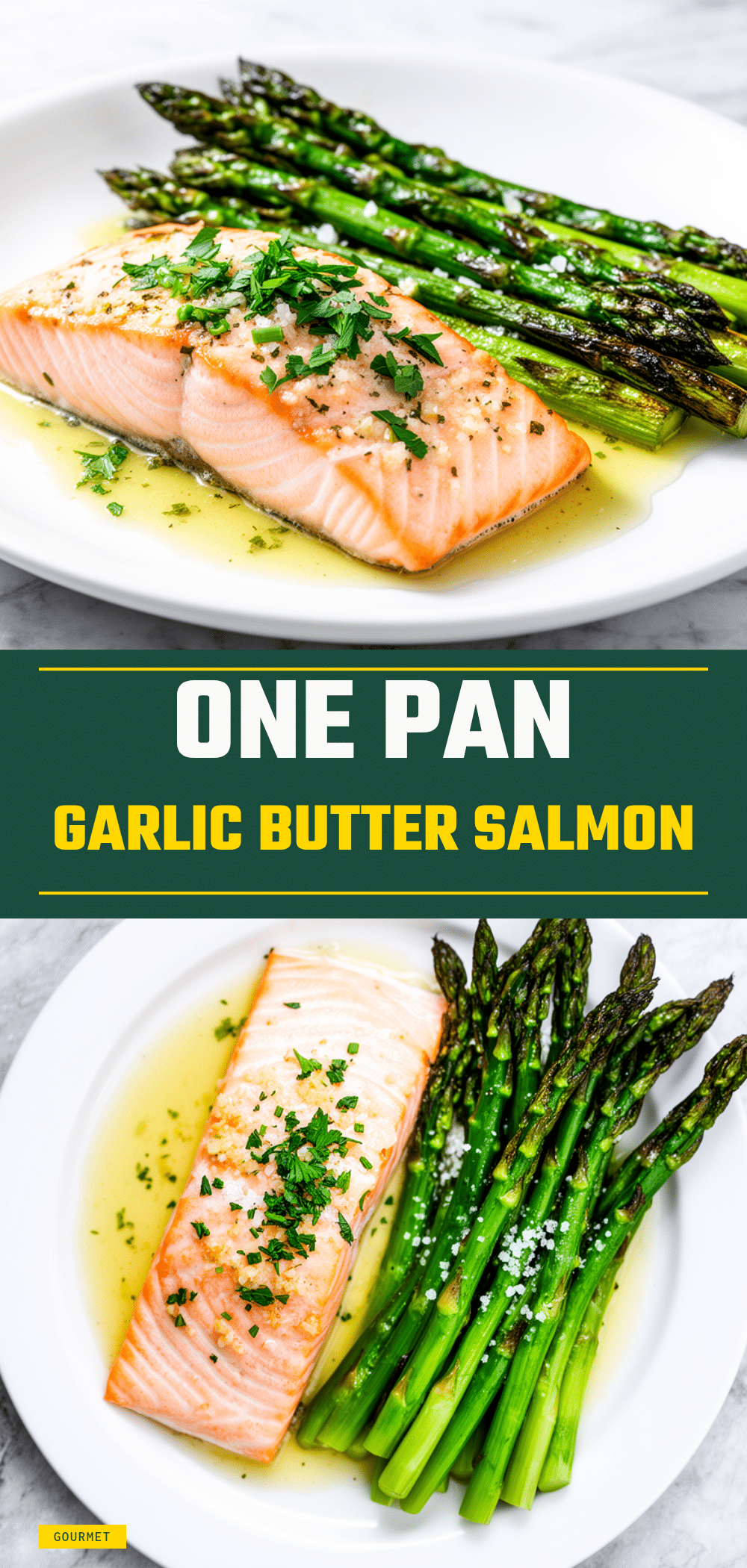
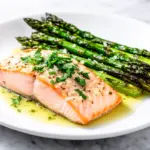
Garlic Butter Salmon: 15-Min Easy Weeknight Dinner
- Total Time: 15 minutes
- Yield: 2 servings 1x
Description
A quick and elegant weeknight dinner featuring wild-caught salmon and roasted asparagus topped with a rich garlic butter sauce. Ready in just 15 minutes with minimal cleanup.
Ingredients
- 4 salmon fillets (about 6 oz each)
- 1 bunch asparagus spears (about 1 lb)
- 2 tablespoons extra virgin olive oil
- 1 teaspoon garlic powder
- 1/2 teaspoon dried oregano
- Salt and black pepper to taste
- 4 tablespoons unsalted butter
- 4 cloves fresh garlic, minced
- 1 tablespoon fresh lemon juice
- 1/2 teaspoon red pepper flakes (optional)
- 2 tablespoons fresh parsley, chopped
Instructions
- Preheat oven to 400°F (200°C). Line a large sheet pan with parchment paper.
- Wash and dry asparagus. Snap off tough woody ends. Toss with 1 tablespoon olive oil, salt, and pepper. Spread in a single layer on the sheet pan.
- Pat salmon fillets dry. Place skin-side down on the sheet pan next to the asparagus. Season with salt, pepper, garlic powder, and oregano. Drizzle with remaining 1 tablespoon olive oil and rub in.
- Roast in the preheated oven for 10-12 minutes, until salmon flakes easily with a fork and asparagus is tender-crisp.
- While salmon roasts, melt butter in a small skillet over medium heat. Add minced garlic and red pepper flakes. Stir constantly for 1 minute until fragrant and golden (do not burn).
- Remove skillet from heat and whisk in lemon juice until smooth.
- Remove sheet pan from oven. Spoon garlic butter sauce over salmon and asparagus. Sprinkle with fresh parsley and serve immediately.
Notes
Line the pan with parchment paper for easy cleanup and to prevent sticking. Do not overcook the salmon as it continues to cook after removal from the oven. Snap asparagus ends rather than cutting them to ensure you remove only the tough parts. For a dairy-free version, swap butter for olive oil or avocado oil.
- Prep Time: 5 minutes
- Cook Time: 10 minutes
- Category: Main Course
- Cuisine: American
Nutrition
- Serving Size: 1 salmon fillet and
- Calories: 450
- Sugar: 2
- Sodium: 350
- Fat: 30
- Saturated Fat: 12
- Carbohydrates: 8
- Fiber: 3
- Protein: 35
Keywords: garlic butter salmon, roasted asparagus, weeknight dinner, easy seafood, one pan meal, healthy dinner, 15 minute meals